

Why choose luxury leather accessories: prestige and durability
Many executives invest heavily in tailored suits and premium watches, then overlook the accessories they use every day. A worn synthetic belt or a cracked leather card holder sends a signal, and not the one you want. Luxury leather accessories are not just about aesthetics. They deliver measurable durability, status reinforcement, and long-term value that mass-market synthetics simply cannot match. This guide breaks down the real differences, the professional impact, and the customization options that make luxury leather a sound investment for discerning professionals.
Table of Contents
- Luxury leather versus synthetics: What really sets them apart?
- Why status and professionalism matter in executive accessories
- How customization creates personal legacy and style
- The sustainability debate: Costs, footprint, and longevity
- The evolving market: Price, exclusivity, and what trends mean for buyers
- Experience true luxury with handcrafted leather accessories
- Frequently asked questions
Key Takeaways
| Point | Details |
|---|---|
| Superior durability | Luxury leather outlasts synthetics by years while improving in appearance. |
| Status and image | Leather accessories project professionalism, sophistication, and success. |
| Personalization power | Customization options allow you to express your own style and legacy. |
| Sustainability balance | Consider both longevity and environmental impact when choosing materials. |
| Market trends | Price increases make authentic craftsmanship and long-term value even more critical in 2026. |
Luxury leather versus synthetics: What really sets them apart?
The gap between genuine luxury leather and synthetic alternatives is wider than most buyers expect. It shows up in wear patterns, surface texture, and lifespan. Synthetics may look comparable on day one, but the difference becomes clear within a few years of regular use.
Luxury leather lasts 10 to 20+ years with proper care, while vegan leather typically begins peeling or cracking within 2 to 5 years. That is a significant gap in cost-per-use when you calculate the full ownership period. Martindale abrasion durability test results consistently show genuine leather withstanding 4 to 5 times more friction cycles than polyurethane alternatives before showing surface degradation.
Synthetics crack, peel, and fade. Real leather does the opposite. It develops a patina over time, a natural deepening of color and texture that adds character rather than subtracting from it. Our patina leather guide explains how this process works and why it matters for long-term value. For a deeper look at how leather ages, the leather aging insight resource covers the full arc from new to distinguished.
| Feature | Luxury leather | Synthetic/vegan leather |
|---|---|---|
| Lifespan | 10 to 20+ years | 2 to 5 years |
| Surface over time | Develops patina | Cracks and peels |
| Abrasion resistance | Very high | Moderate to low |
| Repairability | Resoleable, conditionable | Limited or none |
| Environmental end-of-life | Biodegradable | Microplastic shedding |
Pro Tip: Condition full-grain leather every 3 to 6 months with a quality cream. This extends lifespan significantly and accelerates patina development in the areas that see the most use.
Why status and professionalism matter in executive accessories
For executives, every detail in a meeting room communicates something. The quality of your accessories is read quickly and remembered. A well-worn, high-quality leather portfolio or belt signals attention to detail and financial confidence. A peeling synthetic equivalent signals the opposite.
Luxury leather signals status and sophistication in corporate settings in ways that synthetic materials cannot replicate. The texture, weight, and finish of genuine leather carry associations with craftsmanship and permanence that are immediately recognizable to other professionals who pay attention to these details.
“Accessories are the punctuation of a professional wardrobe. They finish the sentence.”
The practical benefits for executives include:
- Consistency of appearance: Luxury leather holds its shape and color across years of daily use, maintaining a polished look without constant replacement.
- Conversation value: Distinctive, well-crafted accessories attract notice and create natural openings in professional settings.
- Perceived investment: Colleagues and clients read quality accessories as a proxy for judgment and standards.
- Reduced replacement cost: Fewer purchases over time means less disruption and lower total spend.
The bespoke leather benefits article outlines how tailored leather goods reinforce professional identity. For context on how accessories fit into broader executive style, the business attire impact guide provides a practical framework.
How customization creates personal legacy and style
Mass-market accessories are designed for volume. Luxury leather accessories can be designed for you. That distinction matters more as professionals build a personal brand that extends beyond their job title.
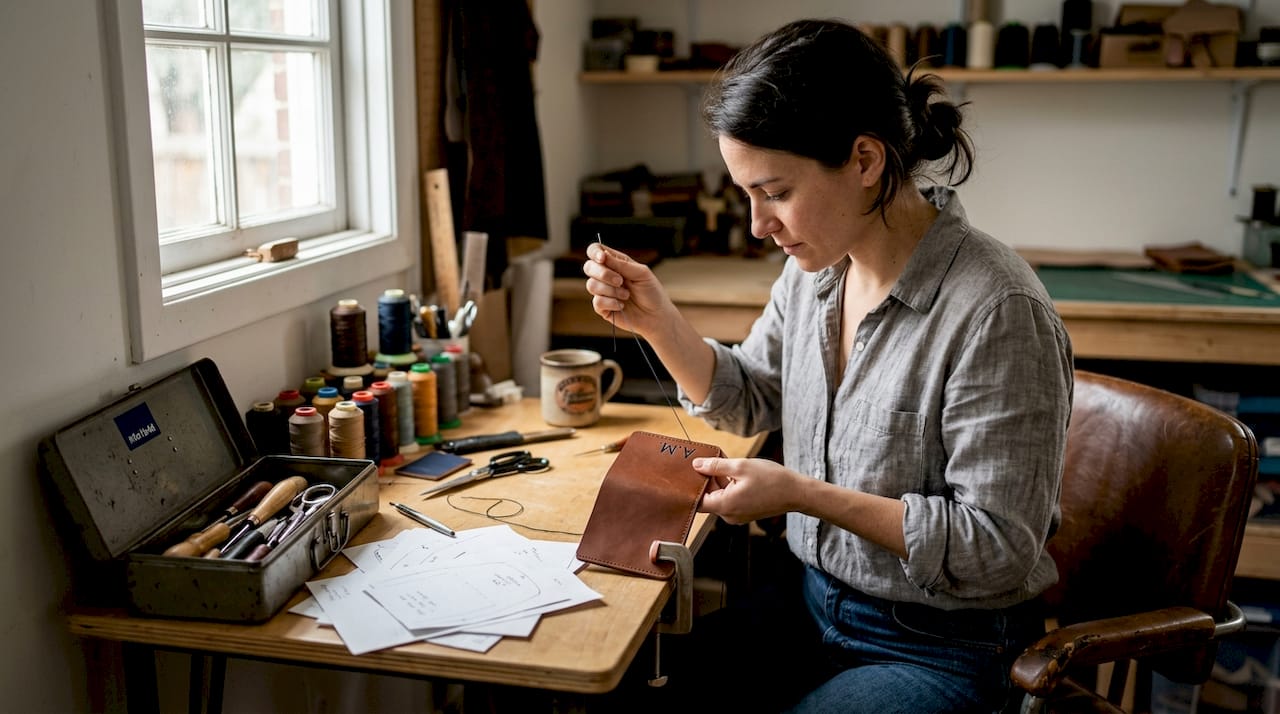
Luxury leather allows for embossing and monogramming, enabling personalization that creates genuine emotional connection and lasting identity. These are not cosmetic additions. They transform a functional object into a personal statement that carries meaning across years and contexts.
The most common customization options available at the bespoke level include:
- Monogramming: Initials or full names stamped or hand-stitched into the leather surface.
- Embossing: Custom patterns, logos, or textures pressed into the grain.
- Color and patina selection: Choosing specific dye finishes or requesting hand-applied patina effects.
- Stitching style and thread color: Contrasting or matching thread that defines the visual character of the piece.
- Hardware specification: Buckle finish, zipper type, and closure style selected to match personal preference.
| Customization type | Availability | Heirloom potential |
|---|---|---|
| Monogramming | Wide | High |
| Hand-stitching | Bespoke ateliers | Very high |
| Patina application | Specialist only | High |
| Custom hardware | Bespoke ateliers | Moderate |
Pro Tip: When ordering a monogrammed piece, choose placement on an interior panel rather than the exterior. It keeps the exterior clean while adding a personal detail that only you and those you choose to show will see.
The shoe customization guide covers the full range of options available for footwear. For a broader view of what personalized footwear involves, customized footwear explained is a useful reference. Professionals who want to apply these principles to formal settings will find the customizing formal accessories guide directly relevant. For an example of what bespoke customization looks like at the highest level, the bespoke executive portfolio from Robb Report illustrates the standard.
The sustainability debate: Costs, footprint, and longevity
The environmental comparison between real leather and synthetics is more nuanced than most coverage suggests. Both materials carry environmental costs. The question is which costs matter most to you and over what time horizon.
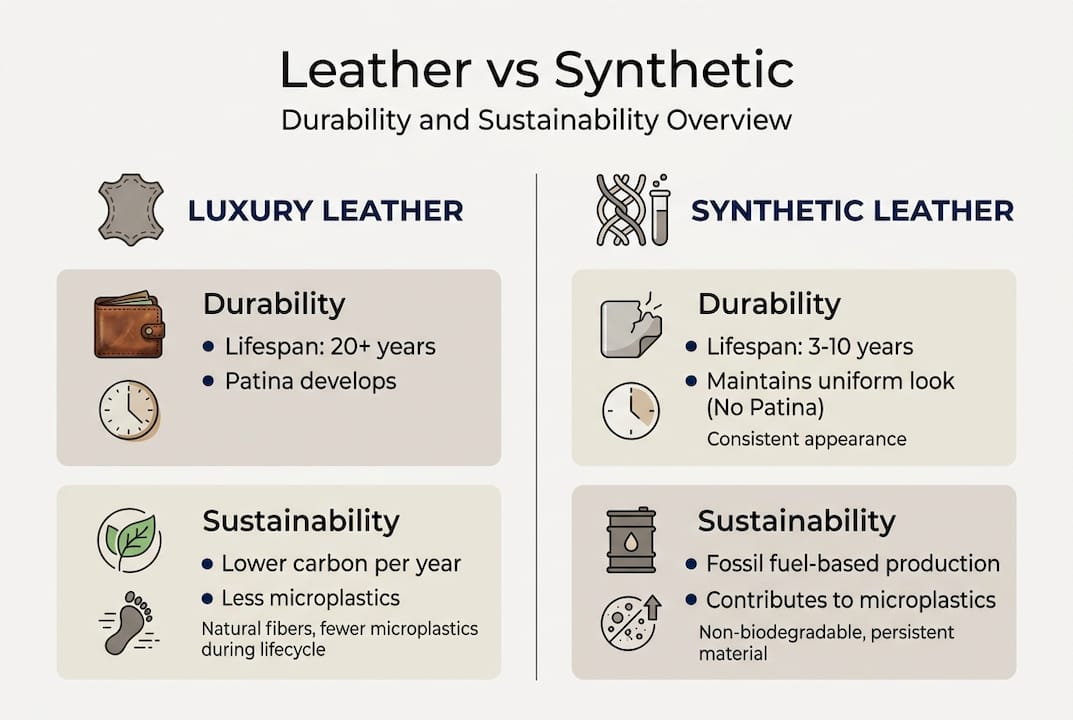
Synthetic leather produces 14.4 kg CO2e per bag versus approximately 100.5 kg CO2e for a comparable real leather item. That is a significant difference in upfront carbon cost. However, synthetics shed microplastics throughout their lifespan and typically require replacement every 2 to 5 years, compounding their total environmental impact over time.
For more on how to evaluate leather quality before purchasing, the leather quality explained guide covers grading, tanning methods, and what to look for. A broader comparison of sustainable fashion materials provides additional context on where both materials sit in the sustainability conversation.
Key considerations for eco-conscious buyers:
- Longevity reduces total impact: A leather bag used for 20 years has a lower per-year carbon cost than three synthetic replacements over the same period.
- Microplastic pollution: Synthetic leather sheds plastic particles with every use, contributing to water and soil contamination.
- Biodegradability: Vegetable-tanned leather breaks down naturally at end of life; most synthetics do not.
- Tanning method matters: Chrome-tanned leather carries higher chemical impact than vegetable-tanned alternatives. Knowing the source and method is important.
The evolving market: Price, exclusivity, and what trends mean for buyers
The luxury goods market has changed significantly since 2019. Price increases have driven most of the value growth in the sector, but that strategy carries risk. When prices rise faster than perceived quality, exclusivity erodes rather than strengthens.
McKinsey notes a luxury slowdown driven by overpricing that undermines the craftsmanship promise that justifies premium positioning. For buyers, this means the market is sorting itself. Brands that deliver genuine quality and heritage are holding value. Those that raised prices without improving product are losing credibility.
“Discerning buyers in 2026 are not just paying for a label. They are paying for verifiable craft, traceable materials, and lasting construction.”
What this means for executives making purchasing decisions:
- Prioritize construction over branding: Goodyear welted shoes and hand-stitched leather goods hold value and can be repaired. Logo-heavy items with synthetic components do not.
- Heritage and provenance matter: Knowing where and how a piece was made is now a standard part of the evaluation process for informed buyers.
- Resale value is real: Well-maintained luxury leather accessories from credible makers retain and sometimes appreciate in value.
- Exclusivity comes from craft, not price: The most respected pieces in 2026 are those with documented craftsmanship, not just high retail tags.
The 2026 executive luxury trends article covers how these market shifts are affecting footwear and accessory choices at the executive level.
Experience true luxury with handcrafted leather accessories
The case for luxury leather is straightforward: better materials, longer lifespan, stronger professional signal, and genuine customization options that mass-market products cannot offer. For executives who treat their accessories as part of their professional identity, the investment calculus is clear.
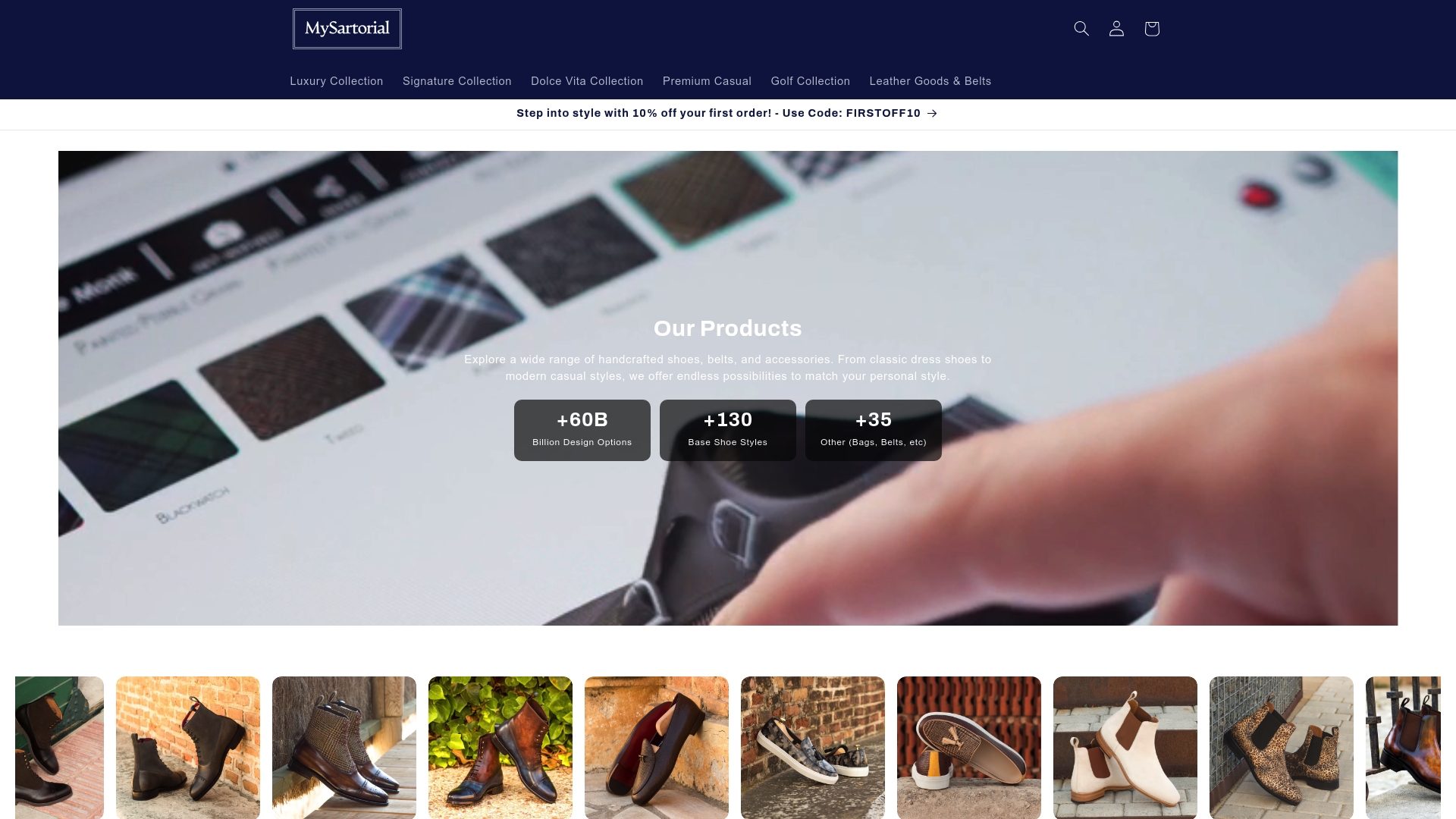
At mysartorial.com, the leather goods and belts collection brings together handcrafted European pieces with customization options built into the selection process. From patina finishes to stitching details, each item can be configured to match your specifications before it ships. The leather works collection showcases the full range of what is available, from formal accessories to everyday carry pieces, all made with the same construction standards applied to the footwear line. If you are ready to move beyond mass-market options, this is a practical starting point.
Frequently asked questions
How long do luxury leather accessories actually last?
Luxury leather accessories routinely last 10 to 20 years or more with proper care, far outlasting synthetics that typically begin degrading within 2 to 5 years.
Is vegan leather more sustainable than real leather?
Vegan leather has a smaller carbon footprint per item, but it is less durable and raises microplastic concerns that compound its total environmental impact over time.
What makes custom luxury leather accessories special?
Customization options like embossing and monogramming turn luxury leather accessories into unique personal pieces with lasting identity and potential heirloom value.
Do luxury leather accessories develop a patina? Why does it matter?
Yes. Patina develops naturally with use, giving leather accessories unique color depth and character that increases their visual appeal and perceived value over time.