

Luxury footwear's role in business attire: 2026 guide
Your footwear speaks before you do. While most executives focus on suits and accessories, they overlook the foundation of professional presence: their shoes. Luxury footwear significantly boosts perceived professionalism and confidence, yet remains the most underestimated element of business attire. This guide reveals how craftsmanship and personalized style transform your professional image, offering practical insights for selecting, customizing, and maintaining shoes that elevate your corporate presence. You’ll discover why handcrafted European footwear matters, how to match styles to occasions, and what maintenance practices preserve your investment for years.
Table of Contents
- Key takeaways
- Why luxury footwear matters in business attire
- Key elements of craftsmanship and personalized style in luxury footwear
- Selecting luxury footwear for different business occasions
- Maintaining and caring for luxury footwear to ensure longevity
- Discover premium leather goods and accessories at MySartorial
- What is the role of luxury footwear in business attire?
Key Takeaways
| Point | Details |
|---|---|
| Executive presence boost | Luxury shoes signal professionalism and confidence, shaping how colleagues and clients perceive you. |
| Craftsmanship and personalization | Choosing shoes based on craftsmanship and a personalized fit creates a polished, distinctive look. |
| Care preserves appearance | Proper maintenance and timely resoling extend life and keep shoes looking showroom ready. |
| Occasion based styles | Match shoe type and color to the meeting or event to reinforce the appropriate level of formality. |
| Custom options express style | Customization lets executives reflect their unique brand through fit materials and detailing. |
Why luxury footwear matters in business attire
Your shoes create immediate impressions that shape professional relationships. Research shows that people form judgments about competence and status within seconds of meeting, and footwear plays a disproportionate role in these assessments. Luxury footwear significantly boosts perceived professionalism by signaling attention to detail and investment in personal presentation.
Executives who wear quality shoes demonstrate commitment to excellence beyond surface level choices. This nonverbal communication affects client trust, colleague perception, and career advancement opportunities. A well-crafted shoe suggests meticulous standards in all professional areas, while worn or poorly constructed footwear undermines even the finest suit.
Comfort directly impacts performance during long meetings and presentations. Handcrafted shoes with proper arch support and quality materials reduce fatigue, allowing you to maintain focus and confidence throughout demanding schedules. The physical comfort translates to visible ease and authority in your demeanor.
Several misconceptions persist about business footwear:
- Price alone determines quality (craftsmanship matters more than brand names)
- Black shoes suit all occasions (brown and burgundy offer appropriate versatility)
- Breaking in shoes requires pain (properly fitted luxury footwear feels comfortable immediately)
- Shoe style matters less than suit selection (footwear completes or compromises entire outfits)
“The foundation of executive presence starts at ground level. Your shoes reveal whether you understand that excellence requires consistency in every detail.” This perspective explains why successful consultants and executives invest in types of luxury shoes for executives that align with their professional goals.
Pro Tip: Observe footwear choices at your next board meeting. You’ll notice that influential leaders consistently wear well-maintained, quality shoes that complement rather than compete with their attire.
Key elements of craftsmanship and personalized style in luxury footwear
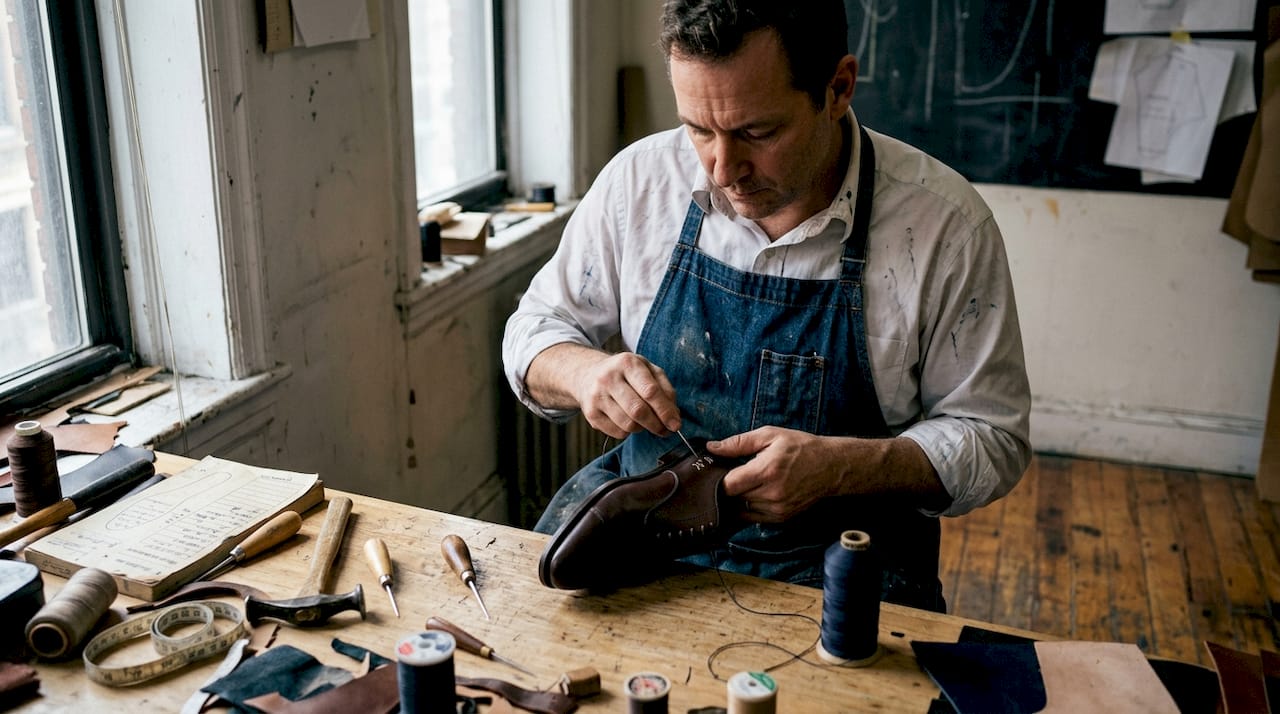
The difference between handmade and machine-made footwear extends beyond production methods to durability and comfort. Handcrafted shoes offer superior quality through techniques like Goodyear welting, which allows resoling and creates flexible construction that molds to your foot over time. Machine-made shoes use cemented construction that cannot be repaired and breaks down within two years of regular wear.
Material selection fundamentally affects shoe performance and appearance:
- Full-grain leather develops rich patina while maintaining structural integrity
- Calfskin offers smooth texture with excellent breathability for all-day wear
- Exotic skins like alligator or ostrich provide distinctive texture for statement pieces
- Vegetable-tanned leather ages beautifully and supports traditional craftsmanship
Customization transforms standard shoes into personal expressions of style. Modern handcrafted luxury shoe crafting offers extensive options including last selection for precise fit, sole material choice for different climates, stitching color to complement or contrast leather, and patina application for unique color depth. These details allow executives to differentiate themselves while maintaining professional appropriateness.
| Feature | Standard Footwear | Bespoke Footwear |
|---|---|---|
| Fit precision | Generic sizing | Custom last from foot measurements |
| Material options | Limited selection | Full range of leathers and exotics |
| Construction method | Cemented or basic stitching | Goodyear welt or hand-welted |
| Customization | Color choice only | Design, materials, details, monogramming |
| Lifespan | 2-3 years | 10+ years with proper care |
| Resoling capability | Not possible | Multiple resoles extend life indefinitely |
Monogramming adds subtle personalization without compromising professional appearance. Placed discreetly on insoles or inner linings, initials or symbols create connection between wearer and shoe while maintaining external elegance. This detail matters for executives who value unique expression within conservative dress codes.
The custom shoe selection guide for professionals emphasizes that true customization begins with understanding your foot structure and walking pattern. Proper assessment ensures that aesthetic choices enhance rather than compromise comfort and functionality.
Pro Tip: When evaluating artisanal details, examine stitching consistency, leather grain uniformity, and sole attachment quality. These elements reveal craftsmanship level more reliably than brand reputation or price point.
Selecting luxury footwear for different business occasions
Classic business shoe styles serve distinct purposes across corporate environments. Oxfords with closed lacing provide maximum formality for board meetings and client presentations. Derbies with open lacing offer slightly relaxed elegance suitable for office environments and networking events. Chelsea boots deliver modern sophistication for creative industries and business casual settings.
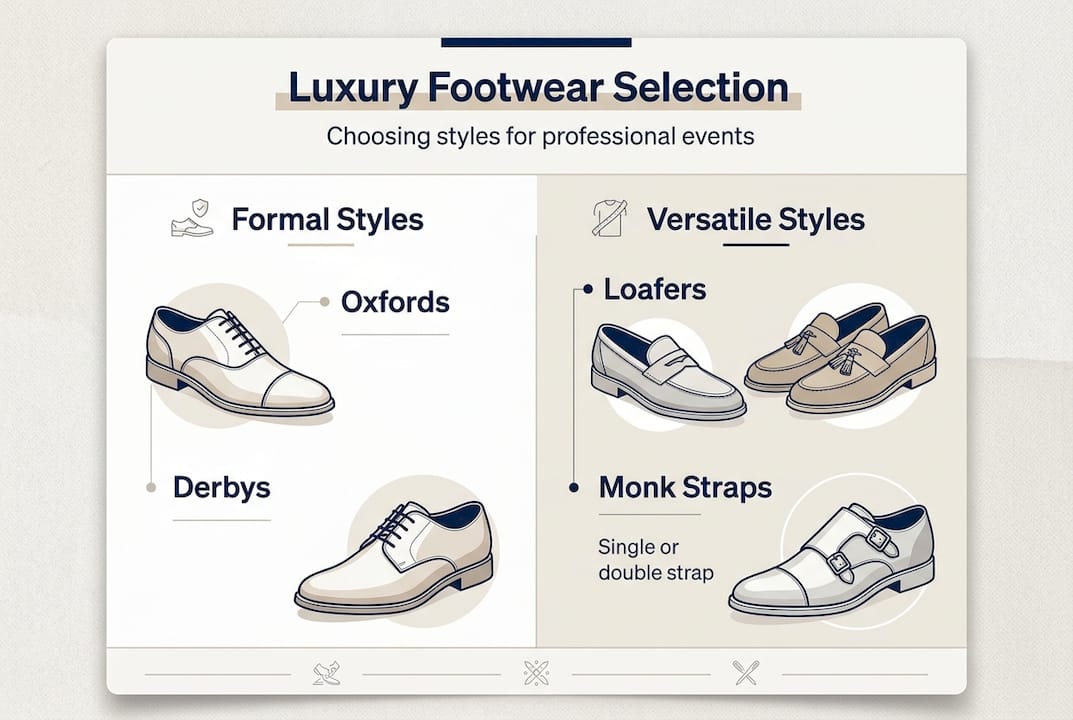
Matching shoe color to attire requires understanding traditional and contemporary guidelines. Black shoes pair with charcoal, navy, and black suits for conservative settings. Brown shoes complement navy, gray, and earth-tone suits while projecting approachable authority. Burgundy offers middle ground between black’s formality and brown’s warmth, working across most business contexts.
Different shoe styles align with specific business contexts based on industry norms and occasion formality. Understanding these distinctions prevents style missteps while maximizing wardrobe versatility.
Step-by-step selection process:
- Assess the occasion formality level and industry expectations for appropriate style boundaries
- Consider your suit color and texture to ensure complementary rather than competing elements
- Evaluate comfort requirements based on standing and walking duration during the event
- Select construction quality appropriate to usage frequency and professional visibility
- Review customization options that enhance personal style without reducing versatility
| Shoe Style | Formality Level | Best Occasions | Suit Compatibility |
|---|---|---|---|
| Cap-toe Oxford | Highest | Board meetings, formal presentations | Charcoal, navy, black suits |
| Plain Oxford | High | Client meetings, interviews | All suit colors |
| Whole-cut Oxford | High | Executive events, ceremonies | Navy, gray suits |
| Derby | Medium-high | Office wear, business lunches | Navy, brown, gray suits |
| Monk strap | Medium | Creative business, networking | Navy, earth tones |
| Chelsea boot | Medium | Business casual, travel | Casual suits, blazers |
Versatility matters when building a professional shoe wardrobe. Rather than accumulating numerous specialized pairs, invest in three high-quality options that cover your typical business scenarios. A black Oxford, brown Derby, and burgundy Chelsea boot provide comprehensive coverage while simplifying daily selection and maintenance routines.
The dress shoe styles for consultants demonstrates how traveling professionals benefit from shoes that transition seamlessly between client sites, airports, and hotel environments without sacrificing polish or comfort.
Pro Tip: Purchase shoes slightly more formal than your typical needs. It’s easier to dress down a formal shoe with casual attire than elevate a casual shoe for unexpected high-stakes meetings.
Maintaining and caring for luxury footwear to ensure longevity
Routine maintenance preserves appearance and extends shoe life significantly. Proper care can double the lifespan of luxury shoes while maintaining the professional appearance that justifies their investment. Daily care takes minutes but prevents damage that requires expensive repairs or premature replacement.
Essential cleaning and polishing practices:
- Remove dirt and dust with soft horsehair brush after each wear
- Apply cream polish monthly to nourish leather and maintain color depth
- Use wax polish for high-shine finish before important presentations
- Clean welts and sole edges with damp cloth to prevent buildup
- Allow shoes to dry naturally away from direct heat sources
Shoe trees made from cedar wood maintain shape while absorbing moisture and odor. Insert trees immediately after removing shoes, while leather remains pliable from body heat. This practice prevents creasing and extends upper leather life by decades compared to shoes stored without support.
Proper storage protects shoes from environmental damage. Keep footwear in cool, dry spaces away from direct sunlight that fades color and dries leather. Use dust bags for shoes worn infrequently, and maintain space between pairs to allow air circulation. Avoid plastic containers that trap moisture and promote mold growth.
Professional maintenance schedules depend on wear frequency. Shoes worn daily benefit from professional cleaning and conditioning every three months. Schedule resoling when you notice worn sole edges or reduced traction, typically after 12 to 18 months of regular use. Quality construction allows multiple resoles, making this investment worthwhile compared to replacement costs.
Common pitfalls that damage leather include wearing the same pair consecutive days without rest, exposing shoes to rain without protective treatment, storing shoes in humid environments, using harsh chemical cleaners instead of leather-specific products, and neglecting small repairs that compound into major damage.
The luxury shoe care guide provides detailed protocols for different leather types and construction methods, ensuring your maintenance approach matches your specific footwear characteristics.
Pro Tip: Invest in quality shoe care products from reputable makers. Premium creams and polishes contain natural ingredients that nourish leather, while cheap alternatives use synthetic compounds that dry and crack materials over time.
Discover premium leather goods and accessories at MySartorial
Completing your professional look requires accessories that match your footwear quality and craftsmanship standards. MySartorial offers handpicked leather accessories crafted with the same attention to detail that defines our shoe collections. Each belt and leather good reflects European artisan traditions, ensuring your entire ensemble communicates cohesive style and quality.
Explore belts designed to complement specific shoe colors and finishes, creating seamless coordination that elevates your business attire. Our craftsmanship of leather goods page reveals the techniques and materials that make these accessories worthy of your investment. From vegetable-tanned leather that develops rich patina to hand-stitched construction that ensures decades of use, every piece supports your commitment to excellence in professional presentation.
What is the role of luxury footwear in business attire?
How does luxury footwear influence first impressions in business?
Luxury shoes signal attention to detail, professionalism, and confidence within seconds of meeting. They serve as subtle indicators of status and style awareness in corporate environments. Quality footwear suggests that you maintain high standards across all professional areas, building trust before conversations begin.
What are the best practices for maintaining luxury business shoes?
Regular cleaning with horsehair brushes, monthly cream polish application, and proper storage with cedar shoe trees form the foundation of shoe care. Schedule professional cleaning every three months for daily-wear shoes, and arrange resoling when you notice worn edges or reduced traction. These practices preserve appearance and extend shoe life significantly beyond standard footwear.
Are custom luxury shoes better than off-the-rack options?
Custom shoes offer precise fit and unique style expression that enhance comfort and personal branding. The bespoke process creates shoes molded to your specific foot structure, eliminating break-in periods and pressure points. Off-the-rack luxury options remain viable when selected carefully for construction quality and style appropriateness, particularly for building initial professional wardrobes.
How can luxury footwear support personal branding at work?
Luxury shoes reflect personality and attention to detail, strengthening brand identity in competitive environments. They differentiate you through subtle style choices that colleagues and clients notice subconsciously. Consistent investment in quality footwear communicates that you value excellence and understand how details create lasting impressions in professional relationships.