

Shoe care guide for businessmen: extend luxury footwear
Investing in handcrafted European shoes represents a significant financial commitment for business professionals, yet many overlook the care practices that determine whether these shoes last two years or two decades. Without proper maintenance, even the finest Goodyear welted luxury footwear deteriorates prematurely, wasting your investment and compromising your professional appearance. This comprehensive guide provides step-by-step instructions, expert recommendations, and troubleshooting advice to help you maintain your luxury shoes at peak condition, preserving both their aesthetic appeal and structural integrity for years of confident wear.
Table of Contents
- Understanding Your Luxury Shoes: Materials And Construction
- Essential Shoe Care Tools And Products Every Businessman Needs
- Step-By-Step Shoe Care Routine For Businessmen
- Troubleshooting And Common Mistakes To Avoid In Shoe Care
- Enhance Your Shoe Care Routine With MySartorial Leather Goods
- Frequently Asked Questions
Key takeaways
| Point | Details |
|---|---|
| Lifespan extension | Regular cleaning and conditioning extend leather shoe lifespan by up to 50%. |
| Shape preservation | Cedar-wood shoe trees maintain form and absorb moisture after each wear, preventing creasing. |
| Resoling advantage | Timely inspection and resoling keep Goodyear welted shoes wearable for decades. |
| Polish quality | Beeswax polish prevents leather cracking more effectively than synthetic alternatives. |
| Storage protection | Proper storage away from heat and sunlight protects leather integrity and color. |
Understanding your luxury shoes: materials and construction
Handcrafted European shoes typically feature Goodyear welt construction, a traditional method where the upper leather, insole, and outsole connect through a leather strip called a welt. This technique creates a durable, water-resistant bond that sets premium footwear apart from cheaper alternatives. The construction allows air circulation within the shoe while preventing moisture penetration, keeping your feet comfortable during long business days.
The primary advantage of Goodyear welted shoes lies in their ability to be resoled multiple times without compromising the upper leather. When the sole wears down, a cobbler can remove the old sole and attach a new one using the existing welt, essentially giving your shoes a complete refresh. This capability transforms an initially expensive purchase into a decades-long investment with proper care.
Sole material significantly impacts durability and maintenance requirements. Rubber soles generally last longer than leather soles because rubber resists abrasion and moisture more effectively. Leather soles offer superior breathability and a more refined aesthetic but require more frequent replacement and careful attention to wet conditions. Understanding your shoe’s construction helps you tailor care routines appropriately, ensuring you address specific vulnerabilities before they become problems.
Comparing Goodyear welt vs Blake stitching reveals important care implications:
| Construction Method | Water Resistance | Resoling Capability | Flexibility | Ideal Use |
|---|---|---|---|---|
| Goodyear Welt | High | Multiple times | Moderate | Business, formal wear |
| Blake Stitch | Moderate | Limited times | High | Dress occasions, warmer climates |
| Cemented | Low | Not possible | High | Casual, short-term wear |
Key construction features to identify:
- Visible stitching along the shoe’s perimeter indicates Goodyear welt construction
- Cork layer between insole and outsole provides cushioning and molds to your foot over time
- Storm welt (extended welt lip) offers enhanced water protection for adverse weather
- Full-grain leather uppers develop rich patina with age when properly maintained
With a clear understanding of your shoe’s build, you can prepare the necessary tools and materials for proper care.
Essential shoe care tools and products every businessman needs
Building a complete shoe care kit requires thoughtful investment in quality products that protect rather than damage your leather. Cedar-wood shoe trees serve as the foundation of proper shoe maintenance, absorbing moisture from the interior while maintaining the shoe’s natural shape and neutralizing odor-causing bacteria. Always insert shoe trees immediately after removing your shoes, while the leather remains warm and pliable.
High-quality beeswax polish provides superior leather protection compared to synthetic alternatives that contain harsh chemicals and artificial additives. Beeswax creates a breathable protective layer that prevents cracking and premature aging while enhancing the leather’s natural depth and luster. Avoid polishes with silicone or petroleum-based ingredients, as these seal the leather’s pores and prevent proper moisture regulation.
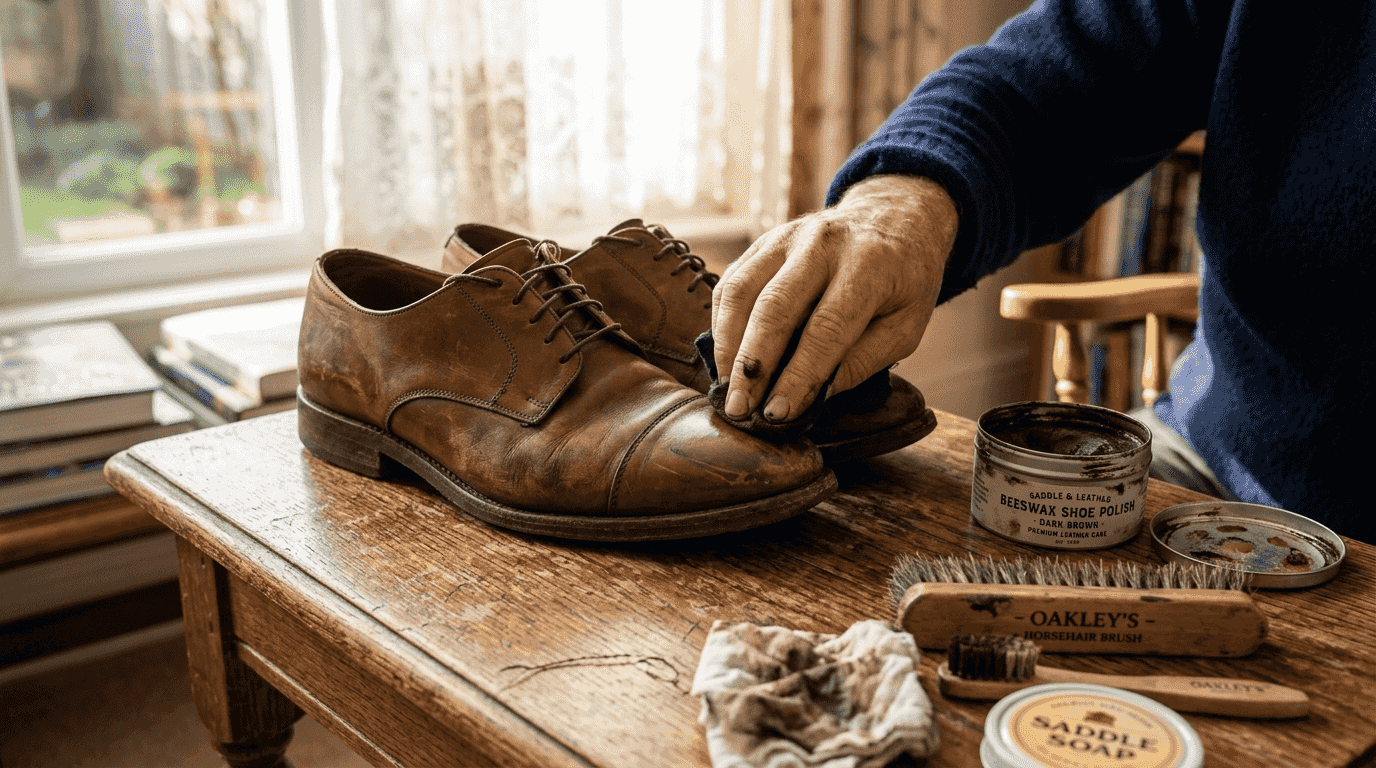
Your complete care arsenal should include both neutral and colored cremes. Neutral creme hydrates leather without altering its color, making it ideal for regular conditioning between polishing sessions. Colored cremes restore faded areas and cover minor scuffs while providing the same nourishing benefits. Match the creme color to your shoe or go slightly lighter, never darker.
Pro Tip: Keep separate brushes for different shoe colors to prevent color transfer. Label each brush and store them in a dedicated shoe care box to maintain organization and prevent contamination.
Comparing essential care products:
| Product Type | Primary Function | Application Frequency | Quality Indicators |
|---|---|---|---|
| Cedar Shoe Trees | Shape retention, moisture control | After every wear | Solid cedar, proper size fit |
| Horsehair Brush | Dust removal, polish buffing | Before and after care | Dense natural bristles |
| Leather Conditioner | Hydration, flexibility | Every 3-6 weeks | Natural oils, no silicone |
| Beeswax Polish | Protection, shine | Monthly | Pure beeswax base |
| Colored Creme | Color restoration | As needed | Pigment quality |
Complete toolkit components:
- Soft horsehair brush for gentle cleaning and final buffing
- Stiff brush for applying polish and working it into leather grain
- Lint-free cotton cloths for applying conditioner and creme
- Chamois or microfiber cloth for final shine buffing
- Edge dressing for sole edges and heels
- Leather Renovateur for deep conditioning
- Neutral and color-matched cremes
- Quality beeswax polish
- Cedar shoe trees sized specifically for your shoes
Investing in proper care products protects your footwear investment far more effectively than attempting shortcuts with household items or cheap alternatives. The difference between premium and budget products becomes evident after several applications, with quality items enhancing leather character while inferior products cause dullness and damage. Consider care products as insurance for shoes that likely cost several hundred dollars or more.
Exploring burnishing techniques adds another dimension to shoe care, creating distinctive color variations and visual depth that enhance your shoes’ unique character.
Equipped with the right tools and products, you can now follow proper cleaning, conditioning, and polishing steps.
Step-by-step shoe care routine for businessmen
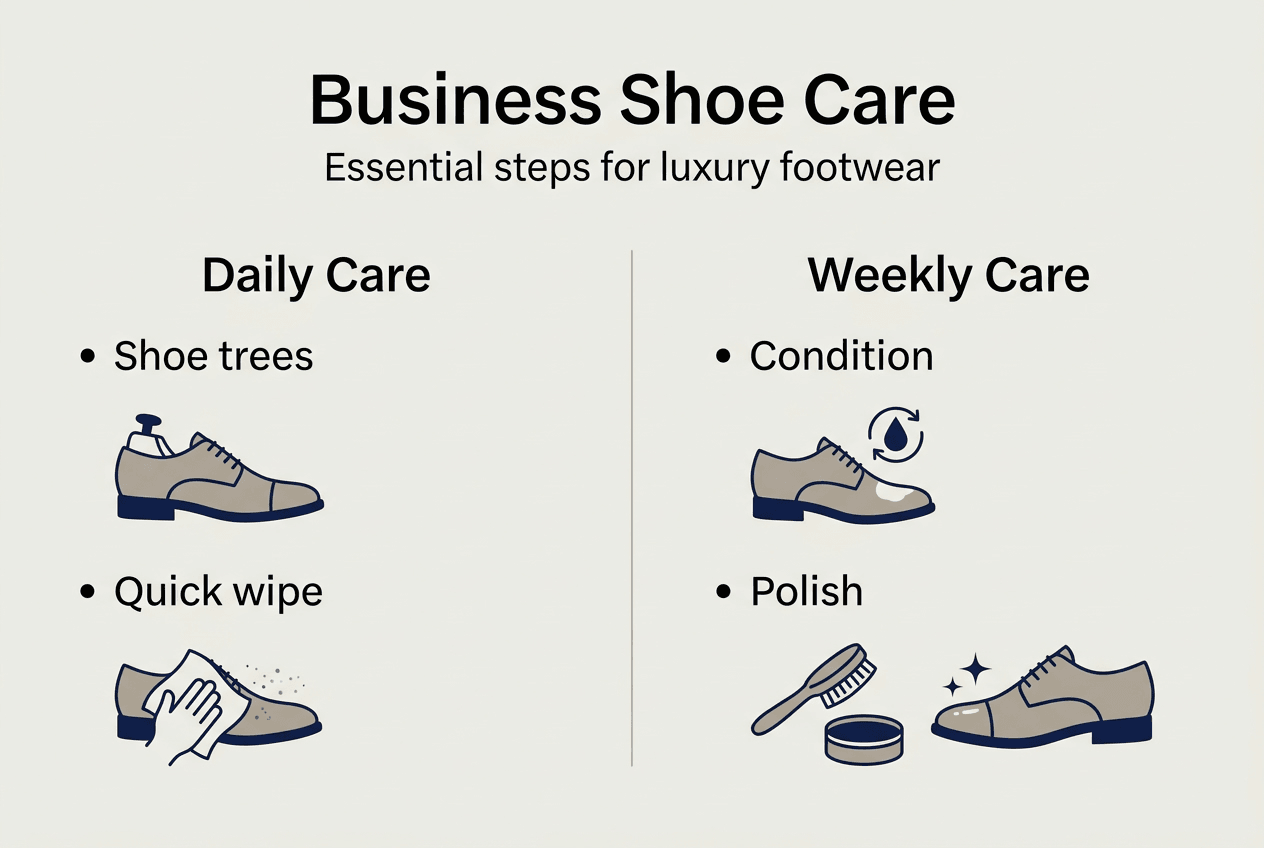
Establishing a consistent care routine transforms shoe maintenance from an overwhelming chore into a straightforward process that preserves your investment. Proper cleaning and conditioning can extend your shoes’ lifespan by up to 50%, making the time investment remarkably cost-effective. Dedicate 45 to 60 minutes for a complete care session, ideally on a weekend when you can work without rushing.
Complete care process:
- Remove laces completely and set aside for separate cleaning or replacement
- Insert shoe trees to maintain shape and provide working tension
- Brush away surface dirt and dust using gentle circular motions with a horsehair brush
- Wipe leather with a slightly damp cloth to remove embedded grime, then let dry for 10 minutes
- Apply leather conditioner or Renovateur using a clean cloth, working in small circular motions
- Allow conditioner to absorb for 15-20 minutes while leather darkens temporarily
- Apply colored creme to restore tone and cover minor scuffs, focusing on worn areas
- Let creme dry for 10 minutes until the leather returns to its normal appearance
- Apply thin layer of beeswax polish using a stiff brush or cloth, covering entire surface
- Allow polish to dry and haze over for 10-15 minutes
- Buff vigorously with a horsehair brush to bring up shine and remove excess polish
- Final buff with a soft cloth or chamois for mirror-like finish on toe caps
Pro Tip: Work in a cool, shaded area away from direct sunlight or heat sources. Excessive heat causes polish to dry too quickly, preventing proper absorption and bonding with the leather surface.
“A proper polish takes time and patience. Rushing the process or skipping steps compromises results and can actually harm the leather. Each step serves a specific purpose in cleaning, nourishing, and protecting your investment.”
Daily maintenance practices preserve your care efforts between deep cleaning sessions. Insert shoe trees immediately after removing shoes to prevent creasing and leather rot. This single habit provides more long-term benefit than any other care practice. Let shoes rest at least 24 hours between wears, allowing moisture to fully evaporate and leather fibers to recover their shape.
Brush your shoes before each wear to remove dust and restore surface luster. This 30-second habit prevents dirt from grinding into the leather grain during wear. Wipe shoes with a damp cloth after wearing in rain or snow, then stuff with newspaper to absorb interior moisture before inserting shoe trees.
Storage requirements:
- Keep shoes in a cool, dry location with good air circulation
- Avoid plastic containers that trap moisture and promote mold growth
- Use breathable cotton shoe bags for dust protection during extended storage
- Store away from direct sunlight, which fades color and dries leather
- Maintain distance from heat sources like radiators or heating vents
- Keep shoes off the floor in humid environments to prevent moisture absorption
Regularly inspect soles for wear patterns, paying attention to heel wear and forefoot thinning. Plan for resoling when you notice uneven wear or when sole thickness decreases noticeably. Proactive resoling prevents damage to the welt and upper leather, preserving your shoes’ structural integrity. Understanding custom luxury shoe crafting principles helps you appreciate the craftsmanship you’re protecting through proper care.
After mastering the routine, learning how to spot issues early and troubleshooting common mistakes ensures maximum shoe lifespan.
Troubleshooting and common mistakes to avoid in shoe care
Even well-intentioned care routines can harm shoes when common mistakes go unrecognized. Neglecting regular conditioning leads to dryness and cracking, resulting in costly replacements that proper maintenance would have prevented. Leather is skin and requires consistent moisture replenishment, especially in dry climates or heated indoor environments. Skipping conditioning sessions to save time ultimately costs far more in premature shoe replacement.
Cheap polishes containing artificial additives and harsh chemicals damage leather over time despite initially appearing to work fine. These products create a plastic-like coating that prevents leather from breathing, trapping moisture inside and causing deterioration from within. The short-term convenience of quick-shine products never justifies the long-term damage they inflict on expensive footwear.
Common storage mistakes:
- Keeping shoes in hot attics or car trunks causes leather to dry out and crack
- Storing in damp basements promotes mold growth and unpleasant odors
- Using plastic bags or containers traps moisture and prevents air circulation
- Placing shoes in direct sunlight fades color and weakens leather fibers
- Storing without shoe trees allows permanent creasing and shape distortion
Pro Tip: If you notice white spots or hazy residue after polishing, you’ve applied too much product. Remove excess with a clean cloth dampened with leather cleaner, then reapply polish in thinner layers.
Failing to monitor sole wear leads to damage that extends beyond the sole itself, potentially compromising the welt and requiring expensive reconstruction. Regular inspection helps you catch wear patterns early when simple resoling suffices. Once wear penetrates through to the welt or cork layer, repair costs multiply significantly.
Addressing specific problems:
- Salt stains: Mix equal parts white vinegar and water, apply with cloth, let dry, then condition immediately
- Water spots: Apply leather conditioner to entire shoe to even out moisture absorption and color
- Scuff marks: Use colored creme matching your shoe color, applied in thin layers until scuff disappears
- Loose grain: Indicates poor quality leather or excessive moisture exposure; cannot be fully corrected but conditioning minimizes appearance
- Cracking: Apply heavy conditioning treatment, but understand that severe cracks are permanent damage
“Prevention costs pennies while repairs cost dollars. The few minutes spent on daily maintenance and regular deep cleaning prevent the majority of serious shoe problems. Most damage results from neglect rather than wear.”
Recognizing when professional help becomes necessary saves you from attempting repairs beyond your skill level. Cobbler services include sole replacement, heel repair, stitching restoration, and structural corrections that require specialized equipment. Establish a relationship with a quality cobbler who understands Goodyear welt construction and uses appropriate materials.
Understanding the benefits of handcrafted shoes reinforces why proper care matters so much. These shoes represent superior craftsmanship that deserves maintenance matching their quality.
With these troubleshooting tips, you’ll maximize shoe longevity and appearance, leading to lasting professional impressions.
Enhance your shoe care routine with MySartorial leather goods
Maintaining luxury footwear requires products that match the quality of your shoes themselves. MySartorial offers carefully curated leather goods and care essentials designed specifically for handcrafted European footwear. From premium beeswax polishes to perfectly fitted cedar shoe trees, each product supports the care practices outlined in this guide.
Explore the leather works collection to discover care kits tailored for business professionals who demand the best for their footwear investments. Quality care products protect your shoes’ longevity while enhancing the natural character that makes handcrafted leather special. Investing in proper care tools today prevents costly replacements tomorrow.
Frequently asked questions
How often should I condition my luxury leather shoes?
Condition leather shoes every three to six weeks depending on wear frequency and climate conditions. Shoes worn daily in dry environments need conditioning every three weeks, while occasional-wear shoes in humid climates can extend to six weeks. Watch for signs like dullness or stiffness indicating the leather needs moisture. Regular conditioning prevents dryness and significantly extends shoe lifespan while maintaining suppleness.
Are Goodyear welted shoes worth the higher maintenance?
Yes, their durable construction and multiple resoling capabilities justify maintenance efforts and initial costs. Goodyear welted shoes last 10 to 20 years with proper care, offering superior cost per wear despite higher upfront prices. The ability to resole multiple times means you’re essentially buying one pair of shoes for life rather than replacing cheaper shoes every few years. Proper maintenance maximizes their exceptional long-term value.
What is the best way to store my shoes when not in use?
Use cedar shoe trees and breathable cotton shoe bags or boxes in well-ventilated areas away from temperature extremes. Store shoes in cool, dry places with good air circulation, avoiding direct sunlight and heat sources that damage leather. Never use plastic containers that trap moisture and promote mold growth. Proper storage between wears allows leather to fully dry and recover, preventing premature deterioration.
How can I tell when my shoes need resoling?
Signs include uneven wear patterns, visible holes, thinning that reveals lighter colored material, or discomfort while walking. Inspect soles regularly for excessive wear, especially at heel and ball of foot where pressure concentrates. Resoling typically occurs every two to five years depending on usage frequency and walking surfaces. Proactive resoling before damage reaches the welt prevents costly repairs and extends shoe lifespan significantly.