

Types of dress shoes for consultants: stylish options for 2026
Choosing the right dress shoes as a consultant means finding footwear that projects professionalism while reflecting your personal brand. Your shoes communicate credibility before you speak, making selection crucial. Consultants must balance professionalism, comfort, and style in their dress shoe choices. This guide walks you through the main dress shoe types suited for consulting work in 2026, covering Oxfords, Derbies, monk straps, and loafers. You’ll learn key differences, discover how materials and construction affect quality, and gain practical frameworks for selecting shoes that fit your consulting role and workplace culture.
Table of Contents
- How To Select The Right Dress Shoes: Key Criteria For Consultants
- Types Of Dress Shoes For Consultants: Classic And Popular Options
- Comparing Dress Shoe Features: Materials, Construction, And Fit
- Choosing The Right Dress Shoes For Your Consulting Role And Style
- Frequently Asked Questions About Dress Shoes For Consultants
Key takeaways
| Point | Details |
|---|---|
| Major shoe types | Oxfords, Derbies, loafers, and monk straps each offer distinct formality levels and comfort profiles for consultants |
| Selection criteria | Evaluate fit, material quality, construction method, and formality to match your workplace needs |
| Custom options | Handcrafted and personalized shoes enhance comfort and project a refined professional image |
| Maintenance matters | Regular care and professional repairs extend shoe life and preserve appearance |
How to select the right dress shoes: key criteria for consultants
Before diving into specific shoe types, understand the foundational criteria that separate exceptional dress shoes from mediocre ones. Your work environment dictates formality expectations. Client-facing roles in finance or law demand higher formality than internal strategy work. Assess whether your typical day involves boardroom presentations or collaborative workshops.
Comfort becomes non-negotiable when you spend eight to twelve hours on your feet. Look for adequate cushioning, proper arch support, and breathable materials. A dress shoe comfort guide reveals that poorly fitted shoes reduce focus and project discomfort to clients.
Material choice dramatically impacts both appearance and longevity. Full-grain leather develops character over time while maintaining structural integrity. Cheaper corrected-grain leather cracks and loses shape within months. Construction method matters equally. Goodyear welt construction allows resoling, transforming a $400 investment into years of use rather than a disposable purchase.
Color and style should complement rather than dominate your professional presence. Black and dark brown remain versatile foundations. Oxblood or tan work for less formal settings. Your shoes should enhance your overall look without demanding attention.
Pro Tip: Measure your feet professionally every two years, as foot dimensions change with age and activity levels, ensuring optimal fit.
Key selection factors include:
- Workplace dress code alignment and client expectations
- Daily comfort requirements based on hours standing or walking
- Material durability for long-term value
- Construction quality affecting repairability
- Color versatility across your wardrobe
Types of dress shoes for consultants: classic and popular options
Four primary dress shoe types dominate professional consulting wardrobes, each offering distinct advantages. Understanding their characteristics helps you build a versatile rotation.
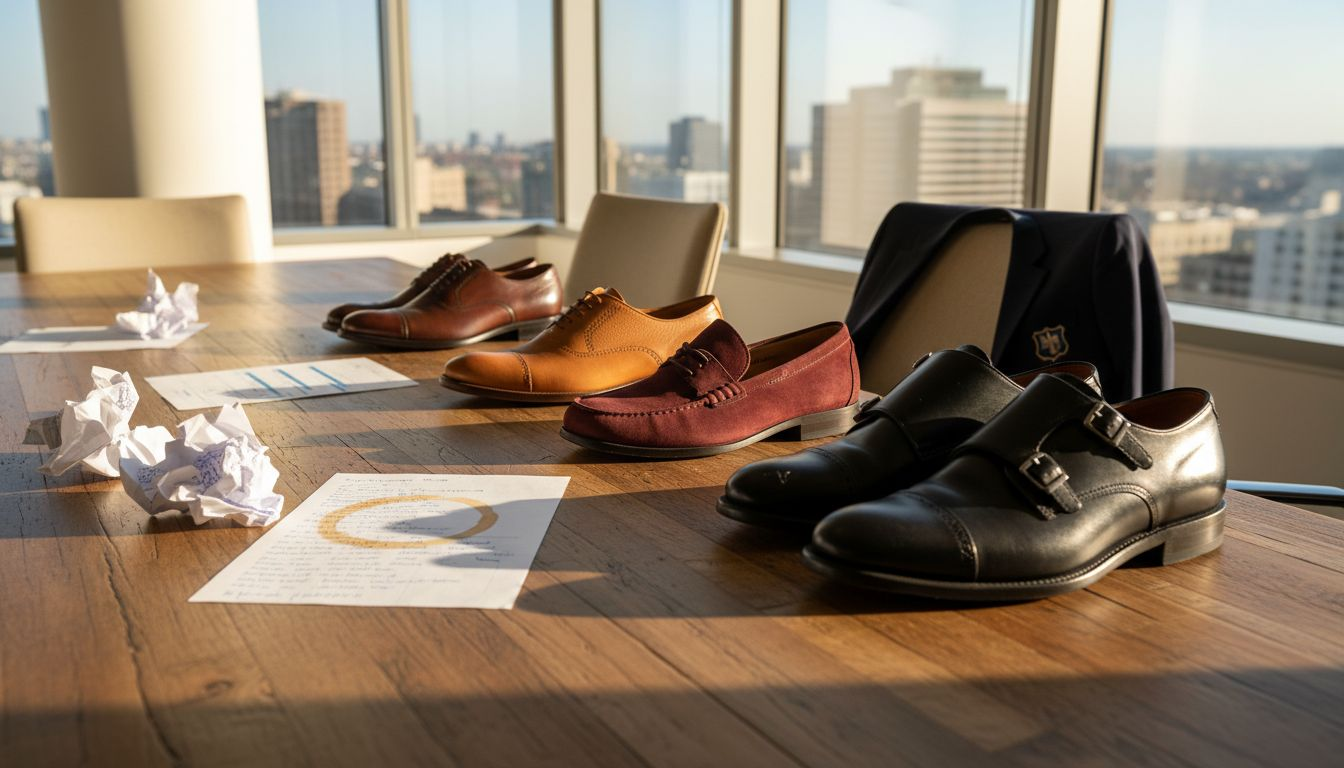
Oxfords represent the pinnacle of formal dress shoes. Their closed-lacing system, where eyelets sit under the vamp, creates a sleek silhouette perfect for high-stakes client meetings and formal presentations. Cap-toe Oxfords add subtle detail without sacrificing formality. Plain-toe versions offer minimalist elegance. Oxfords and Derbies provide classic professional style with distinct lace structures favored in business settings.
Derbies feature open-lacing construction, with eyelets stitched on top of the vamp. This design provides slightly more room across the instep, enhancing comfort for wider feet or longer wear periods. While marginally less formal than Oxfords, Derbies remain entirely appropriate for business settings. Their versatility makes them excellent daily drivers.
Monk straps replace laces with one or two buckle closures, offering distinctive style while maintaining professionalism. Single monks present cleaner lines, while double monks make bolder statements. They bridge formal and business casual exceptionally well. Conservative industries may view them as too fashion-forward, so assess your workplace culture carefully.
Loafers deliver slip-on convenience without sacrificing refinement. Penny loafers and tassel loafers suit business casual environments perfectly. Their ease makes them ideal for frequent travelers navigating airport security. However, they rank lowest in formality among these four types, making them less suitable for traditional corporate settings.
Pro Tip: Own at least two pairs and rotate daily, allowing leather to dry completely between wears, which doubles shoe lifespan.
Each type serves specific scenarios:
- Oxfords for formal meetings, presentations, and conservative clients
- Derbies for all-day comfort in standard business settings
- Monk straps for modern offices and creative consulting roles
- Loafers for business casual days and extensive travel schedules
Explore luxury formal shoes overview and leather craftsmanship details to understand quality markers in construction.
Comparing dress shoe features: materials, construction, and fit
Material quality separates investment pieces from disposable footwear. Full-grain leather, the outermost hide layer, retains natural grain patterns and develops rich patina over years. It breathes better than synthetic materials, reducing moisture and odor. Top-grain leather, sanded to remove imperfections, offers uniform appearance at lower cost but lacks full-grain’s character development.
Construction method determines longevity and repairability. Goodyear welt construction enhances shoe durability and allows resoling for extended life. This process stitches the upper, insole, and welt together, then attaches the outsole to the welt. Blake stitch construction creates sleeker profiles but limits resoling options. Cemented construction glues soles directly to uppers, offering lowest cost but essentially disposable shoes.
Last shape, the foot-shaped form around which shoes are built, profoundly affects fit and comfort. European lasts tend toward narrower heels and sleeker profiles. American lasts accommodate wider feet with more generous toe boxes. Understanding your foot shape helps you target appropriate brands and styles.
| Feature | Premium Option | Standard Option | Impact on Value | | — | — | — | | Leather Type | Full-grain | Top-grain or corrected | Patina development, breathability, longevity | | Construction | Goodyear welt | Blake stitch or cemented | Resoling capability, water resistance, lifespan | | Last Shape | Custom or semi-custom | Standard width options | All-day comfort, reduced foot fatigue | | Sole Material | Leather with rubber toplift | Full rubber | Formality, grip, replaceability |
Proper fit eliminates the break-in pain many associate with dress shoes. Your heel should sit snugly without slipping. Toes need wiggle room without excess space. The widest part of your foot should align with the widest part of the shoe. Quality retailers offer fitting expertise that prevents costly mistakes.
Invest in handcrafted shoe benefits that prioritize these construction elements.
Key comparison factors:
- Leather grade affects appearance evolution and durability
- Construction method determines repairability and investment value
- Last shape impacts day-long comfort and foot health
- Sole composition balances formality with practical traction
Choosing the right dress shoes for your consulting role and style
Your specific consulting context should drive shoe selection. Strategy consultants working with C-suite executives need different footwear than IT consultants implementing software solutions. Assess your typical client interactions. Do you present to boards or collaborate with middle management? Your shoe formality should match or slightly exceed client expectations.
Personal brand alignment matters as much as workplace appropriateness. Classic professionals gravitate toward timeless Oxfords in black or dark brown. Modern consultants might choose sleek Derbies with subtle broguing. Bold personalities can express individuality through monk straps or distinctive patinas, provided their industry accepts such choices. Selecting shoes that fit your specific consulting environment boosts confidence and reinforces professionalism.
Comfort requirements vary by role. If you conduct site visits or walk between meetings, prioritize cushioning and flexible soles. Desk-based consultants can emphasize aesthetics slightly more. However, even minimal movement accumulates over long days, making comfort universally important.
Versatility maximizes wardrobe value. Dark brown Derbies transition seamlessly from navy suits to gray trousers to business casual khakis. Black Oxfords work with charcoal and black suits but clash with brown tones. Build your collection strategically, starting with versatile foundations before adding specialized options.
Follow this decision framework:
- Identify your workplace formality level and dominant client industries
- Assess your daily activity level and time spent standing or walking
- Define your personal style within professional boundaries
- Determine color versatility needs based on your existing wardrobe
- Set a budget that reflects cost per wear rather than upfront price
- Prioritize construction quality for long-term value
- Test fit thoroughly, walking on hard surfaces before purchasing
Explore customizing formal footwear guide for personalization options that align shoes with your unique needs.
Your shoes represent a visible commitment to professionalism. Selecting thoughtfully ensures they enhance rather than undermine your consulting presence.
Upgrade your professional wardrobe with MySartorial leather goods
Your dress shoes deserve equally refined accessories to complete your professional look. MySartorial offers expertly crafted leather goods that complement the shoe styles discussed throughout this guide. Our belts feature the same premium full-grain leather and meticulous construction as our footwear, ensuring color matching and quality consistency across your wardrobe.
Explore our premium leather goods and belts collection, where each piece reflects European craftsmanship traditions. From classic dress belts to sophisticated small leather goods, we provide the finishing touches that elevate consulting professionals from well-dressed to impeccably presented. Visit our leather craftsmanship details page to understand the artisan techniques behind every MySartorial product. When your accessories match your shoes in quality and attention to detail, clients notice the cohesive professionalism.
Frequently asked questions about dress shoes for consultants
What is the most versatile dress shoe for consultants?
Dark brown Derbies offer maximum versatility for consultants, working across formal and business casual settings while providing superior comfort for long days. They pair with navy, gray, and earth-tone suits while remaining appropriate for most client interactions.
How do I ensure my dress shoes fit comfortably all day?
Get professionally measured, try shoes late in the day when feet are slightly swollen, and walk on hard surfaces during fitting. Quality shoes should feel comfortable immediately, requiring minimal break-in beyond leather softening.
Can I wear monk straps in conservative business settings?
Monk straps work in most modern business environments but may appear too casual for traditional finance, law, or executive consulting roles. Assess your specific client base and workplace culture before investing in monk straps as primary dress shoes.
How often should I have my dress shoes professionally repaired?
Resole Goodyear welted shoes when you see leather midsole beneath the rubber toplift, typically every 12 to 18 months with regular wear. Polish monthly and condition quarterly to maintain leather health between major repairs.
What colors of dress shoes are best for meetings and presentations?
Black remains safest for formal presentations and conservative clients, while dark brown offers slightly more versatility across suit colors. Oxblood or burgundy work well in creative or modern consulting environments where subtle personality is welcomed.