

What is customized footwear: luxury handcrafted shoes
Most people assume customized footwear means picking a size and maybe a color from a catalog. In reality, truly customized shoes represent a collaboration between master European craftsmen and discerning clients who value personal expression, exceptional fit, and sophisticated design. This article explores what customized footwear actually involves, from the detailed handcrafting process to the tangible benefits for professionals and luxury consumers seeking shoes that perform beautifully in upscale settings. You’ll discover how bespoke and made-to-order approaches differ, why handcrafted construction matters, and how personalized design elevates both comfort and style.
Table of Contents
- Key takeaways
- Understanding customized footwear: definition and luxury craftsmanship
- The customization process: from concept to bespoke handcrafted shoes
- Comparing customized footwear types: bespoke, made-to-order, and personalized
- Benefits of customized handcrafted footwear for professionals and upscale occasions
- Explore luxurious leather goods and bespoke belts at MySartorial
- FAQ
Key Takeaways
| Point | Details |
|---|---|
| Custom collaboration | Customized footwear is a collaborative process between master European craftsmen and clients to tailor fit, materials, and style. |
| Durable resoleable | Goodyear welting and quality construction make the shoes durable and resoleable, turning them into a lasting investment. |
| Material and design options | Material and design options include full grain calfskin, suede, exotic skins such as alligator or ostrich, patina finishes, and varied sole and stitching choices. |
| From concept to craft | The customization journey spans foot measurement, material selection, design specification, and handcrafting to ensure precise fit and refined aesthetics. |
Understanding customized footwear: definition and luxury craftsmanship
Customized footwear means more than just size adjustments, it’s about creating shoes tailored to personal style, foot anatomy, and desired materials. Unlike ready-to-wear shoes manufactured in standard sizes, customized footwear acknowledges that every foot has unique contours, pressure points, and proportions. Master shoemakers use these measurements alongside your aesthetic preferences to build shoes that fit like a second skin while expressing your individual taste.
European craftsmen bring centuries of refined techniques to this process. They select premium leathers, construct supportive insoles, and employ methods like Goodyear welting that allow shoes to be resoled multiple times over decades of wear. This level of attention transforms footwear from a disposable commodity into a lasting investment. The result is shoes that mold to your gait, support your arches precisely, and develop character through years of use rather than deteriorating.
Luxury customization offers extensive material and design choices:
- Full-grain calfskin, suede, or exotic skins like alligator and ostrich
- Patina finishes that create depth and visual interest
- Sole materials ranging from leather to rubber, chosen for your lifestyle
- Stitching colors, lace styles, and hardware details
- Last shapes that accommodate wide feet, high arches, or specific orthopedic needs
This combination of precise fit engineering and aesthetic personalization distinguishes true custom luxury shoe crafting from simple size selection. You’re not just buying footwear. You’re commissioning a wearable expression of your standards and style that performs flawlessly whether you’re presenting to executives or attending a gallery opening.
The customization process: from concept to bespoke handcrafted shoes
The customization journey includes measuring, material selection, design refinement, and handcrafting phases to ensure perfect fit and style. Understanding each stage helps you appreciate the expertise and time invested in your shoes, and prepares you for the collaborative nature of working with a master shoemaker.
The process typically unfolds in these stages:
-
Foot assessment and measurement: A craftsman traces your feet, measures length, width, arch height, and instep. They note asymmetries, bunions, or pressure points that standard shoes ignore.
-
Material consultation: You review leather samples, feeling the suppleness of calfskin versus the texture of suede or the exotic appeal of crocodile. Color swatches help you envision how patina will develop over time.
-
Design specification: Working from style references and your wardrobe needs, you select shoe type (Oxford, Derby, Chelsea boot), toe shape, heel height, and decorative elements like broguing or cap toes.
-
Last creation or selection: For true bespoke, a wooden last is carved to mirror your foot shape. Made-to-order often adapts existing lasts with modifications.
-
Pattern cutting and assembly: Craftsmen cut leather pieces, skive edges for seamless joins, and begin hand-stitching uppers with waxed thread that won’t degrade.
-
Lasting and sole attachment: The upper is stretched over the last and secured. Soles are stitched using Goodyear welt construction, creating a water-resistant bond that enables future resoling.
-
Finishing touches: Edges are burnished, patina is hand-applied in layers, and hardware is attached. The shoes are polished to a deep luster.
-
Fitting and adjustment: You try the completed shoes. Minor tweaks to heel grip or vamp tension are made before final delivery.
This multi-week journey reflects the customizing formal footwear philosophy: precision and artistry cannot be rushed. Each fitting reveals how the shoes interact with your gait, allowing refinements that mass production never accommodates.
Pro Tip: Schedule your initial consultation at least three months before you need the shoes for an important event. This buffer accommodates the 6 to 12 week crafting timeline plus any adjustment fittings, ensuring your footwear is broken in and comfortable when it matters most.
Comparing customized footwear types: bespoke, made-to-order, and personalized
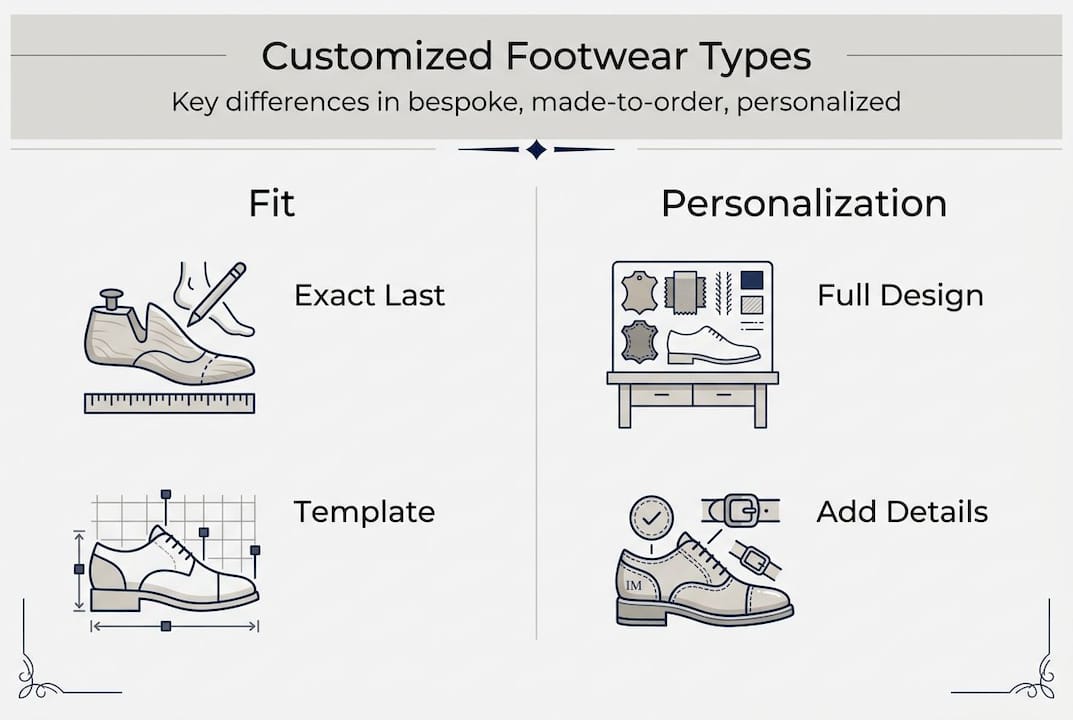
Bespoke shoes are entirely handcrafted to individual specs, while made-to-order often modifies existing templates, and personalized footwear includes design tweaks reflecting personal taste. Understanding these distinctions helps you choose the approach that balances your budget, timeline, and desire for uniqueness.
| Feature | Bespoke | Made-to-Order | Personalized |
|---|---|---|---|
| Customization depth | Complete: last, pattern, materials | Moderate: template adapted | Limited: design options only |
| Fit precision | Exact to your foot anatomy | Very good, adapted from standard lasts | Standard sizes with minor tweaks |
| Timeline | 10-16 weeks | 6-10 weeks | 4-8 weeks |
| Price range | Highest investment | Mid to high | Accessible luxury |
| Uniqueness | Truly one of a kind | Semi-unique | Distinctive but repeatable |
Bespoke footwear represents the pinnacle of customization. A shoemaker creates a unique wooden last carved to replicate your feet, then drafts patterns specifically for that last. Every element from leather selection to stitching placement is determined in consultation with you. The result is unparalleled fit and a shoe that exists nowhere else. This approach suits clients with challenging fit needs or those who view their footwear as an extension of personal identity.
Made-to-order shoes start with proven last shapes and pattern templates, then adapt them based on your measurements and preferences. You might select from 15 last widths, choose leather type and color, specify sole style, and add monogramming. The shoemaker modifies the base design rather than starting from scratch. This delivers excellent fit and substantial personalization at a more accessible price point and faster timeline.
Personalized footwear uses standard sizing but lets you customize aesthetic elements. You pick leather finishes, patina treatments, stitching colors, and hardware from a menu of options. Fit remains based on your size selection rather than individual measurement. This approach works well if you have feet that fit standard sizes comfortably and primarily want design uniqueness.
Key considerations when choosing:
- If you have fit challenges (wide feet, high arches, bunions), bespoke delivers the best comfort and support
- Made-to-order balances customization with reasonable timelines for most luxury consumers
- Personalized options let you express style preferences without the investment of full bespoke
- All three approaches use quality materials and craftsmanship absent from mass production
Pro Tip: Start with made-to-order or personalized shoes from a reputable custom luxury shoe maker to experience handcrafted quality. If the fit and experience exceed your expectations, consider graduating to full bespoke shoe design for your next pair.
Benefits of customized handcrafted footwear for professionals and upscale occasions
Handcrafted shoes often offer three times the durability and enhanced style compared to mass-produced shoes, making them ideal for discerning professionals. Beyond longevity, customized footwear delivers tangible advantages that justify the investment for anyone who values comfort, sophistication, and personal expression.
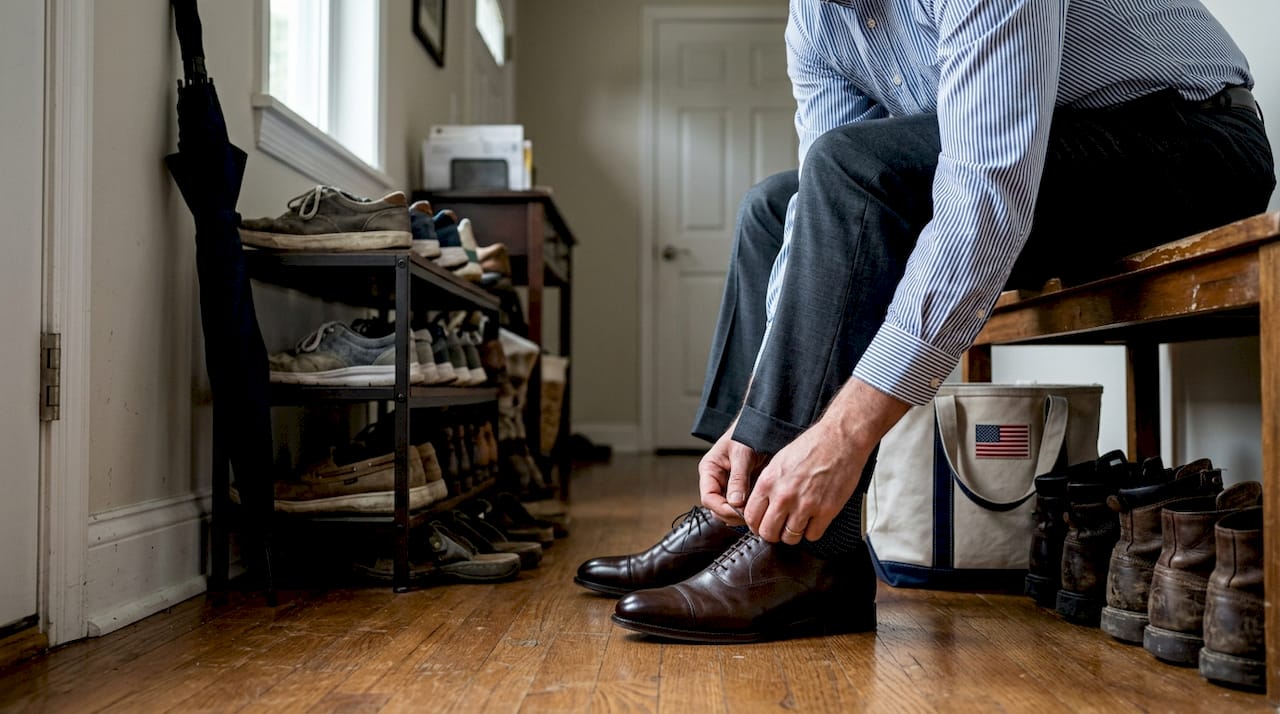
Exceptional fit translates to all-day comfort. Shoes built to your foot shape eliminate the break-in pain and pressure points common with off-the-rack options. Your weight distributes evenly across properly positioned support structures. Arches receive adequate lift without gaps or excessive pressure. This precision means you can navigate a 12-hour workday, from morning presentations through evening networking events, without foot fatigue compromising your performance or presence.
Superior durability reduces long-term costs. Goodyear welted construction allows you to resole shoes multiple times as treads wear down, extending their lifespan to 10 or 20 years with proper care. Premium full-grain leather actually improves with age, developing a rich patina that mass-produced corrected grain can never achieve. When you calculate cost per wear over a decade, handcrafted footwear often proves more economical than replacing cheaper shoes every 18 months.
Sophisticated style communicates attention to detail. Customized shoes signal that you value quality and invest in lasting excellence rather than chasing trends. The clean lines, hand-burnished edges, and perfectly matched patina convey professionalism and discernment. In client meetings and upscale social settings, these subtle markers of taste reinforce your credibility and status.
Additional benefits include:
- Exclusivity: Your shoes are unique or produced in extremely limited quantities, ensuring you won’t encounter identical pairs at important events
- Personal expression: Design choices from leather color to brogueing patterns reflect your aesthetic sensibility
- Orthopedic accommodation: Bespoke construction can integrate supports for plantar fasciitis, Morton’s neuroma, or other conditions without compromising style
- Sustainable luxury: Investing in shoes that last decades reduces consumption and waste compared to disposable fashion
“The difference between customized handcrafted shoes and mass production is like comparing a tailored suit to off-the-rack clothing. Both serve the basic function, but only one truly fits your body, expresses your style, and earns compliments from those who recognize quality.”
For professionals whose credibility depends partly on presentation, and for luxury consumers who appreciate the intersection of artistry and function, customized footwear represents an investment in how you move through the world. Every step reinforces your commitment to excellence.
Explore luxurious leather goods and bespoke belts at MySartorial
Just as customized footwear elevates your professional presence and personal style, the right accessories complete your refined aesthetic. MySartorial extends the same European craftsmanship and attention to detail you expect in handcrafted shoes to a curated collection of luxury leather goods and belts.
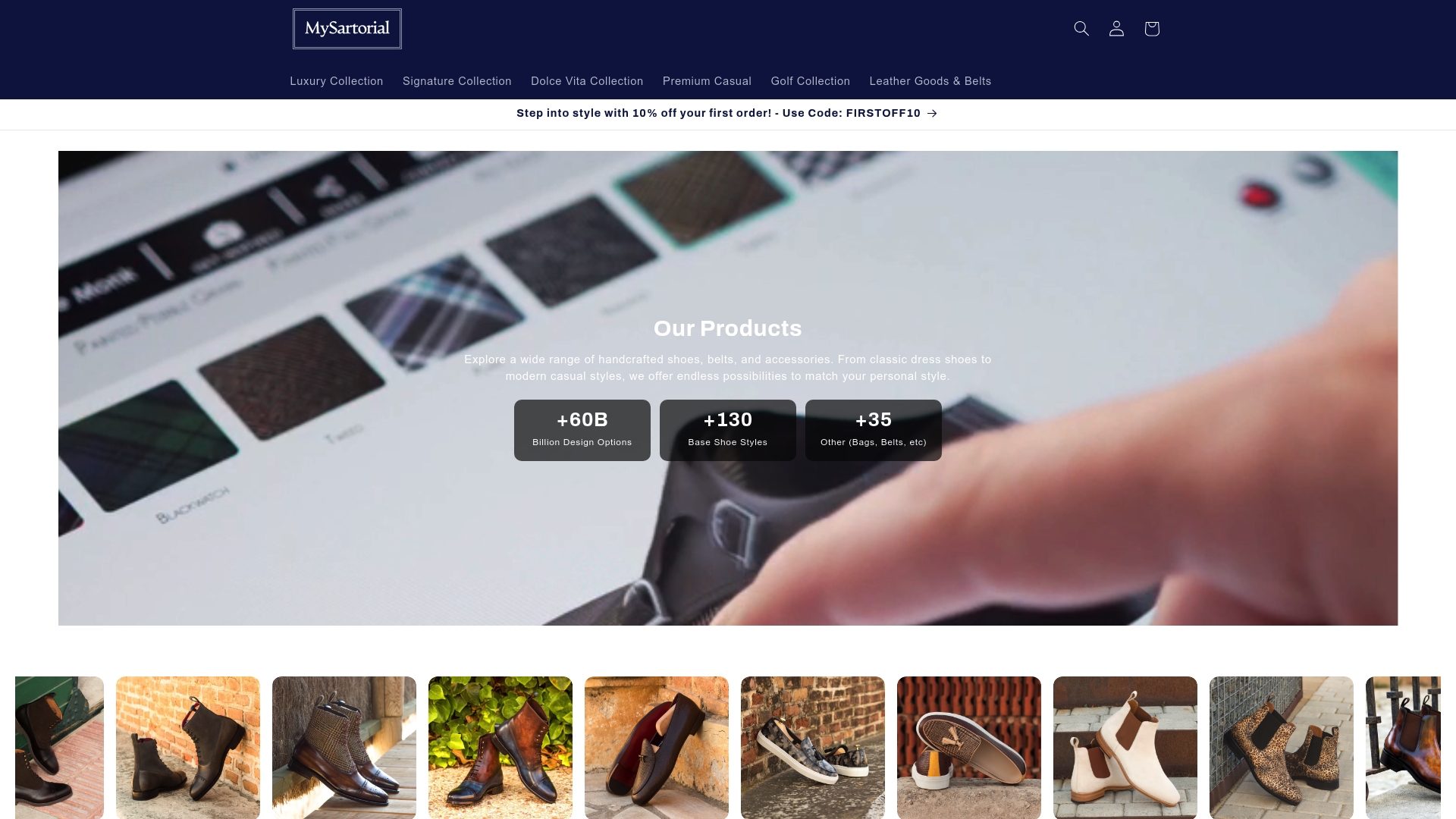
Each piece in the collection reflects the artisanal traditions that make MySartorial footwear exceptional. Full-grain leather belts feature hand-stitched edges and solid brass hardware that develops character over years of wear. Leather accessories are crafted with the precision and quality materials that discerning clients demand. Explore artisanal leather works that complement your customized shoes, creating a cohesive look that demonstrates your commitment to lasting quality and sophisticated style.
FAQ
What is the difference between bespoke and made-to-order shoes?
Bespoke shoes are fully handcrafted from scratch to your exact measurements and design preferences, including a custom wooden last carved specifically for your feet. Made-to-order adapts existing shoe models and lasts with some custom options like leather choice and patina, but involves less complete personalization than bespoke. Bespoke typically costs more and takes longer, while made-to-order balances customization with efficiency.
How long does it take to make customized luxury shoes?
Typically, the process from initial measurement to final delivery takes 6 to 12 weeks, depending on the complexity of customization and the shoemaker’s current workload. Bespoke shoes requiring new last creation sit at the longer end of this range. Multiple fitting appointments may be required for perfect fit and finish, especially for true bespoke work where adjustments ensure the shoes mold precisely to your feet.
Are customized shoes more comfortable than ready-to-wear?
Customized shoes fit your foot shape precisely, reducing pressure points, blisters, and discomfort common with standard sizing. The shoemaker accounts for your arch height, width variations, and any asymmetries between your feet. Handcrafted soles and quality materials further enhance comfort compared to mass-produced shoes, which prioritize manufacturing efficiency over individual fit. Most clients report significantly better all-day wearability.
Can I choose exotic materials for my customized footwear?
Yes, many bespoke and made-to-order shoemakers offer exotic skins like alligator, ostrich, python, or stingray for unique, luxurious finishes. These materials add distinctive texture and visual interest while maintaining durability. Material choice is integral to personalizing style and exclusivity, though exotic options typically increase the overall investment. Your shoemaker can advise on how different skins wear and age based on your intended use.