

What is bespoke shoe design: The ultimate 2026 guide
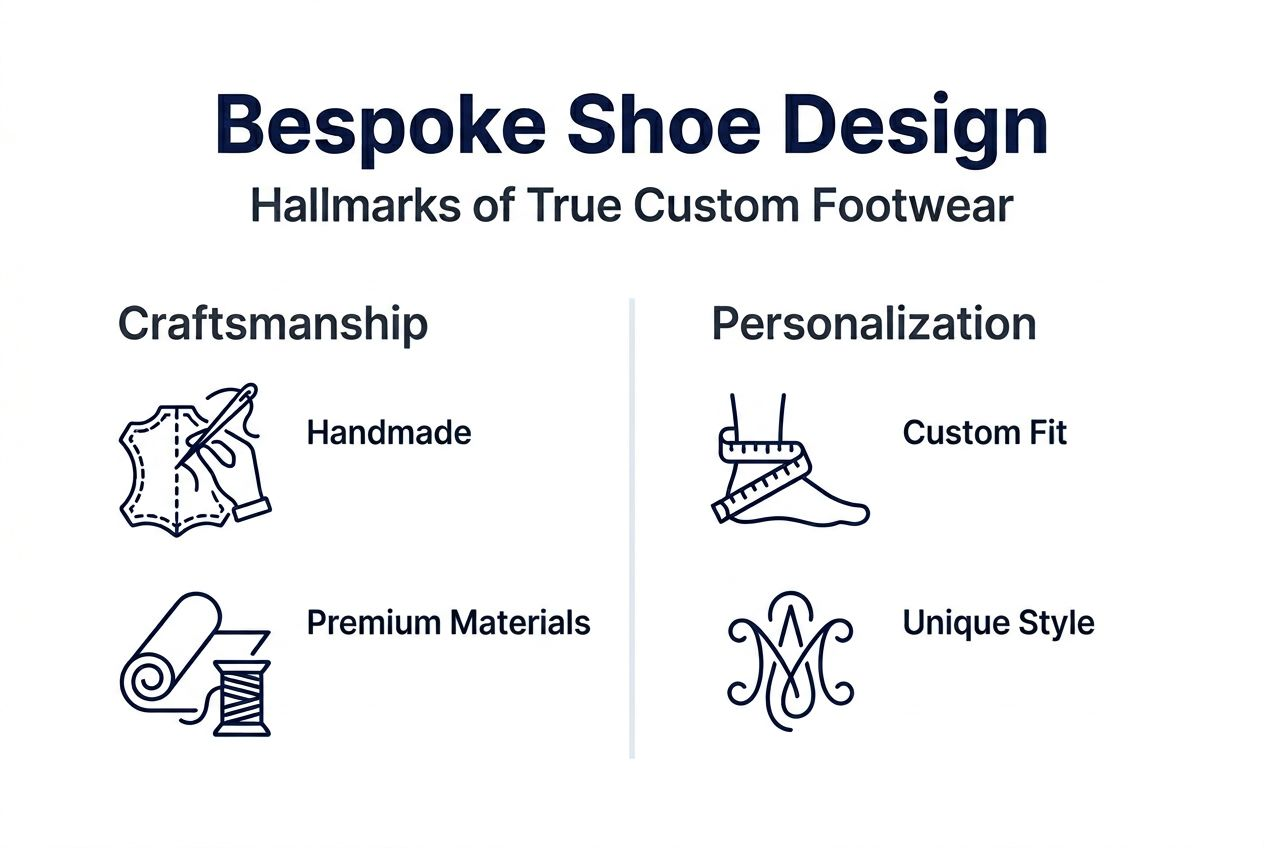
Many confuse bespoke shoes with simple customization or made-to-measure options, missing the true artistry behind this pinnacle of luxury footwear. Bespoke shoe design represents the highest form of personalized craftsmanship, where every aspect is handcrafted from scratch to match your unique foot contours and style preferences. This guide reveals the meticulous process, premium materials, and exceptional value that distinguish authentic bespoke shoes from other footwear categories.
Table of Contents
- Introduction To Bespoke Shoe Design
- The Bespoke Shoe Design Process
- Craftsmanship And Materials In Bespoke Shoes
- Customization Options In Bespoke Footwear
- Bespoke Shoes Vs Other Customization Methods
- Pricing And Value Of Bespoke Shoes
- Common Misconceptions About Bespoke Shoes
- Bespoke Shoemaking Industry And Brands
- Conclusion: Why Choose Bespoke Shoe Design
- Explore Luxury Leather Goods And Bespoke Footwear Accessories
- Frequently Asked Questions
Key takeaways
| Point | Details |
|---|---|
| Definition and heritage | Bespoke shoes are fully handcrafted from scratch using custom lasts created specifically for your feet, rooted in centuries of European shoemaking tradition. |
| Crafting process | The creation involves detailed measurements, multiple fittings over 6-12 months, and extensive client collaboration to achieve perfect fit and style. |
| Premium materials | Artisans use finest full-grain leathers, traditional Goodyear welting, and hand-finishing techniques ensuring decades of durability and timeless elegance. |
| Pricing justified | Costs range from $1,500 to over $10,000, reflecting intensive labor, rare materials, and superior long-term value through repairability. |
| True exclusivity | Unlike made-to-measure or ready-to-wear options, bespoke offers unmatched fit precision, complete customization, and genuine one-of-one construction. |
Introduction to bespoke shoe design
Bespoke shoe design stands as the ultimate expression of luxury footwear craftsmanship. Creating footwear completely from scratch with custom wooden lasts delivers unparalleled fit and comfort that mass production can never replicate. This tradition emerged from European shoemaking guilds centuries ago, where master artisans served royalty and aristocrats with meticulously handcrafted shoes.
The appeal of bespoke shoes extends far beyond mere footwear. For affluent professionals and executives, these shoes represent a convergence of perfect anatomical fit, personal style expression, and enduring quality. Each pair becomes a wearable investment piece that improves with age while reflecting your unique taste and status.
Several key elements distinguish bespoke from other shoe segments:
- Complete handcrafting from raw materials with no pre-existing patterns or molds
- Custom wooden lasts carved specifically to match your foot measurements and contours
- Multiple in-person fittings allowing precise adjustments throughout construction
- Unlimited design options spanning leathers, colors, stitching, and decorative details
- Direct collaboration with master craftsmen who guide every creative decision
Understanding these fundamentals helps you appreciate why discerning individuals view bespoke shoes as the gold standard. The MySartorial blog explores various aspects of luxury footwear craftsmanship, connecting modern style with traditional techniques. Unlike ready-to-wear or even customized mass-market shoes, bespoke creation demands months of skilled labor and produces truly unique footwear tailored exclusively for you.
The bespoke shoe design process
Creating bespoke shoes follows an intricate sequence that blends centuries-old handcraft traditions with modern precision tools. Detailed measurement and custom last creation combined with multiple fittings ensure each shoe conforms perfectly to your feet. This process typically spans 6 to 12 months, though complexity and atelier workload can extend timelines further.
The journey unfolds through carefully orchestrated stages:
- Initial consultation where you discuss style preferences, intended use, and any foot concerns with the master shoemaker
- Comprehensive foot measurement capturing length, width, arch height, instep shape, and even individual toe positioning
- Custom last carving using your measurements to create wooden forms replicating your exact foot contours
- Pattern development and leather selection based on your aesthetic choices and functional requirements
- First fitting with prototype shoes to test fit and make necessary last adjustments
- Hand construction including cutting, stitching, lasting, and sole attachment using traditional techniques
- Second fitting to verify comfort and make final refinements before completion
- Hand finishing with polishing, edge treatments, and any decorative elements like patina or burnishing
Modern bespoke makers increasingly incorporate 3D foot scanning technology alongside traditional measurement methods. This combination captures subtle contours that even experienced eyes might miss while preserving the artisan’s interpretive expertise. The extended timeline reflects not delay but dedication, as each pair receives focused attention at every stage.
Pro Tip: Schedule your initial consultation several months before you actually need the shoes, especially for significant events like weddings or important business occasions, to accommodate the full creation timeline comfortably.
Your active involvement throughout proves critical to success. Regular fittings allow immediate feedback on comfort and appearance, enabling adjustments before construction advances too far. This collaborative approach distinguishes bespoke from passive consumer transactions, transforming shoe creation into a personalized journey. The techniques involved, from handcrafted construction methods to specialized leather finishing like burnishing, require years of training to master.
Craftsmanship and materials in bespoke shoes
The materials and techniques employed in bespoke shoemaking separate these creations from ordinary footwear. Master artisans select only premium full-grain leathers prized for natural grain patterns, suppleness, and aging characteristics. Common choices include fine calfskin for dress shoes, supple suede for casual styles, and occasionally exotic leathers like cordovan or alligator for distinctive luxury.
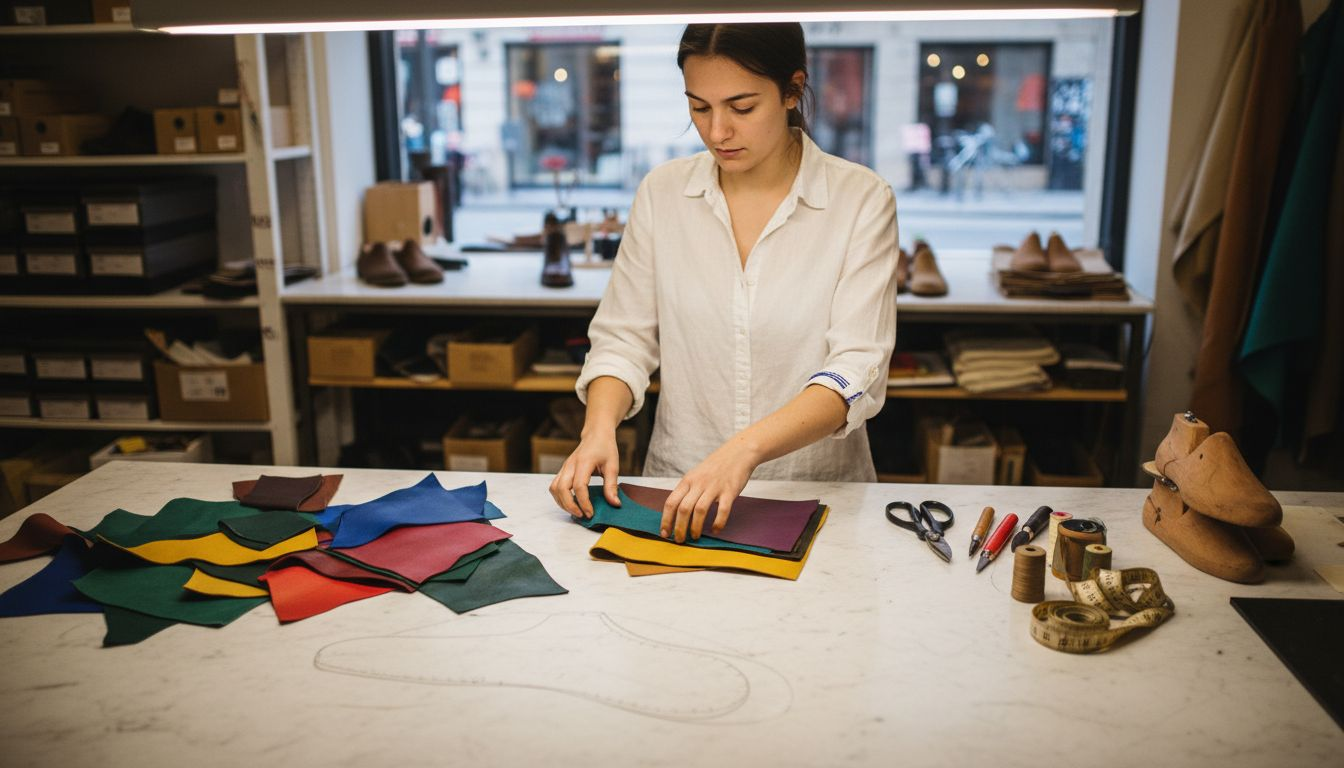
Traditional construction methods like Goodyear welting form the foundation of durability. This technique stitches the upper leather to a welt strip, which then attaches to the sole, creating a robust bond that withstands decades of wear. Unlike cemented construction found in mass-market shoes, Goodyear welting allows complete sole replacement multiple times, effectively making your shoes last a lifetime with proper maintenance.
Key craftsmanship elements include:
- Hand-cut patterns ensuring leather grain orientation maximizes strength and appearance
- Precise hand-stitching using waxed thread for superior durability compared to machine stitching
- Cork footbed molding that conforms increasingly to your foot shape with wear
- Hand-applied edge finishing creating smooth, polished surfaces on sole edges
- Artisan patina and burnishing techniques adding depth, character, and unique color variations
These finishing touches transform functional footwear into wearable art. Patina application involves layering translucent color coats and hand-buffing to create rich, nuanced tones impossible to achieve through factory methods. Burnishing compresses and polishes leather surfaces to achieve glass-like shine on toe caps and heels.
The functional benefits prove equally impressive. Properly maintained bespoke shoes can serve you for 20, 30, or even 40+ years through periodic resoling and refurbishment. This longevity stems from robust construction combined with repairable design, making them genuinely sustainable luxury investments. The MySartorial blog regularly features insights into these traditional techniques and their modern applications.
Customization options in bespoke footwear
Bespoke shoe design offers virtually unlimited personalization possibilities spanning aesthetic and functional dimensions. Your choices shape every visible and hidden element, creating shoes that express your individual style while meeting specific practical needs. This comprehensive customization distinguishes bespoke from limited made-to-measure options.
Leather selection presents the first major decision point. You can choose from hundreds of tannery options including:
- Smooth calfskin in classic colors like black, brown, burgundy, or contemporary shades
- Textured leathers such as pebble grain, Scotch grain, or embossed patterns
- Luxurious suede and nubuck in various nap finishes and color palettes
- Exotic skins like shell cordovan, ostrich, lizard, or crocodile for distinctive luxury
- Combination designs mixing different leathers for color blocking or contrast accents
Beyond leather, you specify decorative details that define the shoe’s character. Broguing patterns range from full wingtip perforations to subtle cap toe medallions. Stitching can be tonal for understated elegance or contrasting for bold visual interest. Even functional elements become style choices, including sole materials like leather versus rubber, edge treatments, and heel heights.
Functional customization addresses your specific wearing conditions and comfort needs. If you require extra arch support, the shoemaker builds it directly into the custom last and insole. Need enhanced traction for wet climates? Specify commando rubber soles with aggressive tread. Prefer lighter weight for extensive walking? Choose thinner leather soles and streamlined construction.
This extensive personalization explains why investing in customized footwear delivers value beyond initial cost. Your collaboration with the artisan ensures every specification serves both aesthetic vision and practical function. The result becomes uniquely yours in ways factory shoes can never match, whether you need luxury formal shoes for professional settings or refined casual styles.
Bespoke shoes vs other customization methods
Understanding distinctions between bespoke, made-to-measure, and ready-to-wear shoes clarifies what you actually receive at different price points. These categories differ fundamentally in construction approach, fit precision, and exclusivity level. Confusion between them leads many to overpay for limited customization or undervalue true bespoke craftsmanship.
Bespoke involves multiple fittings, custom patterns, and hand construction from scratch, while made-to-measure modifies existing lasts with fewer adjustments. Ready-to-wear offers no fit customization beyond standard sizing. These differences create dramatic variations in comfort, durability, and overall quality.
| Feature | Bespoke | Made-to-Measure | Ready-to-Wear |
|---|---|---|---|
| Last creation | Fully custom carved for your feet | Modifies existing standard lasts | Standard factory lasts |
| Fittings required | Multiple (typically 2-4) | One or none | None |
| Construction | Entirely handmade | Combination hand and machine | Fully machine made |
| Pattern | Created specifically for you | Adjusted from standard patterns | Mass-produced patterns |
| Customization scope | Unlimited options | Limited preset choices | None or minimal |
| Timeline | 6-12+ months | 6-12 weeks | Immediate |
| Price range | $1,500-$10,000+ | $400-$1,500 | $100-$800 |
| Exclusivity | One-of-one unique | Limited personalization | Mass market |
The fit precision difference proves most significant for comfort and foot health. Bespoke lasts capture every contour, accommodating bunions, high arches, or asymmetrical feet that standard sizing cannot address. Made-to-measure adjusts width or length but maintains the base last shape, offering improvement over ready-to-wear without bespoke’s anatomical precision.
Pro Tip: If you have relatively standard foot proportions and primarily seek style customization, made-to-measure may satisfy your needs at lower cost; reserve bespoke investment for difficult-to-fit feet or when you want absolute perfection.
Durability and construction quality also differ substantially. Bespoke shoes use superior materials and time-intensive hand techniques throughout. Made-to-measure often combines hand finishing with machine construction to control costs. Ready-to-wear relies entirely on factory production optimized for speed rather than longevity. Understanding MTO versus bespoke differences helps you invest appropriately for your priorities.
Pricing and value of bespoke shoes
Bespoke shoe pricing reflects extraordinary labor intensity, premium materials, and exclusive craftsmanship rather than arbitrary luxury markup. Typical costs range from $1,500 to over $10,000 depending on maker reputation, material choices, and design complexity. Understanding this pricing structure helps you appreciate the genuine value proposition.
Several cost factors determine final pricing:
- Artisan labor spanning 40-80+ hours per pair for measurement, last carving, construction, and finishing
- Premium leather selection from specialized tanneries producing limited quantities of finest hides
- Custom last creation requiring skilled woodworking to replicate your unique foot contours
- Multiple client fittings necessitating appointment time and potential shipping for remote clients
- Maker reputation and waitlist demand, with renowned ateliers commanding premium rates
- Design complexity including intricate broguing, hand-painted patinas, or exotic skin applications
Entry-level bespoke from emerging makers starts around $1,500 to $3,000 for classic designs in standard calfskin. Mid-tier established ateliers typically charge $3,000 to $7,000 for full bespoke service. Elite heritage houses in London, Paris, or Florence command $7,000 to $15,000+ reflecting centuries of reputation and uncompromising quality standards.
Yet bespoke shoes deliver superior long-term value compared to disposable footwear through exceptional durability and repairability. A quality bespoke pair can serve you for 20-40 years with periodic resoling costing $150-$300 every 5-8 years. Compare this to replacing $400 ready-to-wear shoes every 2-3 years, and the lifetime cost equation shifts dramatically.
“True luxury isn’t about spending more, it’s about buying better things that last longer and bring enduring satisfaction rather than fleeting novelty.”
The sustainable investment perspective proves particularly relevant for environmentally conscious consumers. One pair of well-maintained bespoke shoes prevents 10-15 pairs of mass-market shoes from reaching landfills over its lifetime. This durability combined with timeless styling that transcends fashion trends makes bespoke footwear genuinely sustainable luxury.
Common misconceptions about bespoke shoes
Several persistent myths cloud understanding of bespoke shoe design, leading consumers to confuse it with lesser customization options or dismiss it as inaccessible extravagance. Clarifying these misconceptions helps you make informed decisions about footwear investments.
Bespoke means fully hand-made from unique lasts with multiple fittings, not merely decorative customization on factory shoes. This fundamental distinction separates authentic bespoke from marketing claims that dilute the term’s meaning. Many brands now label basic monogramming or color selection as “bespoke” when no custom last creation or hand construction occurs.
Key misconceptions and corrections include:
- Myth: Bespoke just means choosing leather colors and stitching on standard shoe models. Reality: True bespoke involves creating entirely new shoes from scratch using custom lasts carved for your feet.
- Myth: Made-to-measure and bespoke are interchangeable terms. Reality: Made-to-measure modifies existing lasts with limited adjustments; bespoke creates unique lasts with comprehensive customization.
- Myth: Bespoke shoes only suit people with foot problems or unusual sizing. Reality: Anyone valuing perfect fit, superior craftsmanship, and personal style expression benefits from bespoke regardless of foot shape.
- Myth: The high price reflects luxury branding rather than actual value. Reality: Pricing directly correlates with 40-80+ hours of skilled artisan labor plus premium materials and decades of durability.
- Myth: Bespoke shoes are too formal or delicate for regular wear. Reality: Proper construction makes bespoke shoes extremely durable for daily use, with Goodyear welting enabling multiple resoles.
The exclusivity perception also warrants clarification. While bespoke requires significant investment, it’s not reserved exclusively for ultra-wealthy collectors. Many successful professionals commission bespoke shoes as milestone purchases or long-term wardrobe investments, viewing them as wearable art that delivers daily satisfaction for decades.
Understanding these realities helps you evaluate whether bespoke aligns with your priorities. If you value perfect fit, exceptional craftsmanship, complete personalization, and sustainable luxury, bespoke represents logical investment despite higher initial cost. If you primarily seek trendy styles that change seasonally, ready-to-wear likely serves you better.
Bespoke shoemaking industry and brands
The global bespoke shoemaking industry encompasses heritage ateliers with centuries of history alongside innovative contemporary makers bringing fresh perspectives to traditional craft. Leading makers include Gaziano Girling, Bondeno, George Cleverley, Aubercy, and John Lobb, each offering distinct design philosophies while maintaining uncompromising quality standards.
Established heritage houses typically command premium pricing reflecting their reputations and extensive waitlists. London’s Savile Row district hosts several legendary makers serving clients globally. Parisian ateliers bring French elegance and refined aesthetics. Italian shoemakers in Florence and Naples emphasize bold styling and artisanal flair. American makers increasingly blend European techniques with contemporary design sensibilities.
Production timelines vary by atelier but generally span considerable periods:
- Initial consultation and measurement: 1-2 hours
- Last creation and pattern development: 4-8 weeks
- First fitting and adjustments: Scheduled 2-3 months after order
- Construction and hand finishing: 3-6 months
- Final fitting and delivery: 6-12 months total from initial order
- Some prestigious makers: 12-16+ months due to extensive waitlists
Entry pricing for established bespoke makers typically starts around $3,000 to $5,000 for classic designs. Top-tier heritage houses begin at $7,000 to $10,000, with complex designs or exotic materials pushing prices significantly higher. A few ultra-luxury makers charge $15,000+ for their most elaborate creations featuring extensive hand-painting, rare leathers, or extraordinary detail work.
The maker you choose should align with your aesthetic preferences and practical needs. Some specialize in traditional English formality with restrained elegance. Others embrace Italian exuberance with bold last shapes and adventurous color palettes. Research their portfolio, read client testimonials, and ideally visit their atelier to experience their approach before committing to such a significant investment and time commitment.
Conclusion: why choose bespoke shoe design
Bespoke shoe design delivers unmatched benefits for discerning individuals who refuse to compromise on fit, quality, or personal expression. The journey from initial consultation through final delivery transforms footwear acquisition into collaborative artistry, producing shoes that serve you faithfully for decades while reflecting your unique style and values.
The core advantages include:
- Anatomical perfection through custom lasts capturing every contour of your feet for unparalleled comfort
- Complete creative control over materials, colors, styles, and details impossible with mass production
- Superior construction using traditional techniques and premium materials ensuring 20-40+ year lifespan
- Sustainable luxury investment that prevents waste through durability and repairability
- Exclusive ownership of truly one-of-one footwear that no one else possesses
The knowledge you’ve gained empowers confident decision-making about whether bespoke aligns with your priorities and budget. For executives and professionals who spend significant time on their feet, invest in quality wardrobes, and appreciate artisanal craftsmanship, bespoke shoes represent logical indulgence with practical benefits. The perfect fit eliminates foot fatigue. The timeless styling transcends trends. The exceptional durability delivers genuine long-term value.
Whether you commission your first bespoke pair or simply gained deeper appreciation for this rarefied craft, understanding the meticulous process, premium materials, and collaborative nature reveals why bespoke shoe design occupies the pinnacle of luxury footwear. Your feet deserve nothing less than perfection tailored exclusively for you.
Explore luxury leather goods and bespoke footwear accessories
If bespoke shoe design resonates with your appreciation for artisanal quality and personalized luxury, consider how premium accessories complete your refined aesthetic. MySartorial curates exceptional leather goods and belts handcrafted with the same attention to detail that defines bespoke footwear. These pieces complement your shoes while expressing sophisticated personal style.
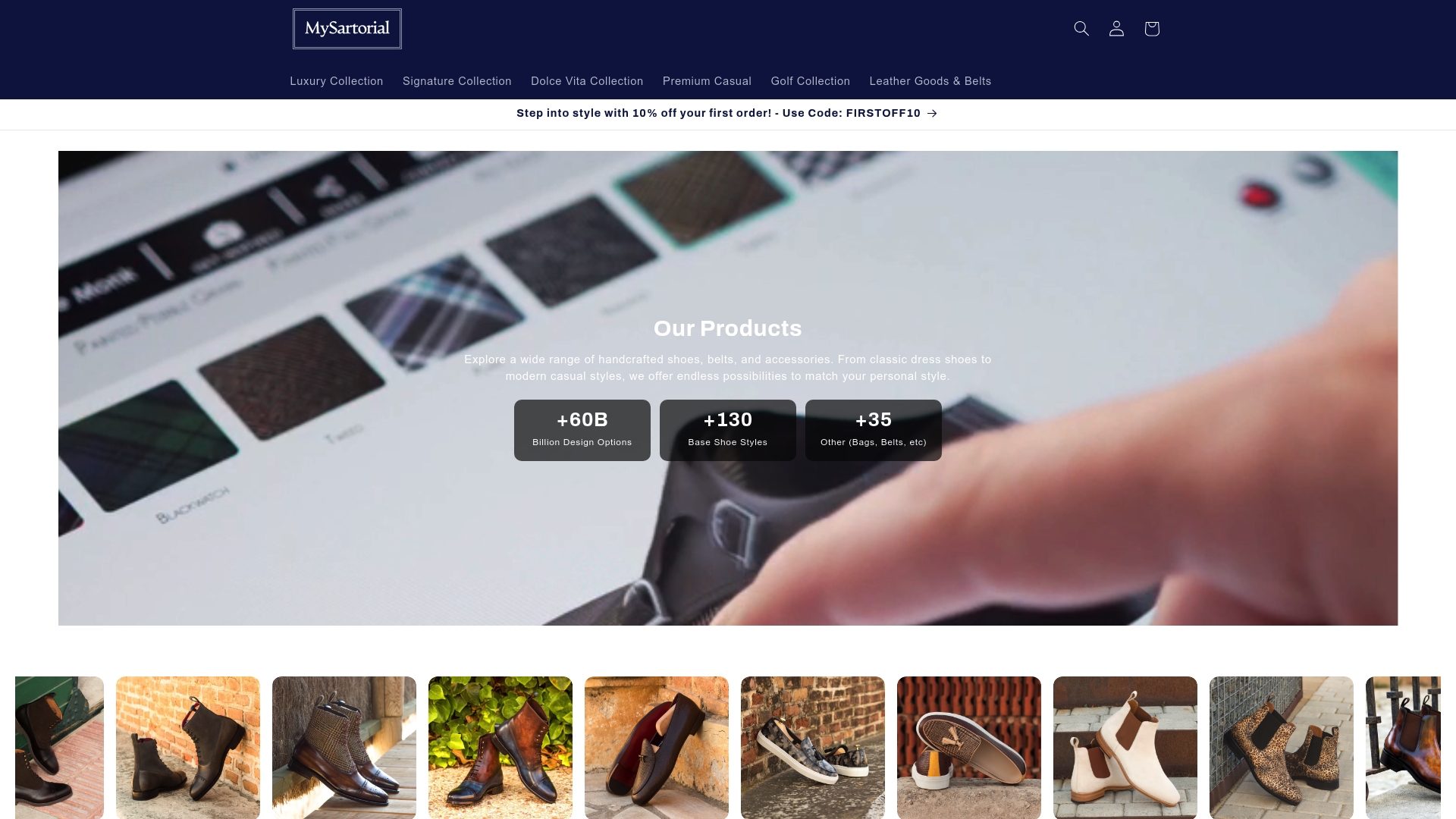
Each accessory reflects European craftsmanship traditions and offers customization options aligning with bespoke values. From supple leather belts that age beautifully to refined small goods showcasing meticulous construction, these items elevate everyday carry into expressions of discerning taste. Explore the leather craftsmanship works collection to discover how artisan-made accessories enhance your wardrobe with timeless quality and personalized character.
Frequently asked questions
What materials are commonly used in bespoke shoe making?
Bespoke shoemakers primarily use premium full-grain calfskin for its durability, suppleness, and beautiful aging characteristics. Additional options include luxurious suede, exotic leathers like shell cordovan or alligator, and durable sole materials ranging from traditional leather to modern rubber compounds. Each material is carefully selected for specific aesthetic and functional properties that suit your intended use and style preferences.
How long does it usually take to make a pair of bespoke shoes?
The typical bespoke shoe creation timeline spans 6 to 12 months from initial consultation through final delivery. This extended period accommodates detailed measurement sessions, custom last carving, multiple fitting appointments for adjustments, and extensive handcrafting stages. Some prestigious ateliers with lengthy waitlists may require 12 to 16 months, though the result justifies the patience through perfect fit and exceptional quality.
Can bespoke shoes be resoled or repaired easily?
Yes, bespoke shoes constructed with Goodyear welting or similar traditional methods can be completely resoled multiple times throughout their lifespan. This construction technique creates a replaceable bond between upper and sole, allowing skilled cobblers to remove worn soles and attach new ones without damaging the shoe body. With proper maintenance including periodic resoling every 5 to 8 years, quality bespoke shoes can serve you for 20 to 40+ years, making them genuinely sustainable luxury investments.
How do bespoke shoes differ from made-to-measure shoes?
Bespoke shoes are entirely handcrafted from scratch using custom lasts carved specifically for your unique foot contours and involve multiple fitting sessions for precise adjustments. Made-to-measure shoes modify existing standard lasts with limited customization and typically require only one fitting or none at all. This fundamental construction difference results in bespoke offering superior fit precision, unlimited design options, and true one-of-one exclusivity compared to made-to-measure’s more standardized approach.