

Handcrafted Footwear: 3X Durability & Unique Style
You’ve probably heard handcrafted shoes are just pricier factory versions. That’s wrong. Handcrafted footwear delivers superior durability through artisan techniques like Goodyear welting, personalized fit from wooden lasts, and materials that age beautifully. This guide explains materials, construction methods, and customization options to help you choose wisely.
Table of Contents
- Introduction To Handcrafted Footwear
- Material Selection And Its Impact
- Artisan Construction Techniques
- Customization And Bespoke Tailoring In Footwear
- Comparison: Handcrafted Vs. Mass-Produced Shoes
- Common Misconceptions About Handcrafted Footwear
- Artisan Workshop Environment And Process
- Conclusion: Why Choose Handcrafted Footwear?
- Discover Your Perfect Pair At MySartorial
- Frequently Asked Questions
Key Takeaways
| Point | Details |
|---|---|
| Premium materials | Full-grain leathers ensure durability and develop rich patina over time. |
| Artisan construction | Goodyear welting allows resoling, extending lifespan three times longer than cemented shoes. |
| Customization options | Personalize leather type, color, stitching, sole, and fit for unique style. |
| Superior repairability | Handcrafted shoes preserve investment value through professional repairs. |
| Common misconceptions | Cost reflects craftsmanship quality, not just branding or factory markup. |
Introduction to Handcrafted Footwear
Handcrafted footwear embodies centuries-old European artisanal shoemaking traditions, where skilled craftsmen prioritize quality over speed. These shoes represent a cultural legacy rooted in Italian shoemaking tradition and meticulous attention to detail. Unlike mass-produced alternatives, handcrafted footwear relies on manual processes that ensure structural integrity and personalized fit.
The distinction between artisan-made and factory shoes centers on three pillars:
- Craftsmanship approach: Skilled artisans hand-select materials and execute each construction step manually, while factories automate assembly lines.
- Material quality: Premium full-grain leathers versus synthetic composites or lower-grade splits common in mass production.
- Longevity focus: Designs emphasize durability and repairability rather than disposable fashion cycles.
For discerning buyers, handcrafted shoes serve as status symbols reflecting refined taste. They communicate an appreciation for heritage, quality, and individuality. You invest in footwear that adapts to your foot’s unique contours, develops character through wear, and lasts decades with proper care. Factory shoes rarely offer these advantages, prioritizing volume and speed over the personalized experience handcrafted footwear provides.
Material Selection and Its Impact
Premium materials form the foundation of handcrafted excellence. Full-grain and top-grain leathers provide exceptional durability and aging characteristics, offering strength, flexibility, and breathability synthetic alternatives can’t match. These natural leathers develop rich patina as they age, creating unique surface textures that tell your shoe’s story.
Sustainable sourcing from trusted European tanneries ensures ecological responsibility and consistent quality. Artisans select hides based on grain tightness, thickness, and natural markings. This careful vetting eliminates defects and guarantees the leather will withstand years of wear. Reputable tanneries use vegetable tanning processes that preserve the hide’s natural structure while minimizing environmental impact.
Material quality directly affects comfort and lifespan:
- Breathability: Natural leather regulates temperature and moisture, reducing foot fatigue during long wear.
- Moldability: Quality leather conforms to your foot shape over time, creating a custom fit impossible with rigid synthetics.
- Resilience: Superior hides resist cracking and maintain structural integrity through resoling cycles.
Compare this to mass-produced shoes using corrected grain or bonded leathers. These materials break down quickly, crack under stress, and can’t be repaired effectively. Burnishing and leather quality techniques enhance depth and character, while leather patina and aging transform shoes into personalized heirlooms. The initial investment in premium materials pays dividends through extended wearability and aesthetic appreciation that grows over decades.
Artisan Construction Techniques
Goodyear welt construction defines handcrafted shoe quality. This double-stitching method allows resoling by attaching the upper to a welt strip, which connects to the sole. When the sole wears down, cobblers replace it without disturbing the upper’s integrity. Cemented shoes glue soles directly to uppers, making them disposable once worn through.
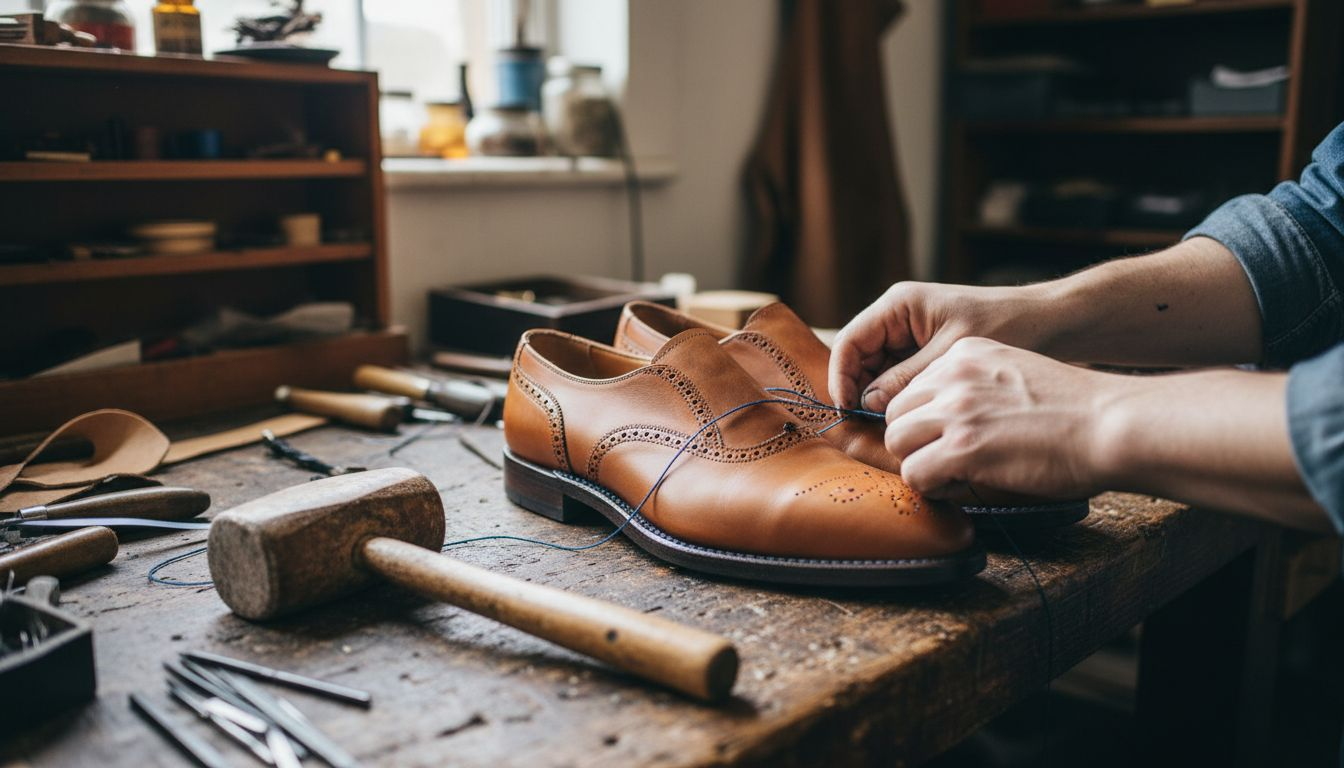
Hand-stitching enhances durability and visual appeal, creating tight, even seams that reinforce structure. Artisans use waxed threads and precise needle angles to lock stitches securely. This manual process takes significantly longer than machine stitching but produces superior strength and aesthetic refinement. Each stitch contributes to the shoe’s architectural integrity.
Wooden lasts improve ergonomic fit by shaping leather around three-dimensional foot forms. Craftsmen stretch dampened leather over these lasts, allowing it to conform to anatomical contours. As the leather dries, it retains this shape, creating a personalized fit that reduces pressure points and foot fatigue. Mass production uses generic lasts optimized for cost, not comfort.
| Feature | Goodyear Welt | Cemented Construction |
|---|---|---|
| Durability | 15-20+ years with care | 2-5 years typical lifespan |
| Repairability | Multiple resoles possible | Disposal after sole wears |
| Comfort | Improves with break-in period | Static fit throughout life |
| Water resistance | Cork layer provides barrier | Glue degrades with moisture |
| Investment value | High long-term cost efficiency | Low due to replacement needs |
Pro Tip: Inspect stitching quality closely when evaluating handcrafted shoes. Tight, evenly spaced stitches with consistent tension signal expert craftsmanship. Irregular spacing or loose threads indicate rushed work that compromises durability.
The Goodyear welt vs Blake stitching debate often confuses buyers. Both are superior to cemented construction, but Goodyear offers better water resistance and durability for harsh conditions. Blake stitching creates sleeker profiles suited to dress shoes but requires specialized equipment for resoling.
Customization and Bespoke Tailoring in Footwear
Bespoke shoes represent the pinnacle of personalization. Craftsmen create patterns from scratch based on precise foot measurements, accommodating unique anatomical features like high arches or bunions. Each shoe is built specifically for you, using custom lasts that capture your foot’s exact dimensions. This process requires multiple fittings and several months to complete.
Custom-made shoes offer extensive personalization using existing lasts modified to your specifications. You select leather type, color, sole material, stitching thread, and decorative details. Customization includes finishes, stitching colors, sole types, and fit adjustments for unique personal style. While not built from ground zero like bespoke, custom shoes deliver significant individualization at lower cost and faster turnaround.
Ready-to-wear handcrafted lines maintain artisanal quality standards but use standardized sizing. These shoes still feature Goodyear welting, premium leathers, and hand-finishing details. They’re excellent options if your feet fit standard measurements and you value craftsmanship over extreme personalization.
Key customizable elements include:
- Leather selection: Choose from calf, cordovan, suede, or exotic skins based on durability needs and aesthetic preferences.
- Color and finish: Specify shade intensity, burnishing effects, and patina treatments that develop over time.
- Sole construction: Select leather, rubber, or combination soles matched to your climate and usage patterns.
- Fit adjustments: Request wider toe boxes, higher insteps, or orthotic accommodations for comfort.
MTO personalized shoes benefits extend beyond aesthetics. Custom fit prevents blisters, reduces joint strain, and improves posture. Your shoes reflect your lifestyle, whether you need formal Oxfords for boardroom presentations or rugged boots for weekend adventures. Explore handcrafted shoe customization insights and customization options in handcrafted shoes to understand the full scope of possibilities.
Comparison: Handcrafted vs. Mass-Produced Shoes
Handcrafted shoes with Goodyear welt construction last three times longer than cemented mass-produced alternatives. This longevity stems from superior materials, construction methods, and repairability. When you factor in replacement costs over a decade, handcrafted footwear often proves more economical despite higher initial prices.
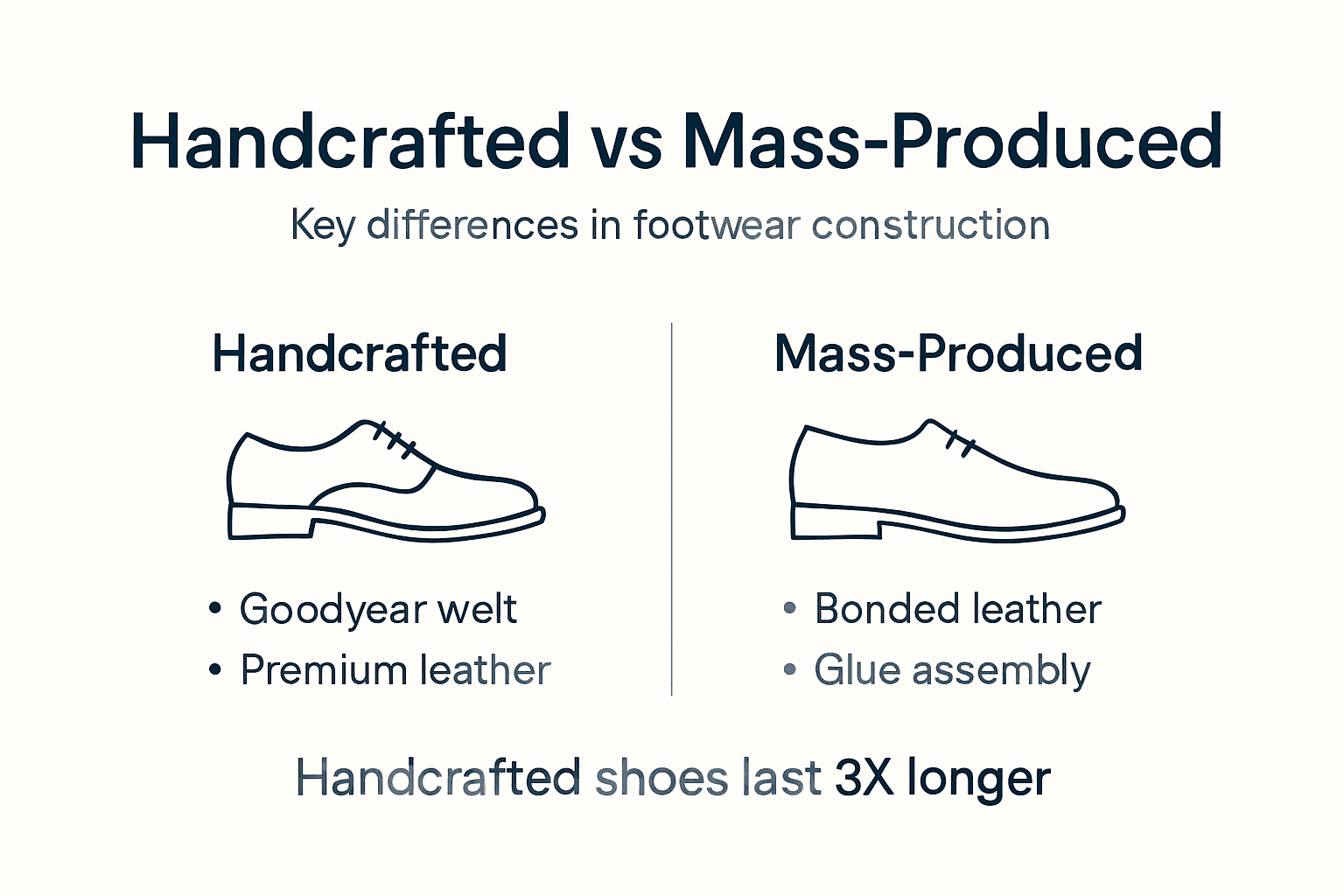
Repairability preserves your investment. Skilled cobblers can replace soles, reattach welts, recondition leather, and rebuild heels on handcrafted shoes. Mass-produced shoes use glued assemblies that fall apart when disassembled. Once the sole wears through or the upper cracks, you discard the entire shoe. This disposable model increases long-term costs and environmental waste.
Mass production prioritizes speed and profit margins. Factories use lower-grade leathers, synthetic linings, and shortcuts like fiberboard shanks instead of steel. Quality control focuses on cosmetic appearance rather than structural integrity. Shoes look acceptable initially but deteriorate rapidly under regular wear.
| Attribute | Handcrafted | Mass-Produced |
|---|---|---|
| Construction method | Goodyear welt or Blake stitch | Cemented or basic stitching |
| Average lifespan | 15-20+ years | 2-5 years |
| Material quality | Full-grain premium leathers | Corrected grain or synthetics |
| Repair potential | Multiple resoles and refurbishments | Limited to cosmetic fixes |
| Cost per year of use | $30-50 annually | $60-100 annually |
| Fit customization | Extensive personalization available | Standard sizing only |
Pro Tip: Calculate cost per wear rather than sticker price. A $600 handcrafted shoe worn 200 times annually for 15 years costs $0.20 per wear. A $150 mass-produced shoe lasting 3 years at the same frequency costs $0.25 per wear, plus replacement hassle.
Understanding handcrafted vs mass-produced shoe differences clarifies why discerning buyers choose artisanal footwear. You’re not paying for branding alone. You’re investing in materials, skills, and construction methods that deliver measurable performance advantages.
Common Misconceptions About Handcrafted Footwear
-
Handcrafted shoes are just expensive factory shoes with better marketing. Reality: Superior materials, artisan techniques, and construction methods provide tangible quality differences. Full-grain leathers, Goodyear welting, and hand-finishing require skilled labor and premium inputs that factory shortcuts can’t replicate. The price reflects real craftsmanship, not inflated branding.
-
Bespoke and handcrafted mean the same thing. Reality: Bespoke refers to fully custom shoes built from scratch using patterns created for your exact foot measurements. Handcrafted is a broader category including bespoke, custom-made (personalized but using modified existing lasts), and ready-to-wear artisan shoes. All bespoke shoes are handcrafted, but not all handcrafted shoes are bespoke.
-
Hand-stitching reduces comfort compared to machine precision. Reality: Proper hand-stitching by skilled artisans creates stronger, more flexible seams than machine stitching. Combined with wooden lasts that shape leather to anatomical contours, hand construction enhances fit and comfort. The break-in period allows leather to mold to your foot, creating personalized support impossible with rigid factory constructions.
Clearing these myths helps you make confident purchasing decisions based on facts rather than assumptions. Handcrafted footwear’s value proposition rests on verifiable quality differences, not subjective marketing claims.
Artisan Workshop Environment and Process
Typical shoemaking workshops organize production into specialized stages. Material selection happens first, where craftsmen inspect leather hides for quality and cut patterns. Cutting requires precision to maximize hide usage while avoiding natural blemishes. Each piece is marked and sorted for its designated shoe component.
Stitching stations feature skilled workers using awls, needles, and waxed threads to assemble uppers. Specialized hand tools enable techniques like saddle stitching, where two needles pass thread through the same hole from opposite directions, creating exceptionally strong seams. This manual process demands years of training to achieve consistent quality.
Lasting benches hold wooden foot forms where dampened leather uppers are stretched and tacked into shape. Artisans apply controlled tension to eliminate wrinkles while preserving the leather’s natural give. As the leather dries, it conforms permanently to the last’s contours. Sole attachment, finishing, and quality inspection complete the process.
Quality control occurs at each stage:
- Pattern cutting: Verify measurements match specifications and grain orientation optimizes strength.
- Stitching: Inspect seam tightness, thread tension, and stitch spacing for uniformity.
- Lasting: Check leather tension, wrinkle elimination, and proper shaping around anatomical features.
- Finishing: Examine edge treatments, polish application, and overall aesthetic refinement.
Pro Tip: Understanding artisan workshops deepens your appreciation for handcrafted shoes. When you know the skill and time invested in each pair, the pricing structure makes sense. You’re paying for mastery that takes decades to develop, not just materials and labor hours.
This environment fosters creativity and attention to detail impossible in assembly line settings. Artisans take pride in their work, signing pieces or maintaining personal quality standards. Each pair reflects the maker’s reputation, creating accountability that drives excellence.
Conclusion: Why Choose Handcrafted Footwear?
Handcrafted footwear delivers unmatched durability through construction methods like Goodyear welting that enable multiple resoles over decades. You gain comfort from premium leathers that breathe naturally and conform to your foot’s unique shape. Customization options let you express personality and status through personalized details impossible with mass production.
Repairability extends shoe lifespan dramatically. Professional cobblers can restore handcrafted shoes to like-new condition multiple times, preserving your investment. This contrasts sharply with disposable factory shoes that end up in landfills after brief service lives. The economic and environmental advantages are clear.
Choosing handcrafted shoes means valuing tradition, quality, and sustainability. You support artisan communities maintaining centuries-old skills threatened by industrial automation. Each purchase represents a vote for craftsmanship over commodity, for lasting value over temporary trends.
Select personalized artisan footwear with confidence. The information in this guide equips you to evaluate materials, construction quality, and customization options intelligently. Your feet deserve footwear that combines heritage techniques, premium materials, and individualized fit. Handcrafted shoes deliver this trifecta reliably.
Discover Your Perfect Pair at MySartorial
Ready to experience the difference handcrafted footwear makes? MySartorial offers bespoke and custom shoes crafted using traditional Goodyear welt construction and premium European leathers. You can personalize leather types, colors, stitching, and fits to match your exact preferences.
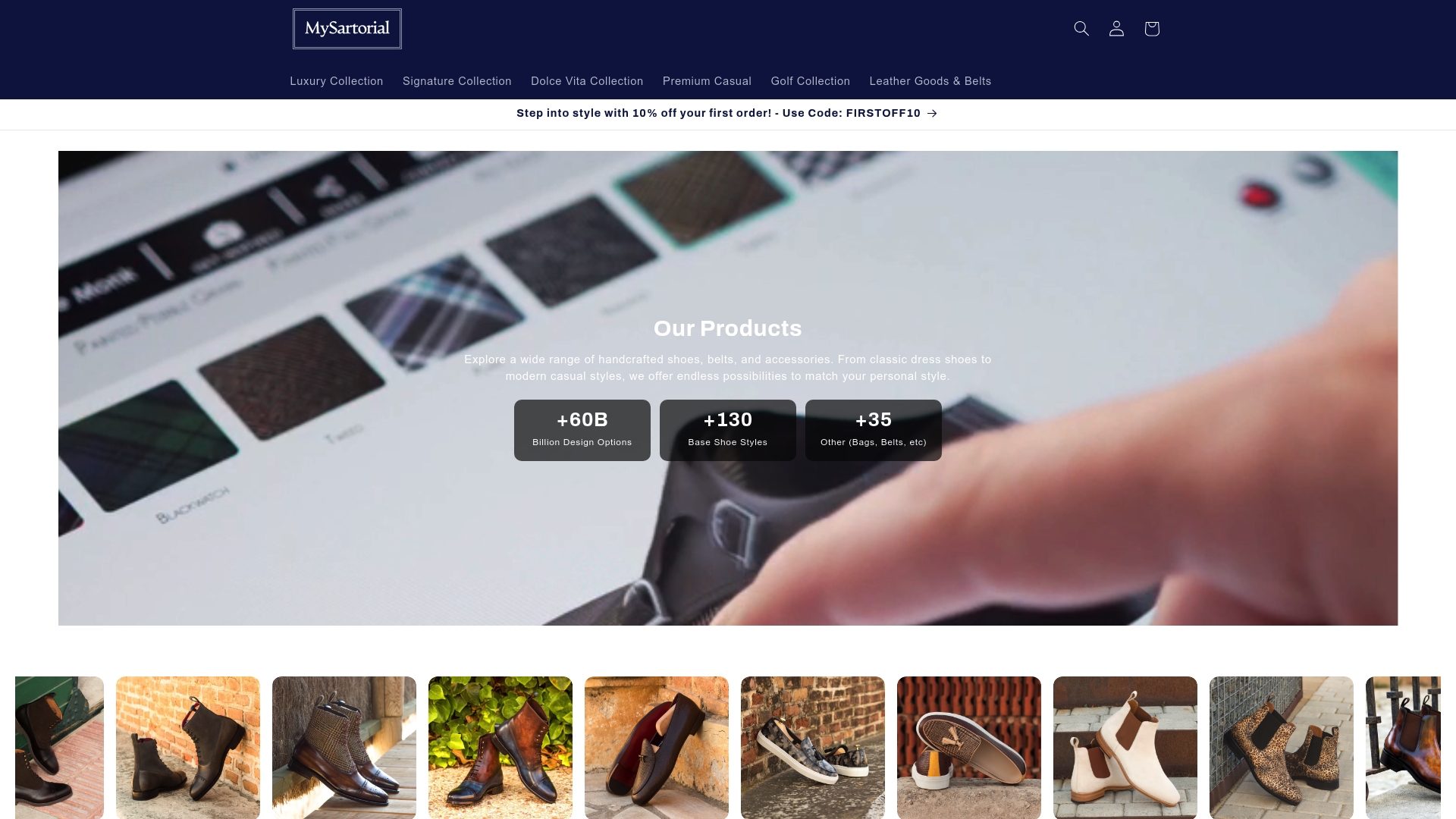
Explore luxury models like the custom Venetian loafers designed for executives who appreciate refined style. Our artisans ensure each pair meets exacting quality standards, from material selection through final finishing. When you invest in MTO personalized shoes, you’re choosing footwear that evolves with you.
Pro Tip: Use MySartorial’s expert consultation services to find your perfect fit and style. Our specialists help you navigate customization options, ensuring your shoes reflect your lifestyle and aesthetic vision. Browse the MySartorial blog insights for detailed guides on shoe care, style matching, and craftsmanship appreciation.
Frequently Asked Questions
What distinguishes handcrafted from bespoke shoes?
Handcrafted is a broad category including bespoke, custom-made, and ready-to-wear artisan shoes made with manual techniques. Bespoke specifically means fully custom shoes built from scratch using patterns created for your exact foot measurements, requiring multiple fittings.
How does Goodyear welt improve shoe lifespan?
Goodyear welt construction attaches the upper to a welt strip, which connects to the sole through double stitching. This allows cobblers to replace worn soles without damaging the upper, enabling multiple resoles over 15-20 years versus disposable cemented shoes.
Can I customize every detail of handcrafted footwear?
Customization scope depends on whether you choose bespoke, custom-made, or ready-to-wear handcrafted shoes. Bespoke offers complete control over design and fit. Custom-made allows extensive personalization of leather, color, sole, and stitching. Ready-to-wear maintains quality standards but uses standard sizing.
Are handcrafted shoes worth the price compared to mass-produced?
Yes, when calculated per wear over their lifespan. Handcrafted shoes lasting 15-20 years with premium materials and repairability cost less annually than replacing mass-produced shoes every 2-5 years. You also gain superior comfort, fit, and style personalization.
How do handcrafted shoes provide a better fit and comfort?
Wooden lasts shape leather to anatomical foot contours, creating personalized support. Premium full-grain leathers mold to your unique foot shape during break-in. Hand-stitching allows flexibility where needed while maintaining structure, reducing pressure points and foot fatigue compared to rigid factory constructions.