

Luxury leather quality explained: a guide for buyers
You’ve probably seen ‘genuine leather’ stamped on products and assumed it signals premium quality. Surprisingly, that label often marks the lowest acceptable grade of leather. Many affluent professionals invest thousands in footwear and accessories without understanding what truly separates exceptional leather from mediocre alternatives. Understanding leather grades, finishes, and tanning methods transforms you from a hopeful buyer into a confident connoisseur. This guide clarifies the terminology that matters, helping you choose luxury leather footwear and accessories that genuinely reflect your status and personal style.
Table of Contents
- Understanding Leather Grades: Full-Grain Vs. Top-Grain And Beyond
- Leather Tanning Processes: Vegetable Tanning Vs Chrome Tanning
- Finishes And Quality Labels: What Truly Defines Luxury Leather?
- Applying Luxury Leather Knowledge: Choosing And Caring For Your Investment
- Discover Premium Leather Goods At MySartorial
- Frequently Asked Questions About Luxury Leather Quality
Key takeaways
| Point | Details |
|---|---|
| Full-grain leather superiority | This highest grade develops rich patina and offers unmatched durability for luxury goods. |
| Grade versus finish distinction | Leather grade, finish type, and tanning method each influence performance and appearance differently. |
| Tanning method impact | Vegetable and chrome tanning create distinct characteristics suited for specific luxury applications. |
| Genuine leather misconception | This marketing term rarely indicates premium quality or long-term durability. |
Understanding leather grades: full-grain vs. top-grain and beyond
Leather grading determines the fundamental quality of your investment. Full-grain leather represents the top layer of the hide with its natural surface completely intact. This preservation of the original grain structure creates the tightest fiber density in any leather product, delivering exceptional strength that resists moisture penetration and physical stress.
What makes full-grain leather the gold standard? Full-grain leather develops a rich patina over time, enhancing both aesthetic appeal and structural integrity. The natural surface retains all original markings, scars, and grain variations that tell the hide’s unique story. These imperfections become distinguishing features rather than flaws. Over months and years of wear, the leather darkens and softens in high-contact areas, creating a personalized patina that reflects your specific usage patterns.
Top-grain leather occupies the second quality tier. Manufacturers sand away the outermost layer to remove imperfections, then apply artificial grain patterns and protective coatings. This process creates uniform appearance and improved resistance to stains and scratches. For executives who prioritize consistent aesthetics and easy maintenance, top-grain offers practical advantages. However, the sanding removes the dense fiber structure that gives full-grain its superior durability.
Pro Tip: Examine leather surfaces closely under good lighting. Full-grain shows natural grain variations and slight imperfections, while top-grain appears suspiciously uniform. Genuine patina development happens only in full-grain leather, making it the smarter long-term investment.
Key differences between grades include:
- Durability: Full-grain maintains structural integrity for decades; top-grain shows wear patterns more quickly
- Breathability: Full-grain’s intact pores regulate moisture naturally; top-grain’s coating reduces airflow
- Aging characteristics: Full-grain develops character; top-grain deteriorates
- Price point: Full-grain commands premium pricing reflecting superior materials and minimal processing
Full-grain leather’s tight fiber structure offers unmatched durability and aesthetic value, justifying its position as the pinnacle of leather quality for discerning professionals.
Below top-grain sit corrected grain and split leather, which undergo extensive processing to hide defects. These lower grades appear in budget products marketed with vague quality claims. Understanding this hierarchy protects you from paying luxury prices for inferior materials.
Leather tanning processes: vegetable tanning vs chrome tanning
Tanning transforms raw animal hide into stable, usable leather. The method chosen fundamentally alters texture, flexibility, durability, and aging potential. Two dominant processes serve different purposes in luxury leather goods.
Vegetable tanning relies on natural tannins extracted from tree bark, particularly oak and chestnut. This traditional process takes weeks or months as tannins slowly penetrate hide fibers. The result? Firmer, denser leather with a distinctive earthy aroma. Vegetable tanning results in firm texture and unique aging, making it ideal for products that benefit from structure and patina development. Vegetable-tanned leather starts pale tan and darkens significantly with sun exposure and handling.
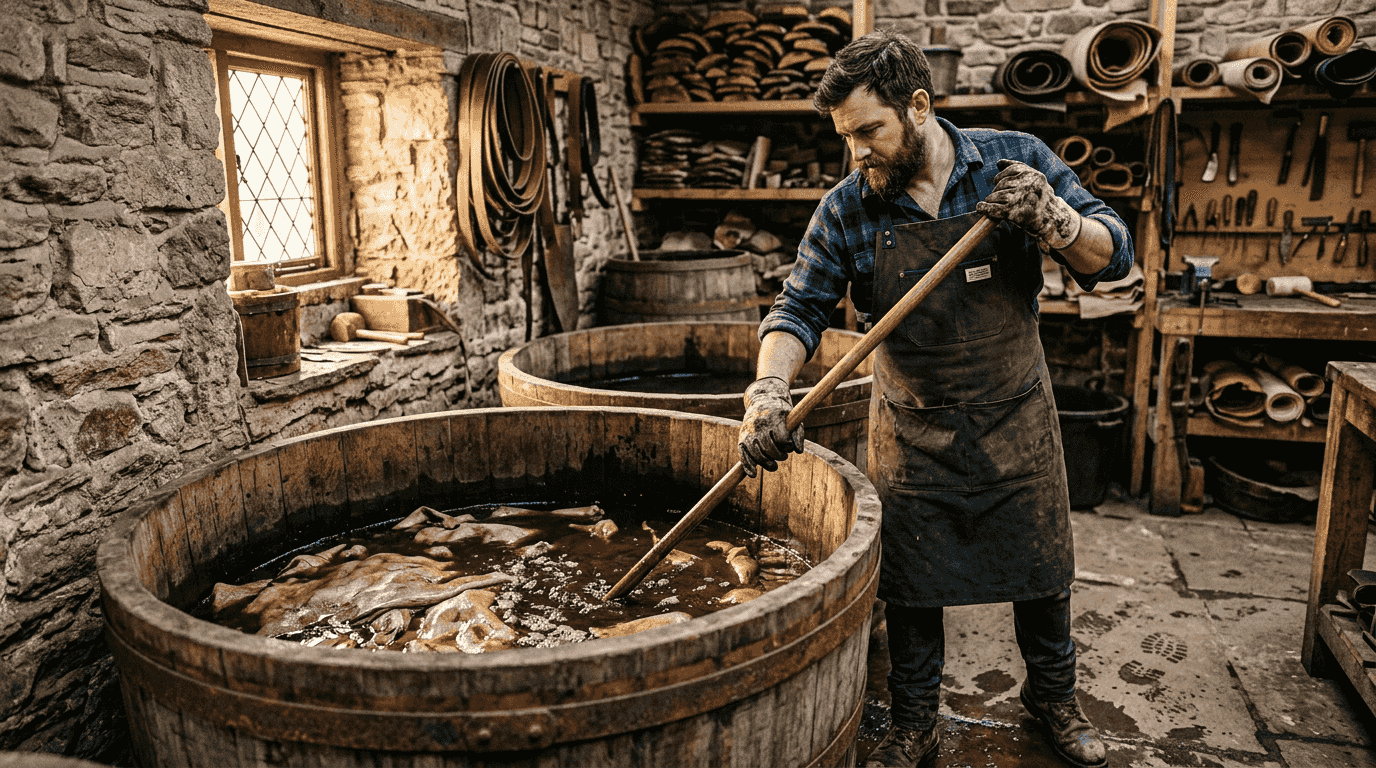
Chrome tanning employs chromium salts in a chemical bath that completes in under 24 hours. This modern method dominates global leather production, accounting for roughly 80% of all tanned leather. Chrome tanning produces softer, more pliable material that resists water and staining better than vegetable-tanned alternatives. The leather retains dye colors more vibrantly and requires less break-in time.
| Characteristic | Vegetable Tanning | Chrome Tanning |
|---|---|---|
| Processing time | Several weeks to months | Less than 24 hours |
| Texture | Firm and dense | Soft and pliable |
| Aging | Develops rich patina | Minimal patina development |
| Water resistance | Lower initially, improves with treatment | Higher natural resistance |
| Best applications | Belts, soles, structured goods | Footwear uppers, soft accessories |
| Environmental impact | Biodegradable, traditional methods | Chemical intensive, requires disposal management |
For luxury footwear, manufacturers often combine both methods strategically. Vegetable-tanned leather excels in soles and structured components where firmness matters. Chrome-tanned leather suits uppers where comfort and flexibility enhance wearability. Bespoke leather goods frequently specify tanning methods to match intended use.
Pro Tip: Choose vegetable-tanned leather for items you want to develop unique character over time, like briefcases and belts. Select chrome-tanned leather for footwear uppers where immediate comfort and consistent appearance matter most.
Advantages and considerations for each method:
- Vegetable tanning benefits: Natural aging, environmental friendliness, traditional craftsmanship appeal, superior patina
- Vegetable tanning drawbacks: Higher cost, longer production time, requires more maintenance, less water resistant initially
- Chrome tanning benefits: Faster production, softer feel, better stain resistance, consistent results, lower price point
- Chrome tanning drawbacks: Limited patina development, chemical processing concerns, less distinctive character over time
Understanding tanning methods helps you select leather products aligned with your priorities. Executives valuing tradition and uniqueness gravitate toward vegetable-tanned options. Those prioritizing immediate comfort and minimal maintenance prefer chrome-tanned alternatives.
Finishes and quality labels: what truly defines luxury leather?
Leather grade, finish, and tanning represent three distinct quality dimensions. Confusion between these factors leads buyers to misjudge value and overpay for inferior products. Finishes alter surface appearance and texture without changing underlying leather grade.
Common finishes include aniline, semi-aniline, pigmented, and specialty treatments. Aniline finishing uses transparent dyes that penetrate leather while leaving grain visible, showcasing natural beauty. Semi-aniline adds a light protective coating for durability while maintaining some natural appearance. Pigmented finishes apply opaque color layers that hide imperfections but obscure grain patterns.
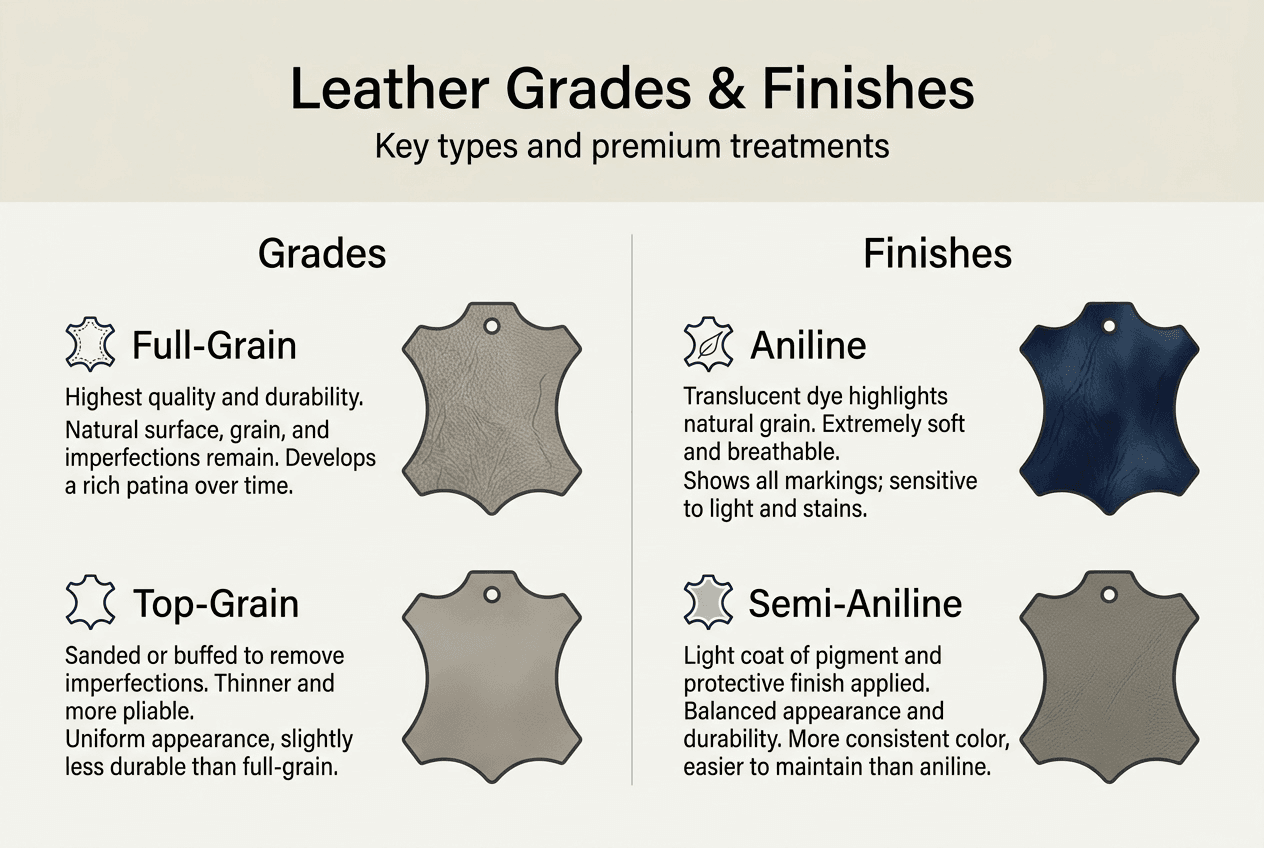
Specialty finishes create distinctive aesthetics. Crazy Horse leather receives wax treatment that creates color variation when scratched or bent, producing vintage appearance. Embossed leather gets pressed patterns that simulate exotic skins or create decorative textures. Pull-up leather contains oils that lighten when stretched, creating dynamic color shifts during wear.
‘Genuine leather’ is a marketing term often unrelated to high quality and durability. This label legally applies to any product containing real leather, regardless of grade. Manufacturers frequently use ‘genuine leather’ stamps on corrected grain and bonded leather, the lowest quality tiers. The term exploits consumer assumptions without guaranteeing performance or longevity.
Top misconceptions that cost buyers money:
- Believing ‘genuine leather’ indicates premium quality rather than minimum leather content
- Assuming all Italian leather is automatically superior without verifying grade and tanning
- Thinking expensive price tags always correlate with leather quality
- Confusing finish type with fundamental leather grade
- Expecting all leather to develop patina regardless of processing method
Verifying true leather quality requires systematic evaluation:
- Ask specifically about leather grade, not just ‘type’ or ‘quality’
- Request information about tanning method and timeline
- Examine surface closely for natural grain variations indicating full-grain leather
- Check product descriptions for specific terms like ‘full-grain’ rather than vague quality claims
- Research brand reputation for transparency about materials and sourcing
- Compare similar products to identify suspiciously low prices suggesting inferior grades
Finish characteristics relevant to executive style:
- Aniline: Natural appearance, shows patina beautifully, requires careful maintenance, premium aesthetic
- Semi-aniline: Balanced protection and natural look, practical for frequent use, moderate maintenance needs
- Pigmented: Maximum durability and stain resistance, uniform appearance, minimal character development
- Patina finishes: Designed to age distinctively, perfect for luxury shoe types that make statements
Understanding the distinction between leather grade, tanning method, and surface finish empowers you to evaluate products accurately and invest in genuine quality rather than clever marketing.
Manufacturers sometimes combine lower-grade leather with premium finishes, creating products that look impressive initially but disappoint over time. Your knowledge of these distinctions protects against such deceptive practices. Focus on grade first, then consider how tanning and finish align with your specific needs.
Applying luxury leather knowledge: choosing and caring for your investment
Translating leather knowledge into smart purchasing decisions requires matching material characteristics to your lifestyle and aesthetic preferences. Executives need footwear and accessories that perform flawlessly in demanding professional environments while projecting appropriate status signals.
Assessing leather quality starts with asking pointed questions. Inquire about specific grade, not generic quality descriptors. Request details about tanning method and approximate processing time. Examine stitching quality, hardware durability, and construction techniques alongside leather grade. Premium leather deserves equally premium craftsmanship.
Key factors when selecting luxury leather goods:
- Grade verification: Confirm full-grain or top-grain designation in writing
- Tanning method: Match vegetable or chrome tanning to intended use and aging preferences
- Finish appropriateness: Select finishes that align with maintenance willingness and aesthetic goals
- Construction quality: Verify techniques like Goodyear welting that complement premium leather
- Customization options: Ensure personalization maintains leather integrity
- Brand transparency: Choose manufacturers who openly discuss materials and processes
Full-grain leather’s durability and patina make it the best value despite higher initial cost. Consider total cost of ownership rather than purchase price alone. A $400 pair of full-grain leather shoes lasting 10+ years with proper care costs less annually than $150 top-grain shoes replaced every two years. Factor in the aesthetic appreciation as patina develops, adding value competitors cannot match.
Proper care extends leather life and enhances appearance. Basic maintenance includes regular cleaning with appropriate leather cleaners, conditioning every few months to prevent drying, and proper storage away from direct heat and sunlight. Use shoe trees in footwear to maintain shape and absorb moisture. Rotate items to allow leather to rest and recover between uses.
Pro Tip: Establish a regular shoe care routine immediately after purchase. Consistent maintenance from day one maximizes patina beauty and extends product lifespan dramatically, protecting your investment while developing unique character.
For executives building leather goods collections, strategic purchasing matters. Start with versatile pieces in neutral colors and classic styles. Invest most heavily in items with highest usage frequency, like daily footwear and briefcases. Gradually add statement pieces that showcase distinctive finishes or custom craftsmanship.
Maintenance intensity varies by leather type. Vegetable-tanned leather requires more frequent conditioning but rewards care with superior patina. Chrome-tanned leather needs less intensive maintenance while delivering consistent appearance. Match care commitment to your schedule and preferences. Both types deserve regular attention to maximize longevity and performance.
Quality leather goods appreciate in personal value over time. Unlike fashion items that depreciate immediately, well-maintained full-grain leather products become more distinctive and meaningful with age. They literally carry your story in their patina patterns, creating irreplaceable personal artifacts that mass-produced alternatives never achieve.
Discover premium leather goods at MySartorial
Now that you understand what separates exceptional leather from mediocre alternatives, you’re ready to invest wisely. MySartorial specializes in handcrafted European footwear and accessories that meet the exacting standards discerning executives demand. Every product combines premium materials with artisan craftsmanship, giving you luxury items worthy of your professional status.
Our leather goods and belts collection features carefully selected hides processed using traditional methods that prioritize quality over speed. You can customize details to match your personal aesthetic while maintaining the structural integrity that defines true luxury. Explore our leather craftsmanship process to see how we blend time-honored techniques with modern design sensibilities, creating products that perform beautifully for decades.
Frequently asked questions about luxury leather quality
What is the difference between full-grain and top-grain leather?
Full-grain leather preserves the hide’s natural surface completely, retaining the dense fiber structure that provides superior durability and patina development. Top-grain leather has the outermost layer sanded away and receives artificial grain patterns plus protective coatings, creating uniform appearance with easier maintenance but reduced longevity.
How does vegetable tanning affect leather quality and appearance?
Vegetable tanning creates firmer, denser leather with distinctive earthy character that develops rich patina over time. The natural tannins penetrate slowly, producing material that starts lighter and darkens significantly with use and sun exposure, making each piece increasingly unique.
Is ‘genuine leather’ a reliable indicator of luxury?
No, ‘genuine leather’ simply confirms the product contains real leather of any grade, often marking the lowest acceptable quality tiers. Manufacturers use this vague term to meet minimum standards while avoiding specific grade disclosure, making it unreliable for assessing true luxury or durability.
How can I maintain the patina on my leather shoes?
Regular cleaning removes dirt that interferes with even aging, while periodic conditioning prevents drying that causes cracking. Use shoe trees after each wear, rotate pairs to allow rest between uses, and avoid excessive water exposure. Consistent care enhances patina beauty rather than diminishing it.
Why invest in full-grain leather despite a higher price?
Full-grain leather’s exceptional durability means properly maintained items last decades rather than years, reducing total cost of ownership. The developing patina increases aesthetic and personal value over time, creating irreplaceable pieces that appreciate rather than depreciate, unlike lower grades that simply wear out.