

How leather defines luxury footwear craftsmanship
Most buyers focus on brand names when shopping for luxury shoes. But the real differentiator sits in the leather itself. Full-grain leather shoes can last 10-20+ years with proper care, developing a patina that makes each pair genuinely unique. That kind of longevity comes from specific materials, tanning methods, and finishing techniques that most buyers never examine. This article breaks down what separates ordinary leather from elite hides, how craftsmanship transforms raw material into lasting footwear, and how personalization turns a shoe purchase into a long-term investment.
Table of Contents
- What makes leather essential for luxury footwear
- Decoding leather quality: Grades, cuts, and origins
- Craftsmanship techniques: Tanning, finishing, and customization
- Patina and personalized aging: The investment angle
- Why leather selection matters more than brand logos
- Where to find elite leather footwear and accessories
- Frequently asked questions
Key Takeaways
| Point | Details |
|---|---|
| Leather drives luxury | Premium leather is the foundation of durability, comfort, and value in elite footwear. |
| Quality goes beyond labels | True leather quality depends on grading, cut, and artisan expertise—not brand names alone. |
| Craftsmanship creates distinction | Artisanal tanning and finishing techniques give luxury shoes their unique character and personalized fit. |
| Patina is investment | Aging beautifully adds both sentimental and financial value to luxury leather footwear. |
| Personalize your luxury | Customization empowers professionals to express style and ensure lasting elegance in every pair. |
What makes leather essential for luxury footwear
Leather has been the foundation of quality footwear for centuries. That status is not accidental. It earns its place through a combination of practical performance and aesthetic depth that synthetic materials have not replicated.
From a functional standpoint, leather offers natural breathability, moisture management, and structural memory. It conforms to the foot over time, creating a fit that improves with wear rather than degrading. These properties are not cosmetic. They directly affect comfort across long days and varied conditions.
Craftsmanship processes amplify these natural qualities. Italian vegetable tanning and hand-finishing create depth, character, and aging potential that mass-produced alternatives cannot match. Vegetable tanning, in particular, uses natural plant-based compounds to treat hides over weeks or months, producing leather with firm structure and rich color development.
Key properties that set premium leather apart:
- Breathability: Natural fiber structure allows air circulation, reducing moisture buildup
- Structural memory: Leather molds to foot shape, improving fit over time
- Patina development: Surface gains depth and personality with age and use
- Resolability: Quality constructions like Goodyear welting allow full sole replacement
- Investment durability: Premium hides resist abrasion and maintain integrity for decades
“Premium full-grain leather, when properly maintained, does not simply endure. It improves. Each wear adds character that no factory process can replicate.”
Understanding luxury shoe materials gives buyers a clearer framework for evaluating what they are actually paying for. Leather’s role in luxury footwear extends well beyond appearance. It is the core material that determines whether a shoe lasts two years or twenty.
Decoding leather quality: Grades, cuts, and origins
Not all leather labeled “full-grain” performs equally. The grade, cut placement, thickness, and tannery each play a distinct role in determining final quality. Buyers who understand these variables make significantly better purchasing decisions.
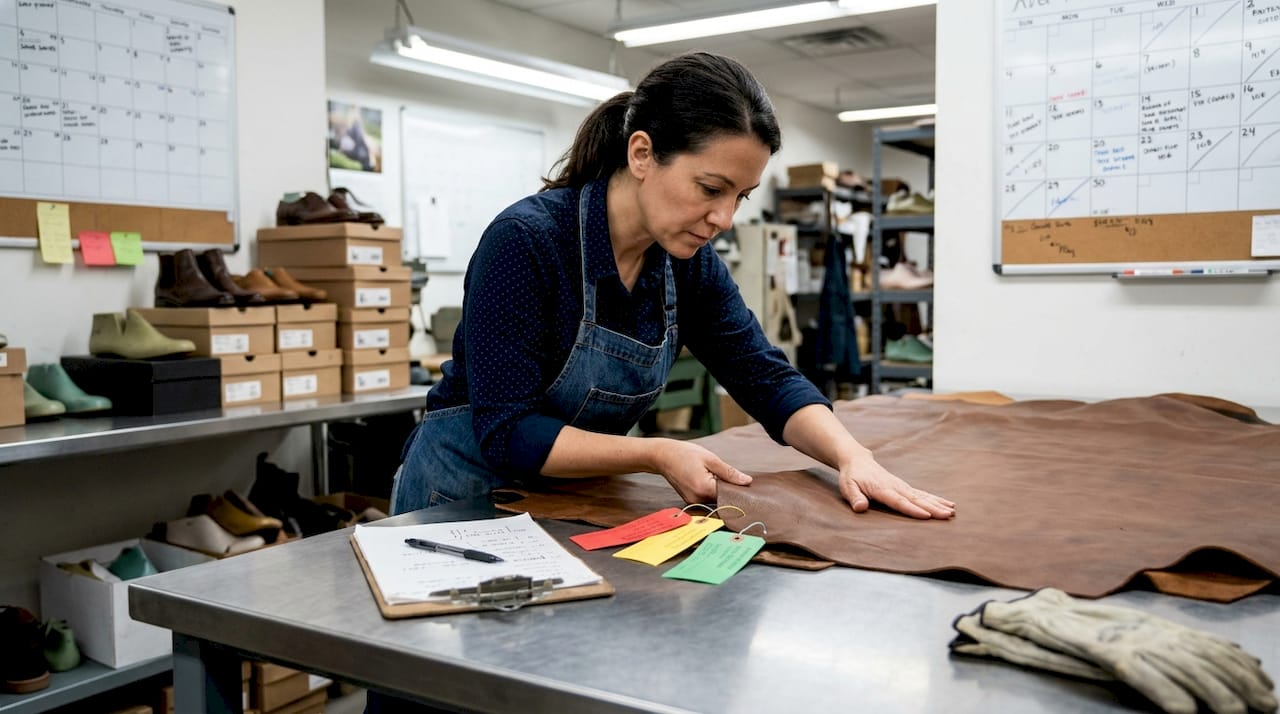
Leather grading ranks hides by surface integrity and fiber density. Grade 1 hides show minimal scarring, tight fiber structure, and consistent thickness. Lower grades may carry surface corrections or uneven density that reduces long-term performance.
Cut placement matters because hide quality varies by location. Leather from the spine offers the tightest fiber structure and greatest tensile strength. Shoulder and belly cuts are softer and less consistent, often used for secondary components.
Thickness affects both feel and resilience. Premium dress leather typically falls between 1.2mm and 1.4mm. Too thin and the shoe lacks structure. Too thick and it loses the refined drape expected in quality craftsmanship.
| Factor | Premium standard | Lower standard |
|---|---|---|
| Hide grade | Grade 1 | Grade 2 or corrected |
| Cut placement | Spine | Shoulder or belly |
| Thickness | 1.2-1.4mm | Under 1.0mm or over 1.6mm |
| Tannery method | Vegetable or pit tanning | Chrome or synthetic |
Four factors to evaluate before purchasing:
- Confirm hide grade with the retailer or brand
- Ask about cut placement for uppers specifically
- Check thickness specifications where available
- Research the tannery or region of origin
Pro Tip: When evaluating leather in person, press the surface lightly and release. Premium full-grain leather returns to shape quickly and shows minimal creasing. Corrected or lower-grade leather tends to crease more deeply and recover slowly.
The custom shoe crafting process at quality brands incorporates these variables at every stage, selecting hides based on intended use and finish rather than defaulting to whatever is available.
Craftsmanship techniques: Tanning, finishing, and customization
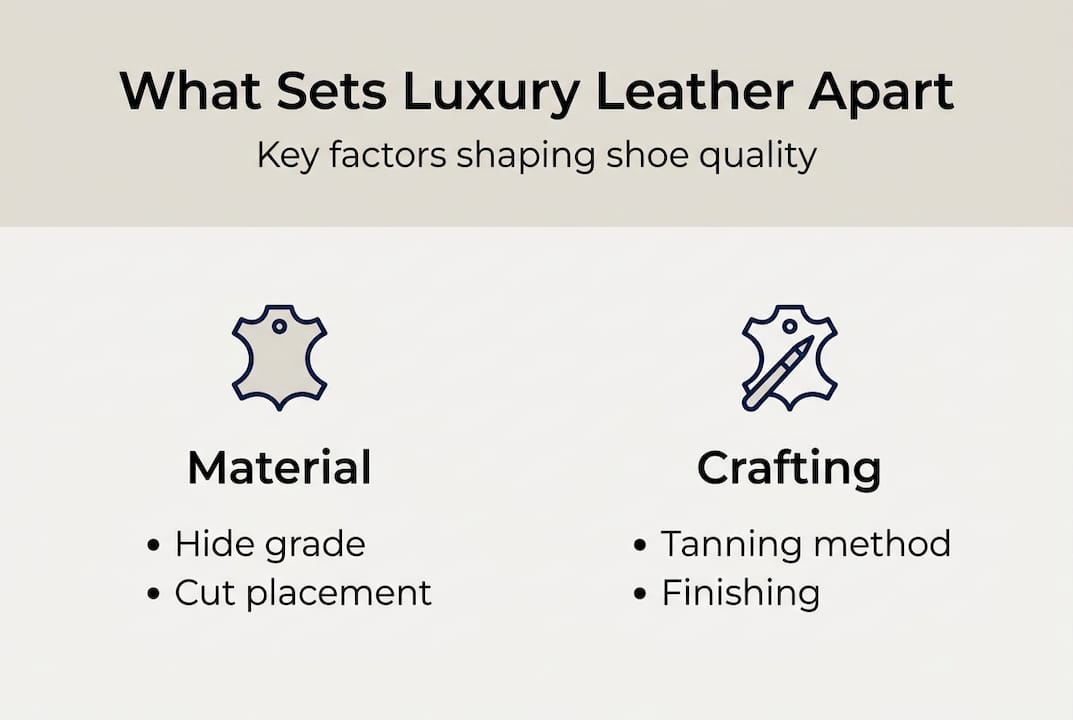
Raw leather quality sets the ceiling. Craftsmanship determines how close the final shoe gets to that ceiling. The techniques used in tanning, finishing, and construction each leave a distinct mark on the product.
Vegetable tanning is the most traditional and labor-intensive method. Hides are submerged in natural tannin solutions derived from tree bark and plant matter, often for weeks at a time. The result is leather with firm body, rich color, and strong aging potential. Italian craftsmanship has long centered on this approach, producing leather that develops character rather than degrading.
Chrome tanning is faster and more uniform but produces softer, less character-rich leather. It dominates mass production. For luxury footwear, vegetable tanning remains the preferred standard.
Hand-finishing includes edge painting, burnishing, and patina application. These steps require skill and time. Machine finishing is faster but lacks the precision and variation that define artisanal work.
Common finishing techniques and their effects:
- Burnishing: Compresses leather fibers at edges for clean, durable lines
- Patina application: Layered dyes create depth and tonal variation
- Welt stitching: Goodyear or hand-welting secures sole to upper for longevity
- Hand-lasting: Stretching leather over a last by hand produces precise fit
| Technique | Method | Result |
|---|---|---|
| Vegetable tanning | Plant-based, weeks-long process | Firm, rich, aging leather |
| Chrome tanning | Chemical, fast process | Soft, uniform, less character |
| Hand-finishing | Artisan application | Unique surface detail |
| Machine finishing | Automated process | Consistent but generic |
Pro Tip: When reviewing shoe customization options, look specifically for brands that offer patina finishing as a custom service. This indicates genuine hand-finishing capability rather than surface-level personalization.
Customization at this level goes beyond color selection. It includes sole choice, welt style, toe shape, and finish type. For professionals who wear their shoes daily, these decisions directly affect comfort and presentation. Exploring types of luxury shoes helps clarify which construction suits specific professional contexts.
Patina and personalized aging: The investment angle
Patina is the gradual change in leather’s surface color and texture through use, light exposure, and care. It is not damage. It is the visual record of a shoe’s history, and it is what separates a well-worn luxury shoe from a worn-out one.
Full-grain leather develops patina in ways that corrected or synthetic materials cannot. The natural surface absorbs polish, oils, and environmental exposure, building layers of color and depth over time. No two pairs age identically, which is precisely the point.
From an investment standpoint, patina matters for several reasons:
- Uniqueness: A patinated shoe is visually one-of-a-kind, impossible to replicate
- Condition signaling: Well-maintained patina indicates careful ownership, supporting resale value
- Longevity indicator: Leather that develops good patina is leather that was properly cared for
- Sentimental value: Shoes that age with the wearer carry personal history
“A shoe that has been worn and maintained for a decade tells a story that a new pair cannot. That story has value, both personal and financial.”
Proper care is what separates patina from deterioration. Regular cleaning, conditioning, and polishing preserve the leather’s fiber structure while allowing natural aging to proceed. The art of patina is a discipline in itself, and understanding it changes how you approach shoe ownership.
For those interested in patina leather specifics, the process begins at purchase. Selecting a shoe with vegetable-tanned leather and a quality finish gives the best foundation for long-term aging. [Customized footwear](https://mysartorial.com/blogs/news/what-is-customized-footwear luxury-handcrafted-shoes) that incorporates patina finishing from the start accelerates this process with intention.
Why leather selection matters more than brand logos
The luxury market spends considerable effort promoting brand identity. Logos, heritage narratives, and celebrity associations dominate marketing. But none of these factors affect how a shoe wears, ages, or holds up over a decade of use.
Leather quality depends on hide grading, cut placement, thickness between 1.2-1.4mm, and tannery expertise. A shoe from an established luxury brand using corrected leather will underperform a shoe from a smaller artisan using Grade 1 spine-cut hides. The logo does not change that outcome.
This is not an argument against established brands. It is an argument for informed buying. When you understand what Grade 1 leather from a skilled tannery actually delivers, you can evaluate any shoe on its merits rather than its marketing. You can also find exceptional quality at price points that major brands cannot match, simply because the cost is going into materials and craft rather than advertising.
Personalization reinforces this logic. A shoe built to your specifications, using premium materials explained in detail by the maker, fits your foot and your aesthetic in ways that off-the-shelf luxury cannot. That specificity is the actual definition of luxury. Not the logo. The fit, the leather, and the craft behind it.
Where to find elite leather footwear and accessories
Applying these insights starts with finding a source that prioritizes materials and craft over marketing.
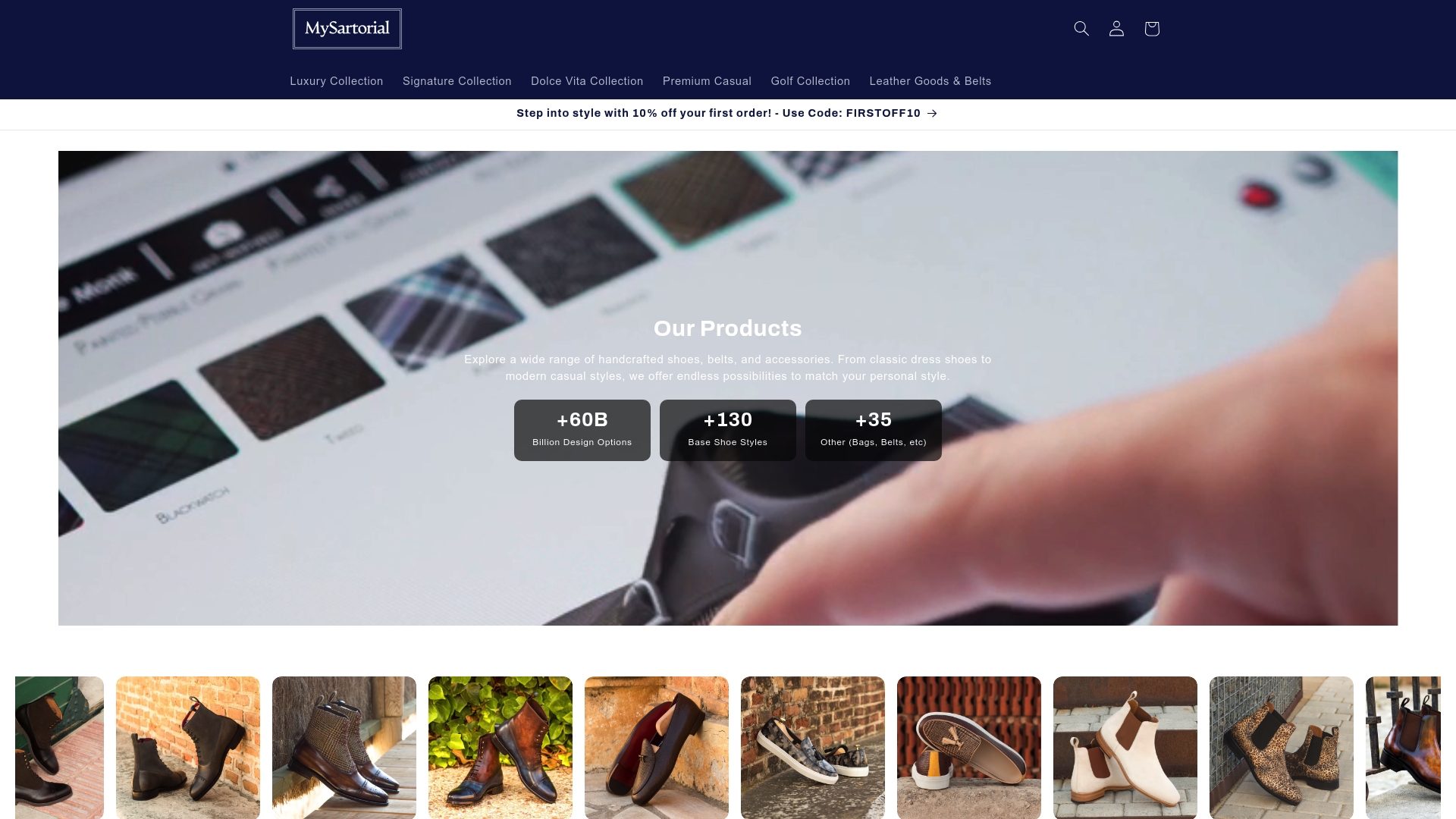
MySartorial offers handcrafted European footwear built on the principles covered in this article. Grade-quality leathers, Goodyear-welted constructions, and genuine customization options across finishes, soles, and patina styles. The leather goods collection extends these standards to belts and accessories that coordinate with the footwear. For a full overview of materials and construction methods, the leather works overview provides detailed sourcing and process information. If you are ready to invest in footwear built to last 10-20+ years, this is a practical starting point.
Frequently asked questions
What type of leather is best for luxury footwear?
Grade 1 full-grain leather from the spine cut is considered the highest standard for luxury shoes, offering superior durability, tight fiber structure, and strong tactile quality.
How long can luxury leather shoes last?
Well-crafted full-grain leather shoes can last 10-20+ years with consistent care, regular conditioning, and periodic resoling through constructions like Goodyear welting.
What is patina and why does it matter?
Patina is the natural aging process of leather that builds depth, tonal variation, and visual character over time. Artisanal craftsmanship and vegetable tanning maximize a shoe’s patina potential, adding both sentimental and resale value.
How can I personalize luxury leather footwear?
Personalization options typically include finish type, patina style, sole construction, welt choice, and fit adjustments. Hand-finishing and bespoke services allow each pair to reflect individual preferences in both function and appearance.