

Luxury shoe materials explained: What makes footwear truly elite
Most people assume a high price tag or a recognizable logo guarantees quality in luxury footwear. That assumption is wrong. The real differentiator is material selection, specifically the type of leather, how it was graded, where it came from, and how it was tanned. These factors determine whether a shoe lasts a decade or falls apart in two years. This article breaks down the key material categories, grading systems, tanning methods, and practical buying criteria that separate genuine luxury from expensive marketing. If you prioritize longevity, personalization, and European craftsmanship, this guide gives you the framework to make informed decisions.
Table of Contents
- What defines luxury in shoe materials?
- Types of leather used in luxury shoes
- Leather grading, thickness, and origin: the hidden drivers of quality
- Tanning techniques: vegetable, chrome, and combination
- How to personalize luxury footwear: materials and craftsmanship
- Common misconceptions and pitfalls: what affluent buyers often miss
- Discover handcrafted luxury footwear at MySartorial
- Frequently asked questions
Key Takeaways
| Point | Details |
|---|---|
| Full-grain leather leads | Shoes made from full-grain leather offer better durability, breathability, and a luxurious patina that improves over time. |
| Grading and thickness matter | Grade 1 hides and proper thickness ensure consistent quality, comfort, and structure in luxury shoes. |
| Tanning impacts longevity | Vegetable and combination tanning produce richer patinas and more resilient, breathable shoes for discerning buyers. |
| Customization elevates uniqueness | Personalizing materials and finishes with expert European craftsmanship creates footwear that’s distinctive and enduring. |
| Avoid marketing traps | Always ask about material source, grading, and tanning methods to distinguish genuine luxury from mere branding. |
What defines luxury in shoe materials?
Luxury in footwear is not a feeling. It is a set of measurable material properties. The most important starting point is understanding the difference between full-grain and corrected-grain leather.
Full-grain leather retains the entire outer surface of the hide, including its natural grain. This makes it superior in strength, breathability, and patina development over time. Corrected-grain leather, by contrast, has been sanded down to remove surface imperfections and then coated with a synthetic finish. It looks uniform, but it loses the structural integrity and aging properties that define true luxury.
Key criteria for evaluating luxury shoe materials:
- Grain retention: Full-grain is the standard for high-end footwear
- Breathability: Natural grain allows air circulation, reducing moisture buildup
- Patina potential: Only untreated surfaces develop rich color depth over time
- Longevity: Full-grain leather outlasts corrected alternatives by years
- Personalization compatibility: Natural leather responds better to custom finishes and dyes
“The hide selection process is as important as the leather type. A poorly selected full-grain hide will underperform a well-selected top-grain piece.”
Pro Tip: When evaluating a shoe, look at the surface under direct light. Full-grain leather shows subtle natural variation. A perfectly uniform surface usually signals a corrected or coated product.
For a detailed breakdown of what separates genuine quality from surface-level branding, the luxury leather quality guide at MySartorial covers the core distinctions clearly.
Types of leather used in luxury shoes
With the basics defined, it is important to understand the actual leather categories available and what each one delivers in practice.
| Leather type | Durability | Patina development | Best use case |
|---|---|---|---|
| Full-grain | Very high | Excellent | Dress shoes, boots |
| Top-grain | High | Moderate | Dress and casual shoes |
| Corrected-grain | Moderate | Poor | Budget luxury, uniform look |
| Suede | Moderate | Low | Casual and loafers |
| Exotic (shell cordovan, etc.) | Very high | Excellent | Signature and collector pieces |
Corrected-grain leather is sanded and coated, making it less durable than full-grain and not preferred for true luxury footwear. It is common in mid-range products marketed as premium.
True luxury prioritizes full-grain over corrected for patina and durability, but selection from prime hide areas and expert tanning determine actual quality. There is no single best leather in isolation.
How to evaluate leather type when buying:
- Ask for the specific leather grade and tannery source
- Check the surface for natural variation (a sign of full-grain)
- Confirm whether the finish is natural or synthetic
- Request information on the hide origin and cut location
- Look at the shoe’s interior lining for matching leather quality
For buyers interested in how patina develops on different leather types, the patina leather guide at MySartorial provides practical visual references. If you are selecting shoes for professional settings, the luxury shoe types for executives guide covers style and material pairings by context.
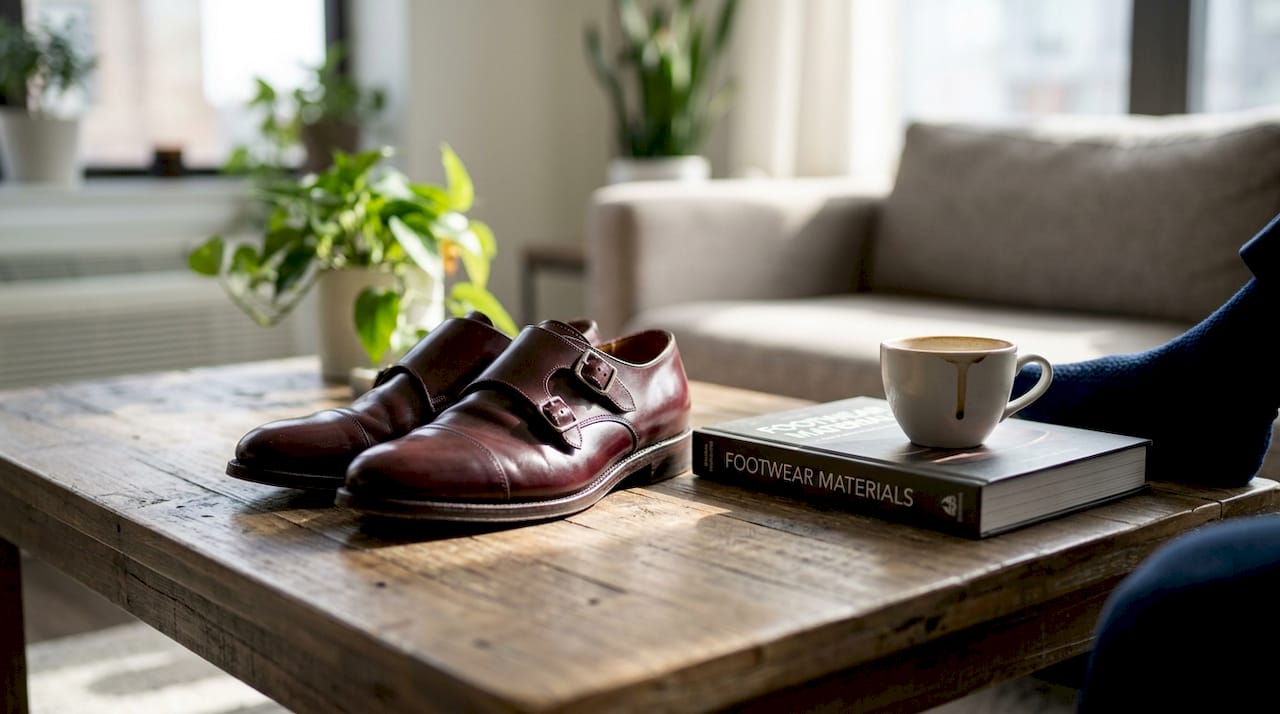
Shell cordovan, sourced from the hindquarters of horses, is one of the most prized exotic leathers. It is dense, non-porous, and develops a distinctive roll rather than crease. Horween leathers from Chicago remain a benchmark for shell cordovan and other premium hides.
Leather grading, thickness, and origin: the hidden drivers of quality
Understanding leather type is only part of the story. The real quality factors come from how the leather is selected, graded, and processed.
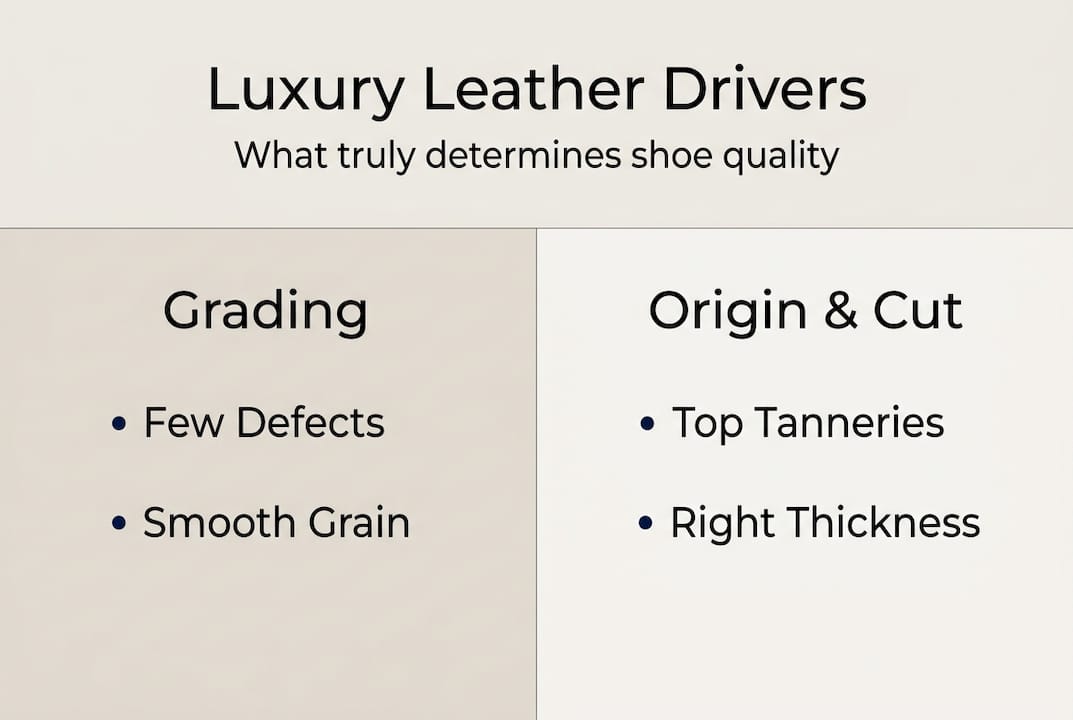
Leather is graded on a scale from 1 to 4 based on the number of imperfections present. Grade 1 hides have the fewest defects and are cut from the stable spine area of the animal, which provides the most consistent fiber density and surface quality. Grade 4 hides have significant scarring, uneven texture, and reduced structural integrity.
Key grading and origin factors:
- Grade 1: Fewest imperfections, cut from spine, highest consistency
- Grade 2 to 4: Increasing defects, used in lower-tier or corrected products
- Spine vs. shoulder: Spine leather is denser and more uniform; shoulder leather is softer but less consistent
- Tannery reputation: Source matters as much as grade
Renowned tanneries like Horween (USA), Du Puy (France), and Ilcea (Italy) produce premium leathers through vegetable or combination tanning processes that support better aging and structural performance.
Thickness also plays a direct role in performance. Box calf at 1.2 to 1.4mm provides structure and shape retention but requires a longer break-in period. Thinner hides, used in loafers and casual styles, offer immediate flexibility but less long-term structure.
For buyers who want to understand how these grading factors connect to the overall purchase decision, the leather grades and selection guide at MySartorial covers the practical implications. Professionals in fields like real estate who need footwear that performs across formal and site settings will find the luxury shoe types for real estate developers guide useful for material-based selection.
Tanning techniques: vegetable, chrome, and combination
After leather selection and grading, the next factor shaping both aesthetics and longevity is how the leather is tanned. Tanning is the process that converts raw hide into stable, usable leather. The method used has a direct impact on patina, breathability, durability, and environmental footprint.
- Vegetable tanning: Uses plant-based tannins. Slower process, typically 30 to 60 days. Produces leather with superior breathability and patina development. Preferred for high-end dress shoes.
- Chrome tanning: Uses chromium salts. Process takes 1 to 2 days. Produces softer, more uniform leather but with limited patina potential. Common in mass-market products.
- Combination tanning (e.g., Chromexcel): Blends both methods. Balances durability and weather resistance with moderate patina development. Used in boots and casual luxury styles.
Vegetable tanning is the traditional choice for European luxury footwear. It is slower and more expensive, but the resulting leather ages in a way that chrome-tanned leather simply cannot replicate.
Pro Tip: When ordering custom shoes, ask specifically whether the leather is vegetable-tanned or chrome-tanned. This single question tells you a great deal about the maker’s material priorities.
For buyers interested in how tanning affects the visual aging of shoes over time, the patina in leather shoes guide at MySartorial covers the process in detail. The crafting custom luxury shoes guide also explains how tanning choices affect customization outcomes.
How to personalize luxury footwear: materials and craftsmanship
Now that we have covered leather selection, grading, and tanning, the next step is understanding how these choices translate into personalized luxury footwear.
Material selection is the foundation of any meaningful customization. The grade of leather, the tannery it comes from, and the tanning method all determine what finishes, patinas, and structural modifications are possible. A corrected-grain leather cannot accept hand-applied patina the same way a Grade 1 vegetable-tanned hide can.
Full-grain leather shows natural marks that are not defects. Creasing is inevitable in any leather shoe, but in premium full-grain leather, creases are fine and shallow. In lower-quality leather, they are deep and can lead to cracking. Embracing these natural characteristics is part of owning genuine luxury footwear.
Practical checklist for ordering personalized luxury shoes:
- Confirm the leather grade (Grade 1 preferred)
- Identify the tannery and tanning method
- Select the finish type: natural, burnished, or hand-applied patina
- Choose sole construction (Goodyear welt for resolability)
- Specify stitching color and style
- Request hide origin details (spine cut preferred)
Additional personalization factors:
- Lining leather: Should match or complement the outer hide quality
- Last shape: Determines fit and silhouette
- Welt type: Goodyear welt allows resoling, extending shoe life significantly
- Patina style: Hand-applied patina requires vegetable-tanned leather
For a full overview of available options, the customization options for luxury shoes guide at MySartorial covers each decision point. The handmade luxury shoe guide explains how European craftsmen execute these choices at the construction level.
Common misconceptions and pitfalls: what affluent buyers often miss
Before you invest, it is important to recognize the traps buyers frequently encounter when purchasing luxury footwear.
The most common mistake is equating price with material quality. A shoe can carry a high price tag and still use corrected-grain leather, chrome tanning, and synthetic linings. Marketing language like “premium leather” or “genuine leather” has no standardized definition and tells you nothing about grade or tannery.
“The ability to ask specific questions about leather grade, tannery, and tanning method separates informed buyers from those paying for branding alone.”
Top pitfalls and how to avoid them:
- Pitfall: Assuming uniform surface texture means quality. Solution: Natural variation is a sign of full-grain leather.
- Pitfall: Ignoring tannery information. Solution: Ask for the specific tannery name and verify its reputation.
- Pitfall: Treating natural marks as defects. Solution: Natural marks in full-grain leather are part of its authenticity, not flaws.
- Pitfall: Prioritizing aesthetics over construction. Solution: Check for Goodyear welt construction and leather lining quality.
- Pitfall: Accepting vague material descriptions. Solution: Request written confirmation of leather grade and origin.
Pro Tip: Before purchasing, ask the brand or retailer for the specific leather grade, tannery name, and tanning method in writing. A reputable maker will provide this information without hesitation.
For a structured approach to evaluating luxury footwear before purchase, the luxury shoe buyer guide at MySartorial outlines the key questions to ask at each stage.
Discover handcrafted luxury footwear at MySartorial
Armed with a clear understanding of leather grades, tanneries, and tanning methods, you can now apply that knowledge directly to your next footwear purchase. MySartorial offers shoes made from Grade 1 leather sourced from established European tanneries, with full transparency on materials and construction.
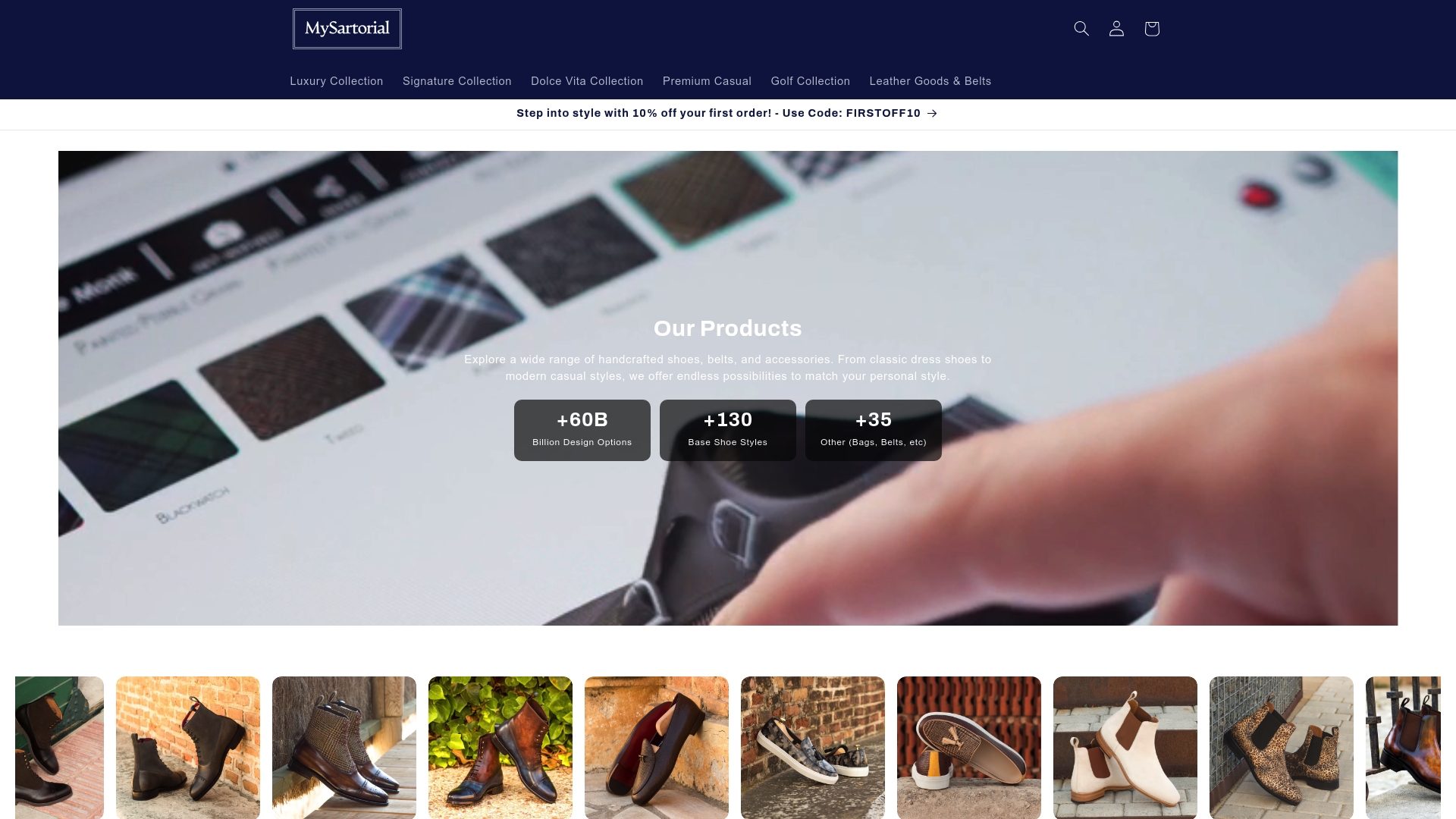
The luxury footwear collection at MySartorial includes customizable options across dress, casual, and specialty styles. You can select leather type, finish, patina style, stitching, and sole construction before placing your order. The leather works section details the materials and craftsmanship standards used across all products. For buyers who want coordinated accessories, the leather goods collection includes belts and accessories made to the same material standards as the footwear.
Frequently asked questions
What is the best leather for luxury shoes?
Full-grain leather is widely considered the best for luxury shoes due to superior strength, breathability, and natural aging properties. It retains the hide’s original surface, which allows patina to develop over time.
Why does leather grading matter in luxury footwear?
Leather grades 1 to 4 are based on the number of imperfections present in the hide. Grade 1 hides offer the highest consistency and are cut from the most stable areas of the animal.
How does tanning technique affect luxury shoe quality?
Vegetable tanning produces richer patinas and better breathability, while chrome tanning is faster but delivers less character in finish. Combination tanning balances durability and weather resistance for boots and casual styles.
What makes European craftsmanship sought after in luxury shoes?
European craftsmanship is associated with technical precision, traditional construction methods, and access to premium tanneries. Tanneries like Du Puy and Ilcea in France and Italy set the standard for leather quality used in high-end footwear.
Should I worry about natural marks on full-grain leather?
Natural marks are not defects. In full-grain leather, they are part of the hide’s authenticity and contribute to the character and patina that develops with wear over time.