

European shoe style tips for professionals: 5 key rules
TL;DR:
- European shoes vary in construction, with Goodyear welted offering durability and resoling advantages.
- Classic styles like Oxfords and Derbies are essential for formal and business settings.
- Personalization through color, finish, and cultural style cues enhances professional footwear choices.
Choosing the right pair of European shoes is not a simple task for professionals who care about the details. The difference between a well-constructed Oxford and a poorly made dress shoe shows up in fit, posture, and how others read your presence in a room. Construction method, leather grade, color selection, and cultural context all shape whether a shoe elevates or undermines a professional wardrobe. This guide covers the core criteria for selecting, personalizing, and rotating European footwear, so your choices reflect both function and sophistication at every level of your professional life.
Table of Contents
- Understand European shoe construction: Why materials and methods matter
- Essential European shoe styles for the well-dressed professional
- Choosing colors, finishes, and details: Personalizing your signature look
- British vs. Continental: Matching shoe culture to your environment
- The true edge: Why consistent shoe investment outpaces trends
- Step up your style with customizable European shoes
- Frequently asked questions
Key Takeaways
| Point | Details |
|---|---|
| Prioritize construction | Select Goodyear welted or Blake-stitched shoes for style and longevity. |
| Match style to occasion | Choose Oxfords, Derbies, or loafers based on your work environment and dress code. |
| Express with details | Personalize your look using suede, grained leather, and tailored bespoke touches. |
| Sync with culture | Align British or Continental design choices with your office’s culture and industry. |
Understand European shoe construction: Why materials and methods matter
Construction is the first filter. Before color or style, the way a shoe is built determines how long it lasts, how it fits over time, and whether it can be repaired or resoled. Two methods dominate quality European footwear: Goodyear welting and Blake stitching.
Goodyear welted construction involves stitching the upper, insole, and welt together before attaching the outsole. This creates a water-resistant channel and allows the shoe to be resoled multiple times without damage to the upper. European shoe styles for affluent professionals emphasize Goodyear welted construction for durability and resoleability. Blake stitching, by contrast, runs a single stitch directly through the insole, midsole, and outsole. The result is a slimmer, more flexible profile, but with less resistance to moisture and fewer resoling options.
| Feature | Goodyear welt | Blake stitch |
|---|---|---|
| Resoleability | Multiple times | Limited |
| Water resistance | High | Lower |
| Profile | Structured | Slim |
| Repairability | High | Moderate |
| Typical origin | English, German | Italian, Spanish |
Material selection matters just as much as construction. The primary luxury shoe materials used in European footwear include:
- Full-grain calf leather: Dense, smooth, and durable. Takes a high shine and develops a rich patina over time.
- Suede: Soft nap finish. Works well for business casual and cooler months. Requires protective spray.
- Grained leather: Textured surface that hides scuffs better than smooth calf. Practical for daily wear.
- Shell cordovan: Premium horsehide. Extremely durable and develops a distinctive roll rather than crease.
Handcrafted durability also means better fit over time. Handmade lasts, the wooden molds used to shape shoes, are often more anatomically precise than machine-produced versions. This translates to less break-in time and better long-term comfort.
Pro Tip: Before purchasing, flip the shoe and examine the welt. A visible, stitched welt running along the perimeter of the sole indicates Goodyear construction. A single row of stitching visible only on the insole points to Blake.
Essential European shoe styles for the well-dressed professional
With materials and construction in mind, the next step is identifying which styles belong in a professional rotation. Each style carries specific signals and serves distinct occasions.
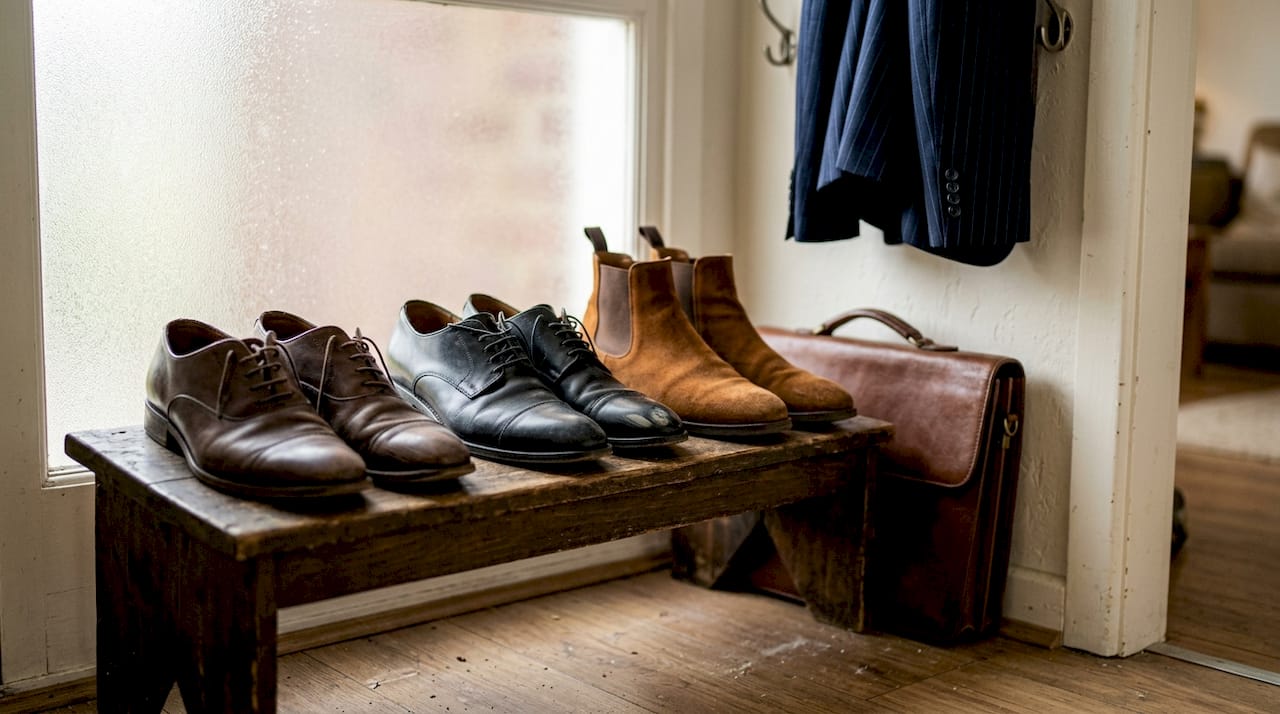
Key styles include Oxfords and Derbies for formal business, Penny and Tassel Loafers for business casual, and Chelsea and Monk Strap shoes for versatility across settings. These core luxury styles map directly to the range of environments professionals move through each week.
| Style | Formality level | Best setting | Season |
|---|---|---|---|
| Oxford | High | Boardroom, formal events | Year-round |
| Derby | Medium-high | Office, client meetings | Year-round |
| Monk strap | Medium | Creative office, business casual | Fall, winter |
| Loafer | Medium | Business casual, travel | Spring, summer |
| Chelsea boot | Medium | Office, evening events | Fall, winter |
Here is a practical order of priority for building a professional shoe wardrobe:
- Dark brown Oxford: The highest-utility formal shoe. Pairs with navy, charcoal, and mid-gray suits.
- Tan or cognac Derby: Slightly less formal than the Oxford. Works across a wider range of casual business outfits.
- Chelsea boot in black or dark brown: Bridges formal and casual. Suitable for client dinners and creative environments.
- Tassel or Penny Loafer: Adds a relaxed but polished option for business casual days and travel.
- Monk strap: A single or double buckle adds visual interest without sacrificing professionalism.
Seasonal awareness matters. Suede Derbies and loafers work well in spring and fall. Smooth calf Oxfords carry through all four seasons. Chelsea boots in grained leather are practical in wet winter months.
The shoe craftsmanship guide at MySartorial covers how construction techniques align with each style’s intended use, which helps when comparing options across collections.
Pro Tip: Invest in at least three versatile pairs before adding specialty styles. One formal, one business casual, and one boot covers the majority of professional settings without redundancy.
Choosing colors, finishes, and details: Personalizing your signature look
Once you’ve selected a style, your color, finish, and personal details make the shoes truly yours. Color is the most visible signal a shoe sends, and the right choice adds range to a wardrobe without requiring more pairs.
Current trends for 2025 and 2026 prioritize suede, grained leathers, and earth tones like dark brown and oxblood over standard black. Black shoes remain appropriate for very formal settings, but brown tones, oxblood, and navy offer more daily versatility and pair with a wider range of suit and trouser colors.
Color selection by use case:
- Dark brown: Pairs with navy, charcoal, and tan. Suitable for most office environments.
- Oxblood: Works with charcoal and mid-gray. Adds depth without being casual.
- Tan or cognac: Best for business casual. Pairs well with chinos and lighter suits.
- Navy: Emerging option for loafers and Derbies. Pairs with gray and beige.
- Black: Reserved for black-tie, formal events, and conservative industries.
Finish choices add a second layer of distinction. Smooth calf takes a high mirror shine, which signals formality. Grained leather reads as more relaxed and practical. Suede sits between the two in terms of formality but adds texture and visual interest.
“The most enduring professional shoes are those that carry a personal mark, whether a patina, a colored welt, or a subtle monogram, without ever announcing themselves too loudly.”
Bespoke shoe details like a contrasting welt color, a hand-applied patina, or discreet monogramming on the insole give shoes a distinct identity. These details are visible to those who know what to look for, which is exactly the point for professionals who value quiet distinction over overt display. The range of custom shoe options available today makes this level of personalization accessible without requiring a full bespoke commission.
British vs. Continental: Matching shoe culture to your environment
With individualization handled, it’s important to match your shoe’s cultural cues to your professional environment. British and Continental European shoes are not interchangeable signals.
English styles suit upper management and formal settings, while Italian and Spanish shoes, with their sleeker Blake construction and relaxed loafer profiles, fit creative industries and business casual environments. Understanding this distinction prevents style mismatches that can read as either too stiff or too casual for a given context.
British shoe traits:
- Structured silhouette with a defined toe box
- Goodyear welted construction standard
- Heavier sole with visible welt
- Conservative color palette: black, dark brown, oxblood
- Appropriate for: finance, law, government, upper management
Continental shoe traits:
- Slimmer last with a tapered or almond toe
- Blake or cemented construction common
- Lighter sole, closer to the foot
- Broader color range including tan, navy, and earth tones
- Appropriate for: creative industries, consulting, media, business casual offices
A useful reference point: Goodyear welt vs. Blake construction differences map almost directly onto British vs. Continental aesthetics. Choosing between them is partly a technical decision and partly a cultural one.
Do not mix British and Continental signals carelessly. A heavy, structured English brogue worn with a slim Italian suit creates visual tension. A sleek Blake-stitched loafer worn in a conservative finance boardroom may read as underdressed. Match the shoe’s construction and silhouette to the environment’s expectations.
The true edge: Why consistent shoe investment outpaces trends
Trend-driven purchasing produces a wardrobe with gaps. A professional who buys based on seasonal catalogs often ends up with five pairs that overlap in function and none that cover every occasion well. The more effective approach is a planned rotation built around three to five pairs of high-quality, versatile shoes that cover the full range of professional settings.
A smart shoe rotation also extends the life of each pair. Wearing the same shoes two days in a row compresses the leather and shortens the lifespan. Rotating between at least three pairs allows each shoe to dry and recover fully between wears.
The case for quality over quantity is straightforward. One well-constructed Goodyear welted Oxford, maintained properly and resoled when needed, will outlast three pairs of poorly made alternatives. The cost per wear over five or ten years favors the better shoe significantly.
Seasonal reviews help. Twice a year, assess which pairs are showing wear, which need conditioning or resoling, and whether any gaps exist in the rotation. This is a functional audit, not a shopping exercise. The goal is a stable, complete wardrobe, not a growing one.
Pro Tip: Plan shoe purchases around gaps in your rotation, not around new styles. If you already own a formal Oxford and a Chelsea boot, the next purchase should fill a business casual or travel need, not duplicate what you have.
Step up your style with customizable European shoes
The principles covered here, construction quality, style selection, color strategy, and cultural fit, apply directly to the range available at MySartorial. The collection includes handcrafted European shoes across formal, business casual, and relaxed categories, with customization options for finishes, stitching, soles, and patina styles.
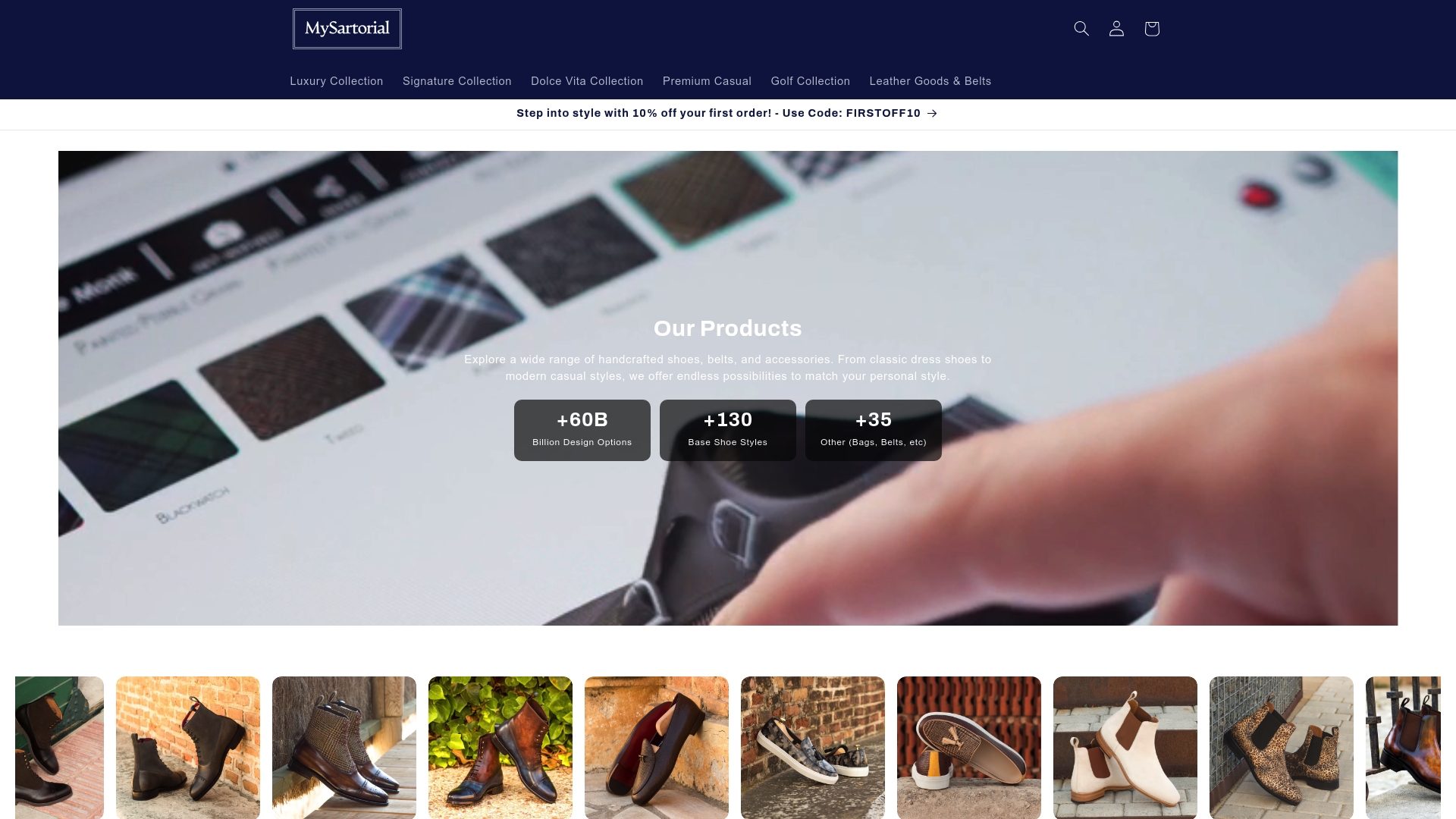
For professionals building or refining a shoe rotation, MySartorial offers over 150 products with the ability to personalize before purchase. Matching leather goods and belts are also available to complete a coordinated look. Explore the full MySartorial collection to find styles that align with your professional environment and personal specifications.
Frequently asked questions
What is the most versatile European shoe style for professionals?
The Oxford shoe in dark brown or oxblood is widely considered the most versatile, as it works in both formal and business-casual settings without visual conflict.
How do Goodyear welted shoes differ from Blake stitched shoes?
Goodyear welted construction offers better water resistance and supports multiple resolings, while Blake stitching produces a slimmer profile with less long-term durability.
What’s the best way to add a personal touch to luxury shoes?
Subtle options like patina finishes, monogramming, or a colored welt add distinction without altering the shoe’s professional character. See the custom luxury shoe guide for available options.
Are suede or grained leather shoes suitable year-round?
Suede and grained leather perform best in spring and fall. Both require protective treatment in wet weather to maintain appearance and structural integrity over time.