

Bespoke detailing in men's shoes: style, fit, luxury
The custom shoe market hit $5.2B in 2023 and is projected to reach $8.6B by 2035. That growth is not accidental. More men are moving away from off-the-shelf options and toward footwear that reflects who they are. But there is a common misconception: many assume bespoke detailing is purely cosmetic, a matter of picking a color or adding a monogram. In reality, it covers everything from how a shoe is constructed around your specific foot shape to the artisan hand-finishing that determines how the leather ages over years of wear. This article breaks down what bespoke detailing actually involves and why it matters for your wardrobe and your feet.
Table of Contents
- What is bespoke detailing in men’s shoes?
- How bespoke detailing impacts fit, comfort, and health
- Craftsmanship: The artistry and investment in bespoke shoes
- How bespoke detailing elevates style and professional impact
- Our expert take: What most luxury buyers miss about bespoke detailing
- Explore bespoke luxury: Your next step with MySartorial
- Frequently asked questions
Key Takeaways
| Point | Details |
|---|---|
| Unique artisan detailing | Bespoke shoes use hand-finishing techniques to create one-of-a-kind footwear that expresses personal style. |
| Superb fit and foot health | Custom lasts crafted from individual measurements offer superior comfort and support while addressing specific foot issues. |
| Long-term investment value | Luxury bespoke shoes deliver longevity, durability, and evolving patina, outlasting mass-produced alternatives. |
| Professional impact | Artisan-crafted shoes signal success, enhance wardrobe, and reinforce individuality in business settings. |
| Market growth and accessibility | Rising demand means bespoke options are increasingly available for affluent men seeking luxury personalization. |
What is bespoke detailing in men’s shoes?
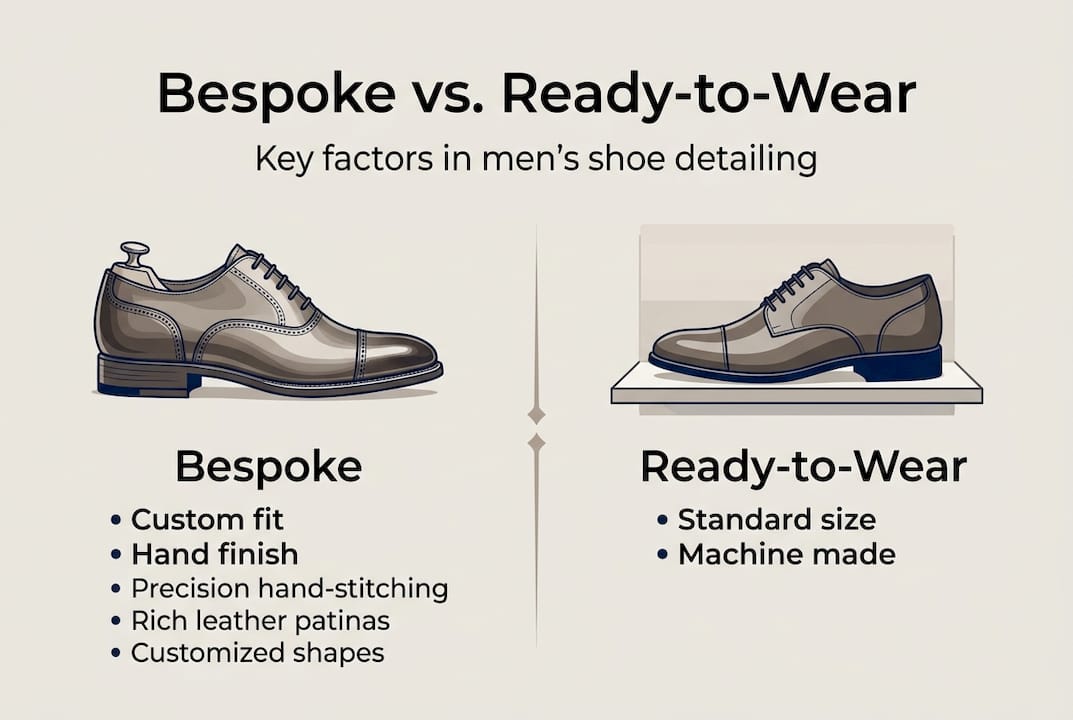
Bespoke detailing refers to the set of hand-applied techniques and personalized construction choices that distinguish a custom-made shoe from a ready-to-wear (RTW) option. It is not just about aesthetics. It covers the entire production process, from the wooden last shaped to your foot to the final polish applied by hand.
A standard RTW shoe is built on a generic last, produced in volume, and finished with automated processes. A bespoke shoe starts with your measurements. Every detail, from the welt to the toe shape to the sole type, is chosen or adapted for you. According to hand-finishing techniques used in bespoke production, these include hand-burnishing, patina application, brogue perforations, and custom stitching. Each of these adds character and individuality that no factory line can replicate.
Here are the core elements that define bespoke detailing:
- Hand-burnishing: Artisans apply layers of wax and pigment by hand to create depth and tone variation across the leather surface.
- Patina finishing: A multi-step coloring process that gives shoes a gradient or aged appearance, unique to each pair.
- Brogue perforations: Decorative hole patterns punched along seams and toe caps, ranging from minimal to full brogue.
- Custom stitching: Thread color, stitch density, and pattern are selected to complement the overall design.
- Sole selection: Cork, leather, rubber, or combination soles chosen for function and style.
For a deeper look at how these choices work together, the bespoke shoe design guide covers the full range of options available when configuring a handcrafted pair.
“True bespoke detailing is not a single feature. It is the sum of dozens of deliberate decisions made by skilled hands, each one contributing to a shoe that cannot exist anywhere else.”
The difference between bespoke and RTW is also practical. RTW shoes are designed to fit the widest possible range of feet. Bespoke shoes are designed to fit one foot. That distinction shapes every other aspect of the shoe, including comfort, longevity, and how the detailing sits on the leather. Exploring shoe customization options gives a clear picture of how far personalization can go in modern luxury footwear.
How bespoke detailing impacts fit, comfort, and health
Fit is where bespoke detailing delivers its most practical value. A shoe built on a custom last, shaped from precise measurements of your foot, distributes weight differently than a standard size. That difference is noticeable from the first wear and significant over time.
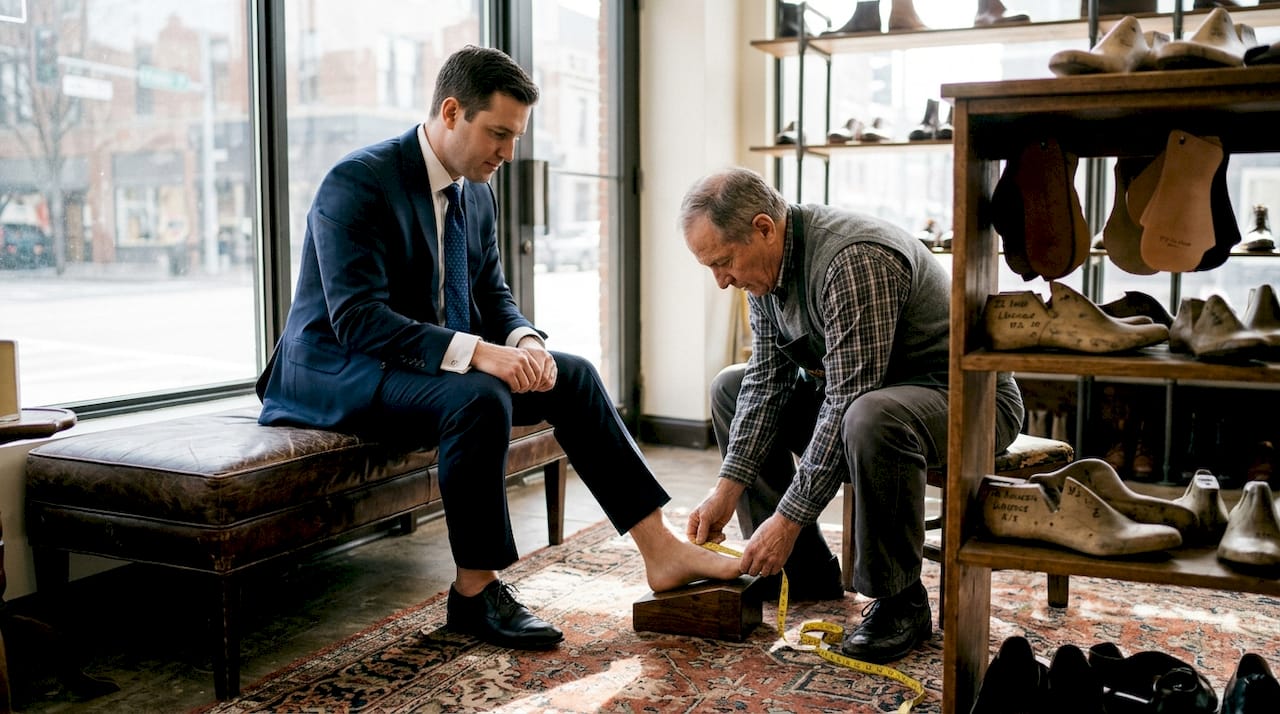
The process of crafting handmade footwear begins with a custom wooden last. Advanced fitting methods capture the full profile of your foot, including length, width, arch height, and any structural irregularities. The last is then carved or adjusted to match. Every element of the shoe is built around that shape.
Here is how the bespoke fitting process typically works:
- Foot measurement: Length, width, instep height, and arch profile are recorded.
- Last creation: A wooden form is shaped or modified to match your measurements.
- Pattern drafting: Upper panels are cut to fit the last precisely.
- Test fitting: A trial shoe (called a trial fit or mock-up) is worn and assessed.
- Final adjustments: The last and pattern are refined before full production begins.
This process matters for foot health. Men with high arches, bunions, or asymmetrical feet often experience discomfort in standard shoes. Bespoke construction accommodates these conditions directly. Artisans can build in extra depth in specific zones, adjust toe box width, or leave room for orthotic inserts. The custom shoe selection guide outlines how to identify which construction features address specific foot concerns.
Pro Tip: If you have one foot slightly larger than the other (which is common), bespoke is the only footwear category that accounts for this without compromise. A skilled artisan adjusts each side independently.
Comfort also affects professional performance. A shoe that fits correctly reduces fatigue during long workdays, improves posture, and minimizes the micro-adjustments your body makes to compensate for poor fit. For men who spend hours on their feet or in client-facing environments, that is a functional advantage. The personalized footwear style resource connects fit quality directly to professional presentation and daily comfort.
Craftsmanship: The artistry and investment in bespoke shoes
Bespoke shoes require significant time and skill. Production involves between 70 and 300 hand steps, with full production timelines ranging from several weeks to several months. Premium full-grain leathers are selected for their ability to develop patina and withstand long-term wear.
The table below compares key production factors across shoe types:
| Feature | Mass-produced | Ready-to-wear luxury | Bespoke |
|---|---|---|---|
| Production steps | 20-40 automated | 40-80 mixed | 70-300 hand steps |
| Last type | Generic sizing | Standard width options | Custom per foot |
| Leather grade | Corrected grain | Full-grain | Premium full-grain |
| Resoleable | Rarely | Sometimes | Yes (Goodyear welt) |
| Lifespan | 1-3 years | 3-7 years | 10-20+ years |
Goodyear welting is the construction method most associated with bespoke longevity. A welt is a strip of leather stitched between the upper and the sole, creating a channel that can be unstitched and resoled multiple times. This means a well-maintained bespoke shoe does not wear out. It evolves. Blake construction, used in some Italian-style shoes, offers a sleeker profile but is harder to resole. For men investing in long-term footwear, Goodyear welting is the more practical choice.
Patina is another investment dimension. A hand-applied patina deepens with wear and conditioning. A shoe that looks good at purchase looks better at five years. That aging process is specific to full-grain leather and cannot be replicated with corrected or bonded leather.
Pro Tip: Budget for shoe care from day one. Cedar shoe trees, quality conditioner, and periodic professional polishing extend the life of bespoke leather significantly. The shoe care guide covers the exact maintenance steps that protect your investment.
The cost of bespoke shoes reflects the time, materials, and skill involved. Entry-level bespoke starts at several hundred dollars and can reach several thousand for full custom commissions. Viewed per year of use, the cost per wear often compares favorably to replacing lower-quality shoes every two to three years.
How bespoke detailing elevates style and professional impact
Men account for 57.2% of custom shoe sales globally, driven by demand for personalization in formal and professional wear. That majority reflects a shift in how professional men approach their wardrobes.
Bespoke detailing signals something specific in professional settings. A shoe with hand-applied patina, clean brogue work, and a well-chosen sole communicates attention to detail and personal investment. It is not loud. It is precise. That precision reads differently than a recognizable luxury logo. As bespoke detailing research confirms, these shoes offer timeless style and individuality that mass-produced footwear cannot match.
Here is a comparison of common detailing features and their professional context:
| Detail | Formal suitability | Casual versatility | Visual impact |
|---|---|---|---|
| Plain toe cap | High | Low | Minimal |
| Semi-brogue | High | Medium | Moderate |
| Full brogue | Medium | High | Strong |
| Hand patina | High | High | Distinctive |
| Contrasting welt | Medium | High | Bold |
Key style considerations for professional men:
- Patina depth: Lighter tones suit boardroom settings; darker gradients work for evening or creative industries.
- Sole choice: Leather soles signal formality; rubber or combination soles add practicality for city wear.
- Toe shape: Chisel toes read as modern and structured; rounded toes are classic and versatile.
- Stitching color: Matching thread is conservative; contrast stitching adds a deliberate design accent.
For men in finance or law, why bankers choose custom dress shoes outlines how specific detailing choices align with sector norms. Understanding Goodyear vs. Blake stitching also helps when selecting the right construction for your lifestyle and work environment.
Our expert take: What most luxury buyers miss about bespoke detailing
Most buyers focus on brand recognition when purchasing luxury footwear. That is understandable but often misses the point. The real value in bespoke is not the label. It is the last and the finishing.
A shoe built on a custom last, finished by a skilled artisan, will outperform a well-known brand’s RTW offering in fit, comfort, and durability. Every time. The subtle details, the way the leather sits at the heel, the evenness of the patina, the tightness of the welt stitching, are what separate a genuinely excellent shoe from an expensive one.
Goodyear welting and hand-applied patina are consistently undervalued by first-time buyers. They are not visual features. They are structural and material decisions that determine how the shoe performs over a decade. Buyers who prioritize flashy design elements over construction quality often end up with shoes that look impressive for a season and deteriorate quickly.
Investing in bespoke is an investment in physical wellbeing and professional presentation, not just style. The personalized footwear style resource reinforces this point with practical guidance on making detailing choices that serve long-term goals.
Explore bespoke luxury: Your next step with MySartorial
MySartorial brings European artisan craftsmanship to an accessible online platform, with 150+ handcrafted styles across formal, casual, and specialty collections. Each product includes customization options covering finishes, stitching, soles, and patina styles.
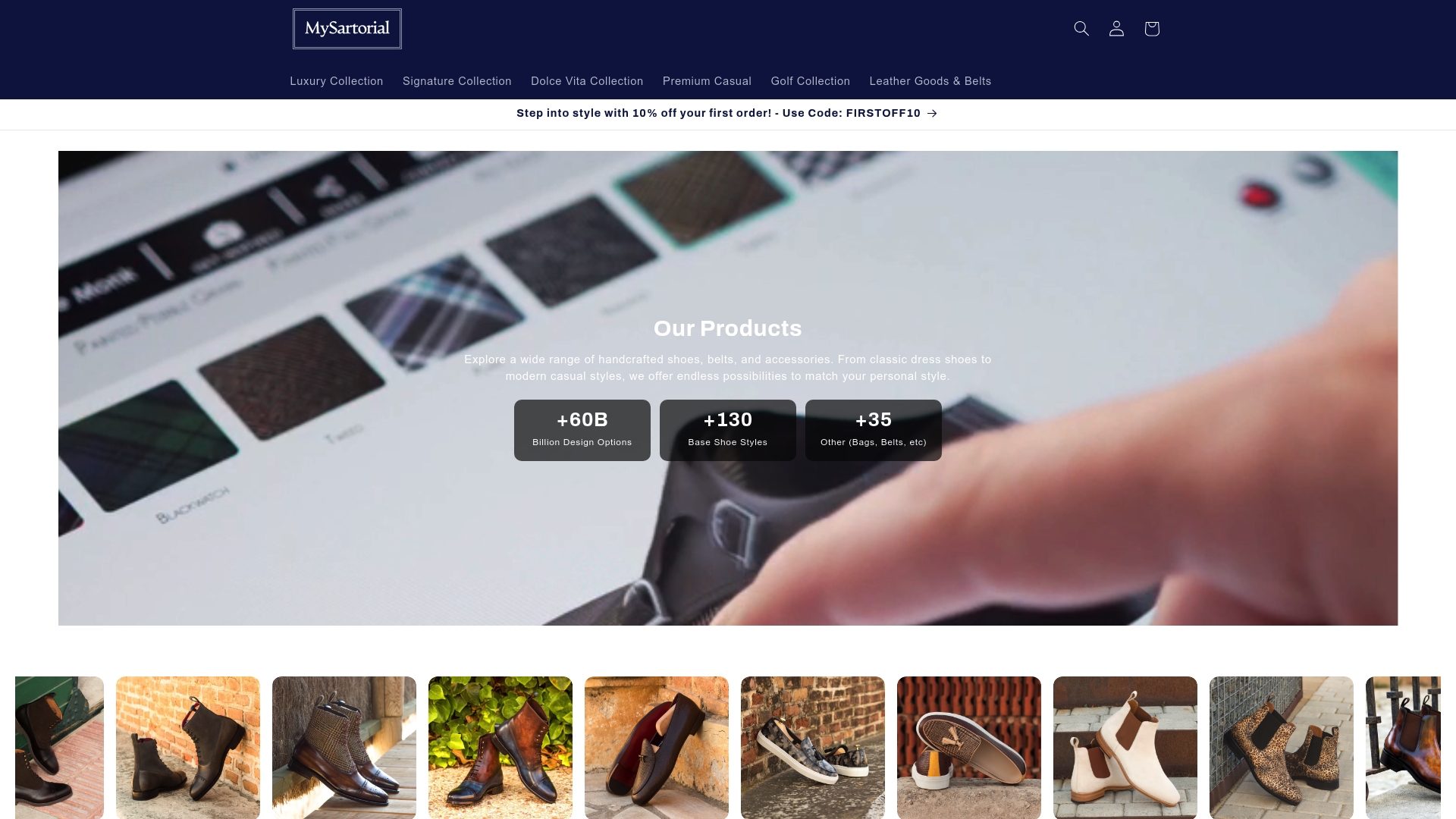
For men ready to move beyond standard footwear, the custom digital print shoes collection offers a starting point for personalized style. Matching leather goods and belts complete the look with coordinated craftsmanship. Every piece is configurable before purchase, with clear options at each step. Quality materials, Goodyear-welted constructions, and hand-applied finishes are standard across the range.
Frequently asked questions
What are the key benefits of bespoke detailing over ready-to-wear shoes?
Bespoke detailing delivers superior fit through custom wooden lasts, along with unique style, better foot support, and longer-lasting construction compared to mass-produced options.
How long does the bespoke shoe process take?
Production typically involves 250 or more steps and can take anywhere from several weeks to five months depending on the complexity of the commission.
Is bespoke shoe detailing worth the high price?
For professionals who wear dress shoes regularly, bespoke construction offers durability and personalization that justify the higher upfront cost when measured over years of use.
Can bespoke detailing address foot health problems?
Yes. Artisans use advanced fitting methods to accommodate bunions, orthotics, and unique feet, building structural support directly into the shoe’s construction.