

European Shoe Craftsmanship: Quality and Legacy Guide
Most luxury consumers can’t distinguish true handcrafted European shoes from well-marketed lookalikes. The difference lies in artistry, tradition, and practical benefits that extend far beyond aesthetics. Genuine European craftsmanship involves centuries-old methods, skilled artisans, and region-specific traditions that create footwear designed to last decades. This guide clarifies what defines true craftsmanship, explores regional methods and materials, and explains what these distinctions mean for your personal luxury collection.
Table of Contents
- What defines European shoe craftsmanship?
- The main methods: Goodyear, Blake, and more
- National signatures: British, Italian, and French craftsmanship
- Materials, finishing, and the power of patina
- Longevity, care, and investment value
- Discover and invest in true European craftsmanship
- Frequently asked questions
Key Takeaways
| Point | Details |
|---|---|
| Handcrafted steps matter | European shoes can involve up to 270 steps for superior fit and durability. |
| Construction impacts longevity | Goodyear welt lasts longest; Blake is preferred for flexibility and elegance. |
| Material quality counts | Full-grain leather ensures unique patina and shoes that age gracefully. |
| Proper care extends life | Resoling and rotating your pairs help luxury shoes last decades. |
| Personalization elevates value | Patina, burnishing, and hand-finished details make each shoe unique. |
What defines European shoe craftsmanship?
European shoe craftsmanship centers on tradition, handwork, and materials that set it apart from factory production. Shoes crafted in Europe use methods refined over centuries by skilled artisans who follow region-specific traditions passed down through generations. The process demands patience and precision that mass production cannot replicate.
Core elements include hand-stitching, premium full-grain leathers, multi-step finishing processes, custom lasting forms, and natural patina development. Each pair receives individual attention at every stage. The time investment differs dramatically from assembly lines. Where factories prioritize speed and volume, European workshops prioritize quality and longevity.
European shoes involve 150-270 manual steps and use full-grain leather for longevity and patina.
The difference becomes clear when examining construction details:
- Hand-stitched seams that flex with your foot rather than against it
- Full-grain leather that breathes and develops character over years
- Custom lasting that shapes each shoe to anatomical precision
- Multi-layer sole construction designed for resoling and decades of wear
- Hand-applied finishes that create depth and variation in color
This level of care transforms footwear from disposable fashion into lasting investment. Custom luxury shoe crafting represents the pinnacle of this tradition, where personalization meets centuries of expertise.
The main methods: Goodyear, Blake, and more
Construction method determines how your shoes fit, feel, and age. The technique matters more than most buyers realize. Three primary methods dominate European shoemaking, each with distinct characteristics and regional preferences.
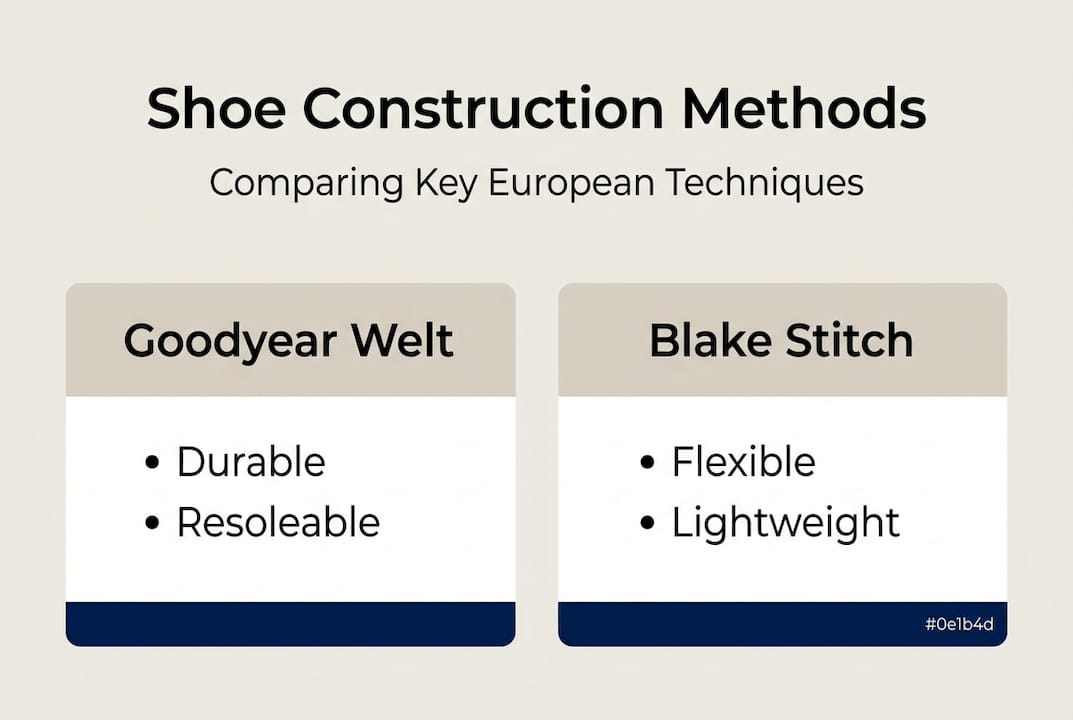
Goodyear welt construction originated in England and remains the gold standard for durability. The method attaches the upper to the sole through a separate welt strip, creating a cavity that can be opened and resoled multiple times. Goodyear welt allows 3-5+ resoles, is highly durable and water-resistant. The construction feels stiff initially but softens over years as the cork footbed molds to your foot. This method suits daily wear and rough conditions.
Blake stitch represents Italian elegance and flexibility. Blake stitch is an Italian preference, prized for its flexibility and slim profile. The sole attaches directly to the upper through a single stitch line, creating a sleeker silhouette and lighter weight. The trade-off comes in resoling limitations and lower water resistance. Blake construction excels in formal settings where elegance outweighs ruggedness.
Hand-welted and Norwegian methods occupy the prestige tier. Hand-welting replicates Goodyear construction entirely by hand, commanding bespoke pricing. Norwegian welt wraps stitching around the shoe’s perimeter, creating exceptional waterproofing for outdoor and weather applications.
Pro Tip: Choose Goodyear for daily rotation and variable conditions, Blake for lightweight formality and elegant occasions.
| Construction | Durability | Resoles | Water Resistance | Weight | Flexibility |
|---|---|---|---|---|---|
| Goodyear Welt | Highest | 3-5+ | High | Heavy | Stiff initially |
| Blake Stitch | Moderate | 1-2 | Low | Light | High |
| Norwegian | High | 3-5+ | Highest | Heavy | Moderate |
| Hand-Welted | Highest | 5+ | High | Heavy | Moderate |
Understanding these differences helps you select construction that matches your lifestyle. Goodyear vs. Blake stitching explores these trade-offs in detail, while why Goodyear welt matters explains the technical advantages of this time-tested method.
National signatures: British, Italian, and French craftsmanship
Regional traditions create distinct characteristics in fit, finish, and function. Understanding these nuances helps you appreciate why your favorite luxury shoes perform the way they do.
British shoemaking centers in Northampton, where makers like Church’s built reputations on structured durability. British makers excel in structured durability (270 steps), using Goodyear welt construction almost exclusively. The fit tends toward structured and formal, designed for daily rotation in professional settings. British shoes prioritize longevity and weather resistance over flexibility.
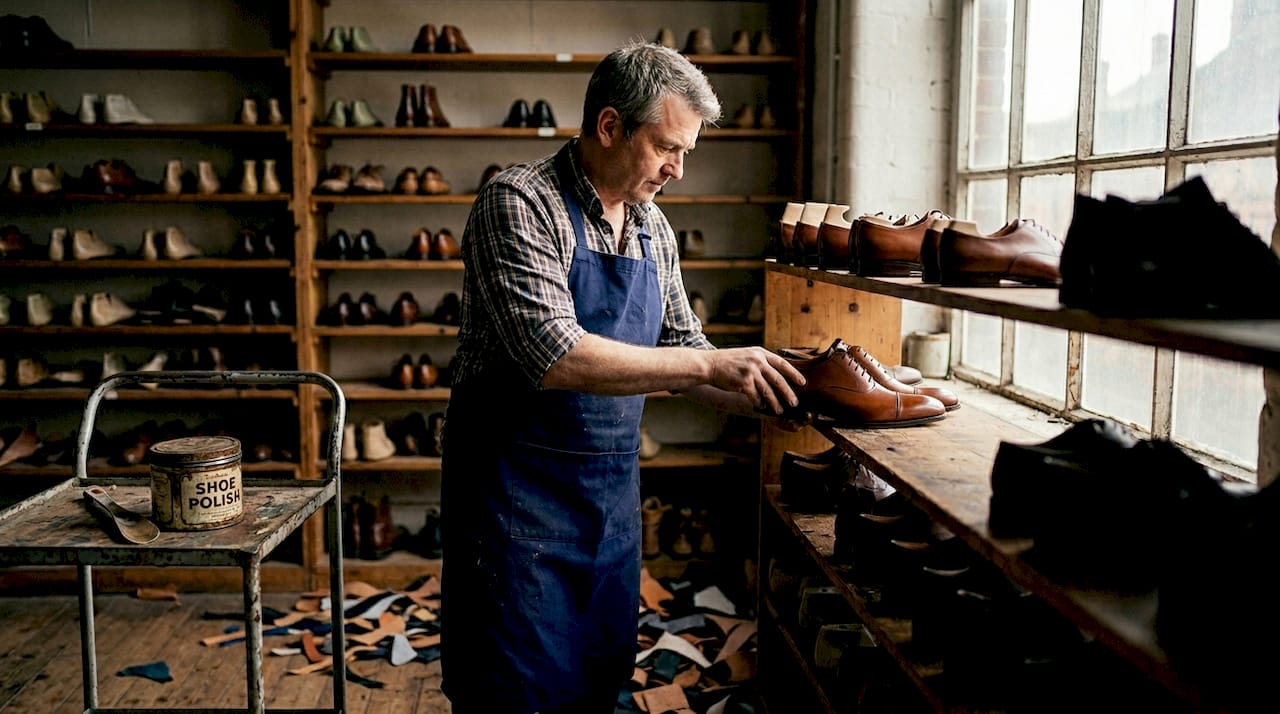
Italian craftsmanship from regions like Marche and Florence emphasizes elegance and flexibility. Blake stitch construction dominates, creating lighter shoes with sleeker profiles. Italian makers excel in vibrant patinas and hand-burnished finishes that add visual depth. Bologna construction, a specialized Italian technique, wraps soft leather around the foot like a glove. The result feels more like wearing refined slippers than structured shoes.
French makers occupy a niche between British structure and Italian elegance. Paraboot and similar houses use robust weatherproofed methods, often employing Norwegian welt for outdoor applications. French shoes blend durability with understated style, favoring function without sacrificing refinement.
| Origin | Primary Construction | Fit Character | Average Steps | Hallmark Traits |
|---|---|---|---|---|
| British | Goodyear Welt | Structured, formal | 250-270 | Durability, weather resistance |
| Italian | Blake Stitch | Flexible, elegant | 150-200 | Patina, slim profile |
| French | Norwegian/Goodyear | Robust, practical | 180-220 | Weatherproof, understated |
Choosing based on use-case:
- Formal office rotation: British Goodyear welt for structure and longevity
- Evening events and refined occasions: Italian Blake stitch for elegance and comfort
- Variable weather and outdoor settings: French Norwegian welt for protection
- Daily casual wear: Italian or British depending on climate
- Travel and versatility: Goodyear welt for durability across conditions
These regional signatures extend beyond construction to finishing techniques. Patina in luxury shoes showcases how Italian makers lead in color development, while patina leather guide explains the science behind these beautiful aging processes.
Materials, finishing, and the power of patina
Materials and finishing separate luxury footwear from everything else. Understanding these layers changes how you select and care for your collection.
Full-grain leather represents the highest quality tier. Unlike corrected or split leathers, full-grain retains the hide’s natural surface, complete with subtle variations and markings. This preserves strength, breathability, and the ability to develop patina. Vegetable-tanned leather uses natural tannins rather than chemicals, creating material that ages gracefully and develops rich color depth over years.
Full-grain leather develops a unique patina and offers decades of wear when cared for. The natural aging process creates color variations and sheen that reflect your wear patterns. No two pairs age identically. This personalization distinguishes luxury footwear from uniform factory products.
Hand-burnishing adds depth through friction and heat applied to leather edges and surfaces. Artisans use bone or wood tools to compress and polish the material, creating lustrous finishes that machine buffing cannot replicate. Custom dyes allow for color gradients and subtle variations that add visual interest. These techniques require skill developed over years of practice.
Enhancing and preserving fine materials:
- Rotate shoes every 2-3 days to allow leather to dry and recover
- Use cedar shoe trees immediately after wear to maintain shape and absorb moisture
- Condition leather every 3-6 months with quality cream or wax
- Brush regularly to remove dirt and restore surface luster
- Store in breathable bags away from direct sunlight and heat
Pro Tip: Rotate shoes and avoid over-wearing to allow patina to mature gracefully rather than develop stress marks and premature creasing.
The relationship between materials and finishing creates the visual signature of European shoes. The art of patina explores how natural aging enhances aesthetics, while patina leather benefits details the practical advantages of this process. Burnishing in leather shoes demonstrates how hand-finishing techniques add character and depth.
Longevity, care, and investment value
European craftsmanship translates directly into shoes that justify their investment through decades of wear. Proper care and maintenance extend this value further.
Resoling represents the primary advantage of quality construction. Where cemented shoes become disposable after sole wear, welted construction allows complete sole replacement. Resole every 2-5 years to extend life; properly rotated shoes with care can last decades. Each resoling costs a fraction of new shoes while preserving the broken-in comfort of uppers molded to your feet.
Patina development adds value over time rather than diminishing it. Well-aged leather shoes with rich color variation and natural wear patterns command respect and admiration. The visual story they tell reflects quality and care. Rotation prevents premature wear and allows materials to rest and recover between wears.
Well-cared-for Goodyear-welted shoes can last 10-20+ years with proper rotation and periodic resoling.
Essential steps for lifetime care:
- Insert cedar shoe trees immediately after each wear to maintain shape and absorb moisture
- Brush shoes before and after wear to remove dirt and restore surface finish
- Condition leather every 3-6 months with appropriate cream or wax products
- Rotate pairs every 2-3 days minimum to allow complete drying
- Resole proactively when wear becomes visible but before damage reaches the welt
True craftsmanship represents long-term investment rather than consumable purchase. The cost per wear decreases dramatically over years of service. A pair worn 100 times per year for 15 years delivers 1,500 wears. Compare this to fashion shoes replaced every season. The economics favor quality when viewed across decades rather than seasons.
Patina aging in shoes demonstrates how proper care enhances rather than merely preserves your investment. The relationship between owner and shoes deepens as they age together, creating footwear that feels uniquely yours.
Discover and invest in true European craftsmanship
Experiencing the difference between genuine European craftsmanship and mass production requires sourcing from makers who prioritize tradition and quality. Curated selections eliminate guesswork by offering only shoes that meet exacting standards for materials, construction, and finishing.
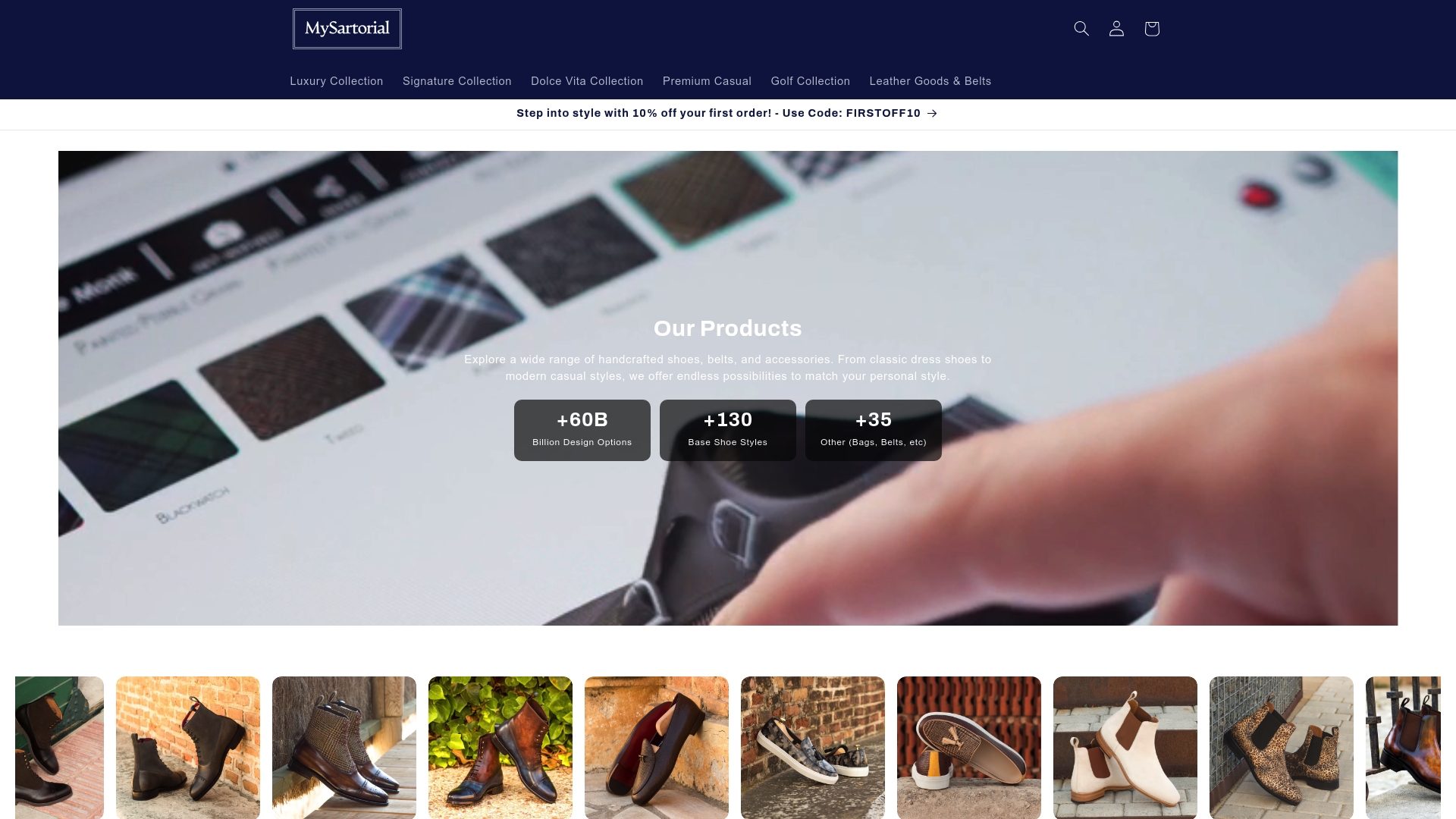
Bespoke options and premium lines provide access to customization that makes each pair uniquely yours. Choose leathers, finishes, sole types, and details that match your style and needs. This level of personalization transforms shoes from products into personal statements.
Elevate your footwear collection by exploring European leather goods that complement handcrafted shoes, discover exclusive leather works showcasing artisan techniques, or browse the full range at MySartorial where European tradition meets modern customization.
Frequently asked questions
Why do European shoes cost more than mass-produced options?
European shoes use premium materials and can involve up to 270 manual steps, resulting in superior durability and unique aesthetics compared to factory-made shoes. The time investment and skill required justify higher pricing.
How do I choose between Goodyear welt and Blake stitch construction?
Choose Goodyear for durability and weather resistance; Blake for lighter, flexible, and more elegant fits. Your lifestyle and climate should guide the decision.
What is patina and why is it valued?
Patina is the unique color and sheen leather develops with age, showcasing personal wear patterns and adding luxury appeal. It represents the living quality of natural materials.
How often should European shoes be resoled?
Experts recommend resoling every 2-5 years for longevity, depending on wear frequency and sole material. Proactive resoling prevents damage to upper construction.