

How to choose notary shoes: style, comfort, prestige
TL;DR:
- Proper shoe selection relies on understanding dress code, versatility, and durable construction.
- Key features include full-grain leather, Goodyear welt, and appropriate styles like Oxfords or Derbies.
- Regular fit checks, proper verification, and rotation extend shoe lifespan and maintain comfort.
Choosing shoes as a notary, lawyer, or corporate executive is not purely a style decision. You spend long hours on your feet, move between formal hearings and client meetings, and your appearance signals credibility before you say a word. Most professionals default to whatever looks polished in the store, then spend months dealing with blisters, worn-out soles, or shoes that simply do not match the range of settings they work in. This guide covers what to evaluate before you buy, how to move through the selection process step by step, what mistakes to avoid, and how to verify quality before committing.
Table of Contents
- What to consider before buying notary shoes
- Step-by-step guide to choosing notary shoes
- Common mistakes when choosing notary shoes
- How to verify shoe quality and fit
- Why most professionals get shoe selection wrong—and how to get it right
- Step up your notary style with handcrafted shoes
- Frequently asked questions
Key Takeaways
| Point | Details |
|---|---|
| Emphasize comfort and style | The right notary shoe balances comfort for long days with a polished, professional look. |
| Invest in quality materials | Full-grain leather and Goodyear welt construction signal durability and enhance your brand. |
| Mind fit and construction | Proper measurement and choosing the right build prevent pain and wasted money. |
| Avoid common buying mistakes | Don’t overlook fit testing, material details, or rotating pairs for longer wear. |
What to consider before buying notary shoes
Before browsing any catalog, get clear on the specific demands of your professional environment. Dress codes vary across jurisdictions and firm cultures. Some courtrooms and notarial offices expect strict black or dark brown leather. Others allow more flexibility. Knowing your baseline requirement prevents you from buying something that looks good at home but creates friction at work.
Consider the range of events you attend in a given week. A notary who moves between court appearances, client signings, and networking dinners needs a shoe that transitions well. A corporate executive who stays primarily in boardrooms has different needs. Versatility matters more than most buyers initially expect.
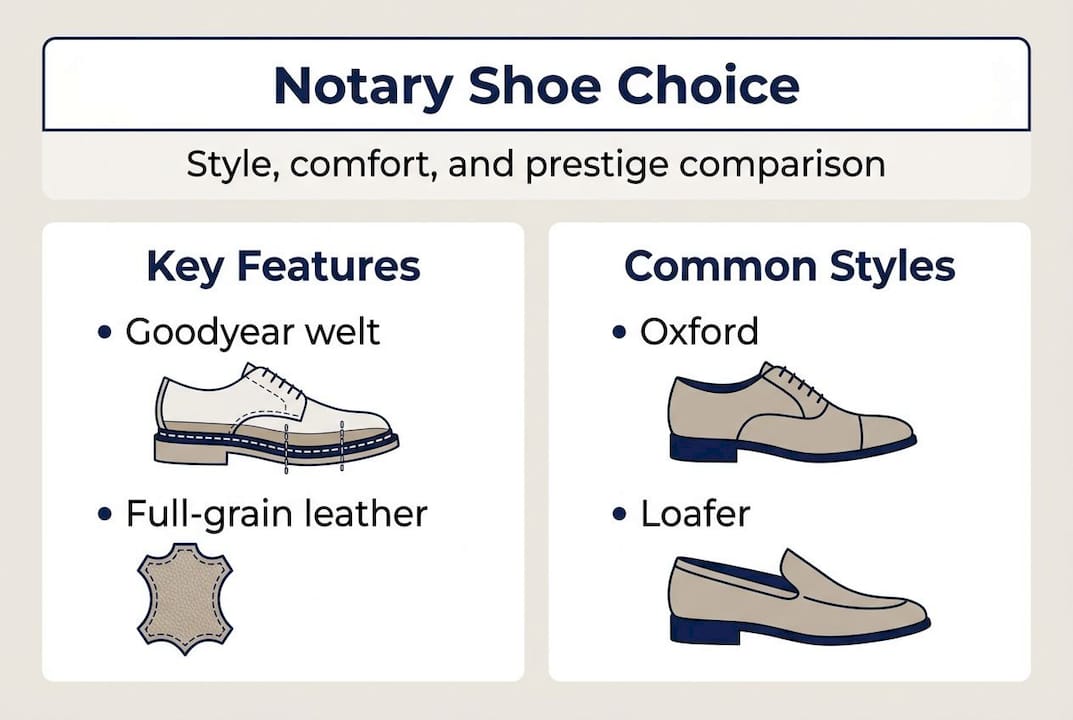
Personal branding is also a factor. Luxury formal shoes for notaries serve a dual purpose: they meet dress code requirements and communicate attention to detail. Clients and colleagues notice footwear. A worn-down heel or a shoe that does not fit the suit sends a signal you probably do not intend.
Here are the core features to shortlist before making any purchase:
- Color: Black for formal and courtroom settings; dark brown or burgundy for semi-formal and business casual
- Construction: Goodyear welt preferred for durability and resoling capability
- Leather quality: Full-grain leather for longevity and patina development
- Sole type: Leather soles for formal environments; rubber or combination soles for mixed-use
- Lining: Full leather lining for breathability and comfort during long days
Pro Tip: Always check for a Goodyear welt when evaluating a shoe. This construction method bonds the upper, insole, and outsole with a strip of leather, making the shoe resolable and significantly extending its usable life.
| Setting | Recommended style | Color range |
|---|---|---|
| Courtroom or formal hearing | Oxford | Black |
| Client meetings | Derby or Oxford | Black, dark brown |
| Networking or semi-formal | Loafer or Derby | Brown, burgundy |
| Mixed daily use | Derby | Black, dark brown |
Black Oxfords are universal for lawyers and notaries, while loafers work well in less formal professional settings.
Step-by-step guide to choosing notary shoes
Now that you know what to prioritize, follow this selection workflow to make the process repeatable and reliable.
- Measure your feet accurately. Foot size changes over time. Measure both feet in the late afternoon, when feet are at their largest due to natural swelling. Use the longer foot as your reference size.
- Identify your construction preference. Goodyear welt offers the most durability and is resolable. Blake stitch produces a slimmer profile but is harder to resole. Learn more about Goodyear welt construction before deciding.
- Evaluate leather type. Full-grain leather retains its natural surface, develops a patina over time, and resists moisture better than corrected-grain leather, which has been sanded and coated to hide imperfections.
- Compare silhouette types. Oxfords have closed lacing and a cleaner line, making them the most formal option. Derbies have open lacing and a slightly wider fit, offering more comfort. Loafers have no lacing and suit less formal settings.
- Try shoes in the afternoon. This accounts for foot expansion and gives you a more accurate fit reading.
- Walk and stand for at least ten minutes. A shoe that feels fine sitting down may create pressure points when you walk. Test both.
| Shoe type | Formality level | Best use case |
|---|---|---|
| Oxford | High | Courtroom, formal hearings |
| Derby | Medium-high | Client meetings, office |
| Loafer | Medium | Semi-formal, networking |
Artisan shoe brands like John Lobb and Crockett & Jones emphasize Goodyear welt and full-grain leather specifically because these choices support long-term personal brand elevation.
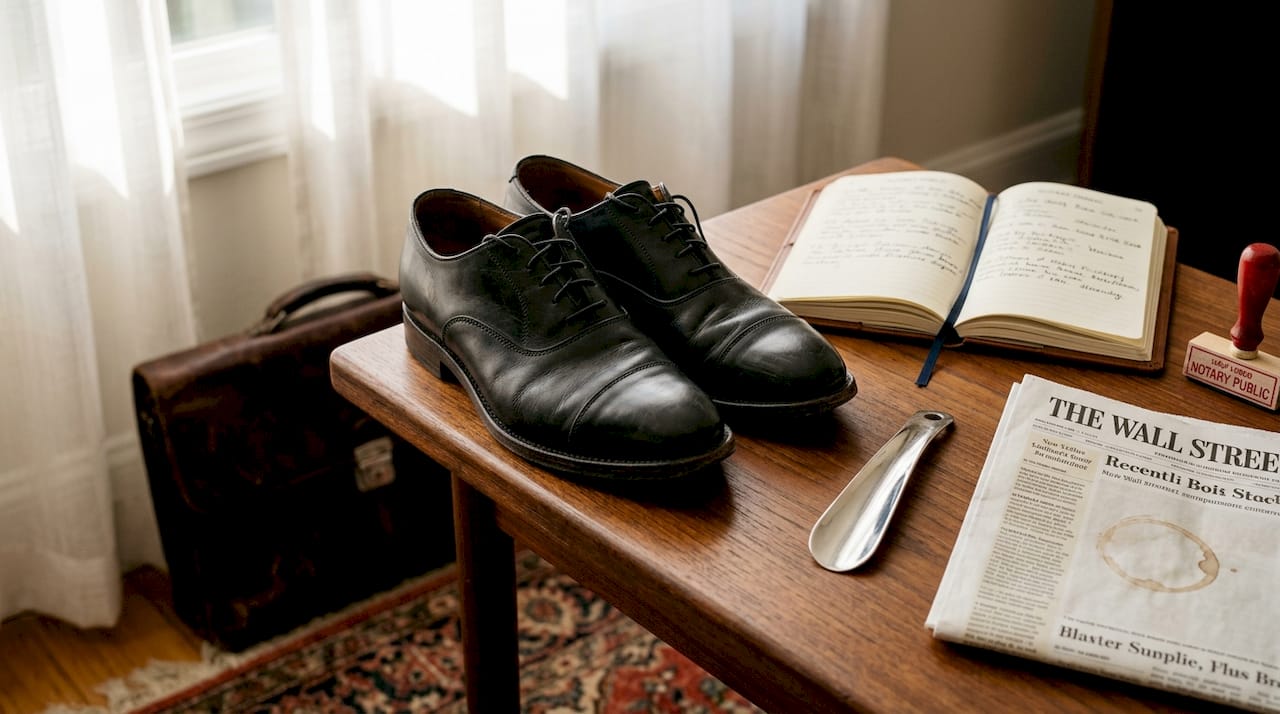
Pro Tip: If standard sizing does not work for your foot shape, consider customizing formal footwear. Custom options let you adjust width, toe shape, and construction details to match your exact needs.
Common mistakes when choosing notary shoes
Having a clear process helps. Knowing what to avoid helps just as much.
Prioritizing design over comfort. A shoe that looks sharp but causes foot pain after two hours is not a professional asset. It becomes a liability. Long depositions, court appearances, and back-to-back client meetings require footwear that supports your feet throughout.
Underestimating the break-in period. Quality leather shoes require time to conform to your foot. Many buyers try a shoe once, find it stiff, and return it. That stiffness is normal. Plan for a break-in period of several wears before judging comfort.
Assuming price equals quality. A high price tag does not guarantee construction quality or material integrity. Check stitching, sole attachment method, and leather grade directly. Comfort-forward brands like Wolf & Shepherd demonstrate that hybrid designs can deliver all-day professional wear without sacrificing style.
Ignoring versatility. Buying shoes that only work in one setting limits your wardrobe and increases cost over time. A well-chosen Derby or a clean loafer can cover formal and semi-formal needs, reducing the number of pairs you need to maintain.
Here is a summary of the most common errors:
- Buying shoes that fit snugly at purchase without accounting for break-in
- Choosing synthetic linings that trap heat and moisture
- Neglecting sole thickness and arch support for long-wear days
- Overlooking comfortable stylish options that balance form and function
- Failing to consider personalized footwear guidance when standard fits do not work
“Hybrid designs built for all-day professional wear prove that comfort and style are not competing priorities. The right construction handles both.”
Pro Tip: Rotate between at least two pairs of shoes. Leather needs 24 to 48 hours to dry and return to its natural shape between wears. Rotation extends the life of each pair significantly.
How to verify shoe quality and fit
Once you have narrowed down your options, use these checks before finalizing your purchase.
- Inspect the stitching. Even, tight stitching along the welt and upper indicates quality construction. Loose or uneven stitching is a red flag.
- Check the sole. A leather sole should feel firm and even. Look for consistent thickness and clean edges. Rubber soles should be bonded without visible gaps.
- Examine the leather surface. Full-grain leather has a natural grain pattern. It should feel smooth but not plasticky. Corrected-grain leather often looks too uniform and lacks depth.
- Assess arch support and heel height. The insole should support your arch without creating pressure. The heel should be stable, not wobbly, when you stand.
- Perform a standing and walking fit test. There should be roughly a thumb’s width of space at the toe. The heel should not slip. The widest part of your foot should align with the widest part of the shoe.
| Quality indicator | What to look for | Red flag |
|---|---|---|
| Stitching | Even, tight, consistent | Loose, skipped, or uneven |
| Leather | Natural grain, smooth texture | Plasticky, overly uniform |
| Sole attachment | Goodyear welt or Blake stitch | Glued only, no visible welt |
| Lining | Full leather, no rough edges | Synthetic, peeling at seams |
Dress shoe standards from recognized artisan brands confirm that Goodyear welt construction and full-grain leather are the benchmarks for professional footwear that supports personal brand elevation.
Also review the brand’s aftercare and warranty policies. Shoes with resoling options and care support are a better long-term investment. Consider luxury shoe types that include monogram or custom finish options. These details add a distinct, professional identity to your footwear. Learn more about Goodyear welt vs Blake construction to make an informed final call.
Why most professionals get shoe selection wrong—and how to get it right
Most notaries and lawyers approach shoe buying the same way they approach buying any professional item: they look for something that fits the dress code and move on. That approach works once. It does not build a wardrobe that lasts or a professional image that holds up over time.
The real issue is that shoe selection is treated as a one-time decision rather than a long-term investment. Construction quality, rotation habits, and personalization are afterthoughts. But these are exactly the factors that determine whether a pair of shoes serves you for two years or ten.
Convention pushes professionals toward safe, generic choices. Trend pushes them toward whatever looks current. Neither approach accounts for the practical demands of a full workday or the cumulative value of a well-maintained, personalized collection. Custom shoe insights from professionals who invest in tailored footwear consistently point to the same outcome: better comfort, stronger image, and lower long-term cost. The professionals who get this right think about footwear the same way they think about any professional tool. They choose for function first, invest in quality construction, and maintain what they own.
Step up your notary style with handcrafted shoes
You are now equipped to evaluate, select, and verify notary footwear with a clear process. The next step is finding options that meet the standards outlined here.
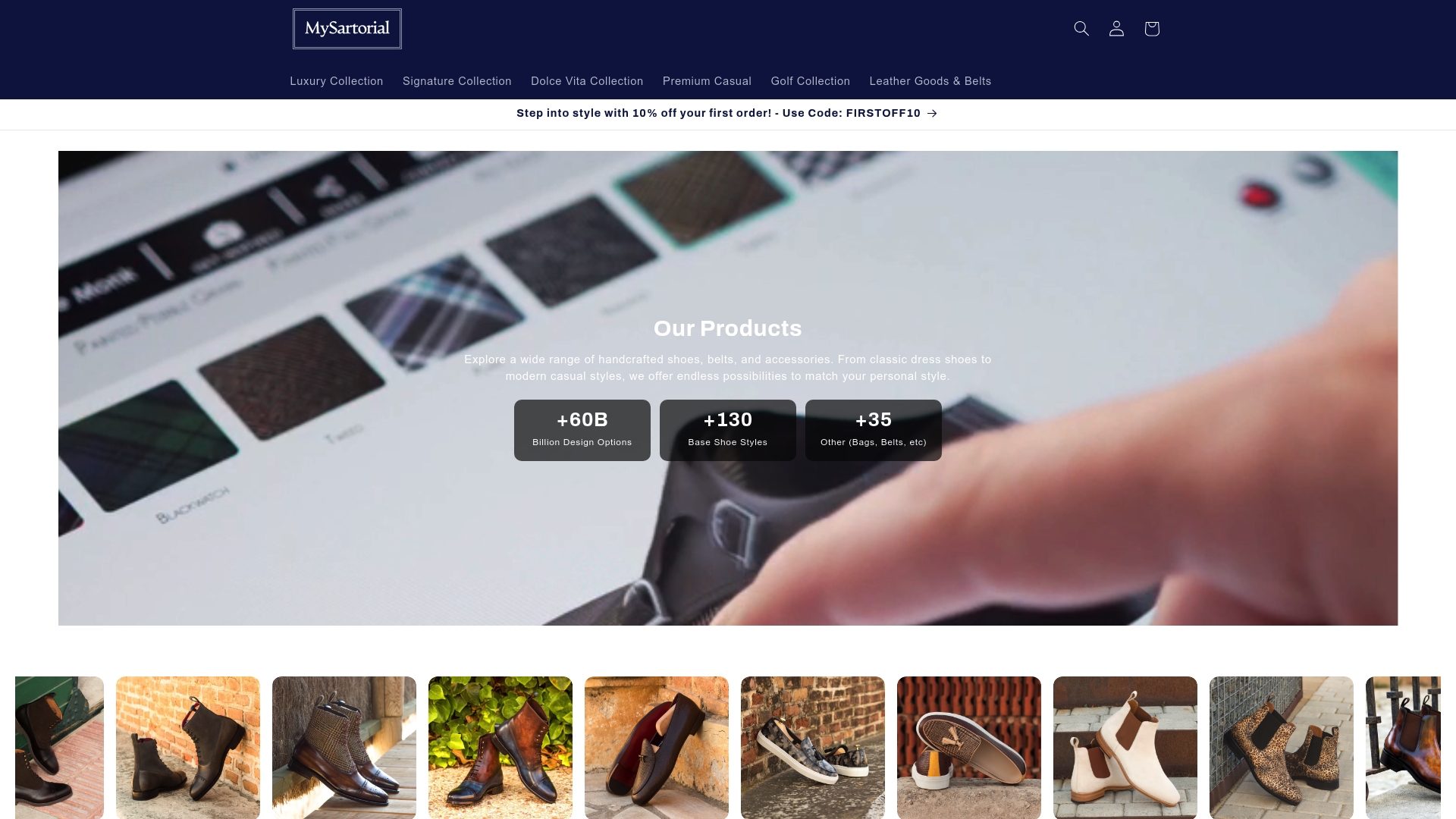
MySartorial offers a range of handcrafted formal shoes built with Goodyear welt construction and full-grain leather, with customization options across finishes, stitching, soles, and patina styles. You can select an Oxford, Derby, or Chelsea boot and adjust the details to fit your professional identity. The collection also includes leather accessories such as belts and bags that coordinate with your footwear for a consistent, polished look. Over 150 products are available across formal and semi-formal collections, with options for personalization before checkout.
Frequently asked questions
What shoe style is most accepted for notaries?
The most universally accepted shoe style for notaries is the black Oxford. Loafers are appropriate for less formal professional settings.
Is Goodyear welted construction worth the investment?
Yes. Goodyear welted shoes offer durability, comfort, and the ability to resole, making them a practical long-term investment for professionals who wear dress shoes regularly.
How do hybrid shoes improve comfort for notaries?
Hybrid designs combine classic formal silhouettes with added cushioning and flexible construction, making them well suited for long workdays without compromising professional appearance.
Should I rotate between multiple pairs of notary shoes?
Yes. Rotating between at least two pairs allows each shoe to dry out and recover its shape between wears, which extends shoe life and supports foot health over time.